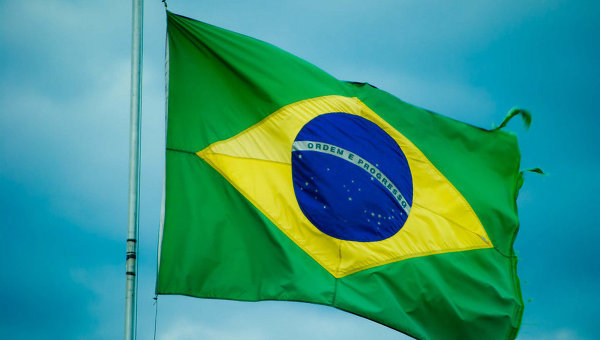
The end of 2017 and the beginning of 2018 was marked by a series of harsh attacks from national regulators in a number of countries around the world. Unfortunately, Brazil is next on the list of “conservatives” who zealously opposed the unregulated circulation of Bitcoin.
Brazil is the largest country in South America. The only country with an official Portuguese language in the entire American continent, which, thanks to its area (8,515,770 km²), and population (205,737,996 inhabitants), is in fifth place among the countries of the world.
The Brazilian national securities market regulator, the Brazilian Securities Commission (CVM) in mid-January 2018 sharply criticized crypto companies, banning local investment funds to carry out direct transactions for the purchase and sale of digital currencies. According to the official statement of the CVM, Bitcoin and other cryptocurrencies cannot be classified as financial assets, which entails a ban on carrying out any transactions with them.
Until 2018, the issue of regulating domestic markets neither in Brazil nor in other countries was so strict. Why exactly now the national economies of many countries have decided to take up arms against Bitcoin and impose a taboo on the free circulation of any cryptocurrencies in general remains a mystery. After all, it is obvious that no one can yet be satisfied with the formal arguments of the authorities, based allegedly on concerns about the risks of anonymity and strengthening measures to combat terrorism.
Such a position of the Brazilian government in relation to bitcoin is not new and is almost a logical continuation of the words of the head of the Central Bank of Brazil, Ilan Goldfine, who in October 2017 emotionally spoke out against bitcoin, calling it “a typical bubble or pyramid.” He expressed this opinion in an official interview with one of the representatives of the Brazilian media, as he believes that bitcoin is a financial asset without collateral, and companies buy it in the hope that it will rise in price.
Moreover, since December 2017, the Brazilian parliament began developing legislation that is designed to tighten the regulation of bitcoin in the country in the future. In particular, the lower house of the National Congress of Brazil is currently studying the possibility of passing a bill that proposes to ban cryptocurrencies altogether and equate their use with financial crimes.
But it seems that the matter is completely different.. In October 2018, elections are scheduled to take place in Brazil, in which citizens will have to determine not only the future president of the country, but also vote for new state governors, deputies and senators of the National Congress.
Thus, most likely, the current government in Brazil is simply afraid that the opposition, which can be financed using digital currency, will win the upcoming elections. How else can we explain the recent decision of the Supreme Electoral Court of Brazil, which banned the use of bitcoin in the 2018 election campaign?
Be that as it may, the “war” declared by state regulators in most countries against Bitcoin cannot better demonstrate the helplessness and precariousness of the entire international financial system.
And the so-called global banking elite, tired of futile attempts to take control of crypto-flows, decided to simply ban them. Thus, exposing not so much their fear of the anonymity of bitcoin, but the fear that bitcoin or its analogues in the very near future will be able to destroy the monopoly of states “on money”. After all, there is probably no better alternative today than “crypto”, even for the “hardest” national currency.

You May Also Like
$3 million in stolen electricity = $14.5 million in Bitcoin
A Taiwanese miner surnamed Yang was recently arrested and accused by authorities of illegally mining 100 million yuan ($14,500,000) in cryptocurrency. Young used $3.2 million in stolen electricity to power the mining rig.
New SEC Requirement Philippines
The SEC requires sellers to register cryptocurrency cloud mining contracts as securities. The Philippine Securities and Exchange Commission (SEC) issued an advisory on April 10 in which it applied the Howey test to determine whether such contracts are securities.
