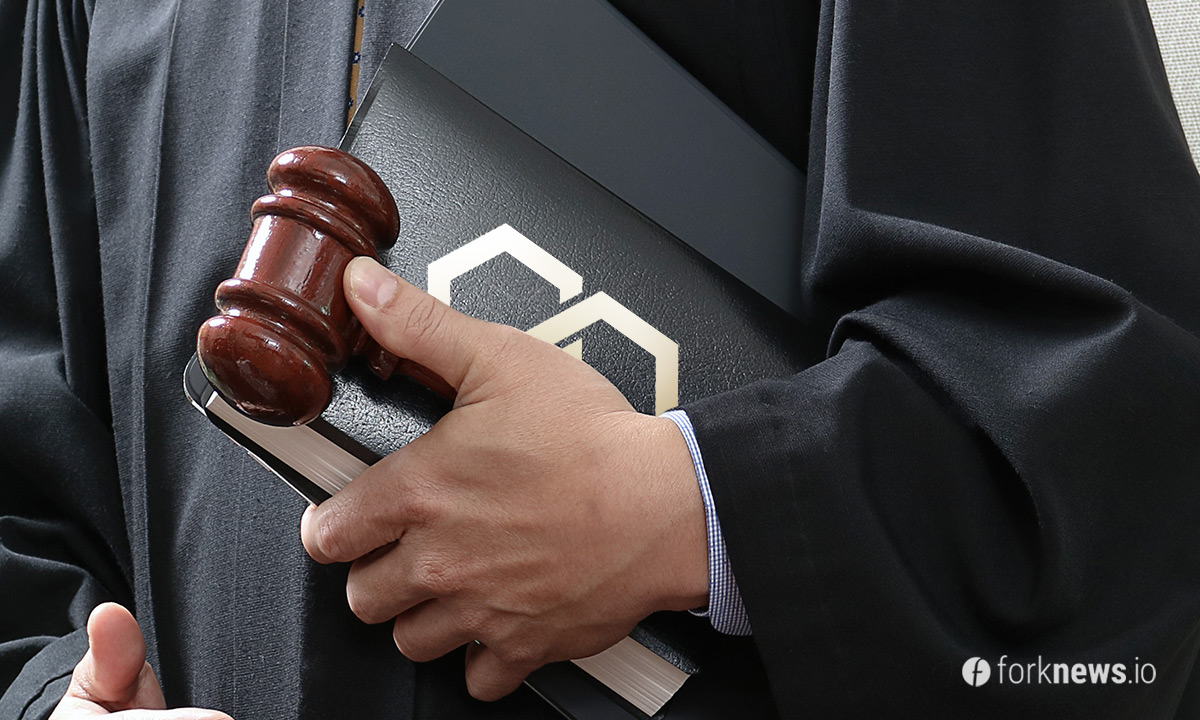
China continues to create its own crypto history, implementing a policy of banning cryptocurrencies and supporting blockchain technology. Last week, the Supreme Court of the Middle Kingdom recognized records on the blockchain as reliable evidence.
Now, Internet courts can use blockchain records to resolve Internet-related legal disputes. Legalized as evidence, digital data should be admissible in court if the data is collected and stored through a blockchain with digital signatures, reliable timestamps and hash verification, or through a digital hosting platform and can verify the authenticity of the technology used, the Supreme People's Court said in a statement.
China is one of the first countries to accept blockchain records as legal evidence.
In light of recent news from China, this development is not came as a complete surprise. The pioneer of digital justice in the country was the Hangzhou Internet Court. It was this court that, since last year, has been developing the practice of considering cases with evidence based on blockchain, collecting and classifying the basis for giving legal force to evidence that was authenticated using this technology. Based on an analysis of the work of the first Internet court, new rules of general legal proceedings were formulated.
At first glance, the created precedent looks like another step towards the official recognition of blockchain at the state level.
But, on the other hand, the court now has the right to request information stored in a distributed registry about the movement of digital currencies and use it during the trial. And this fact negates the basic principle of anonymity of cryptocurrency transactions.
Given the illegality of cryptocurrency transactions in China, any trader who circumvents the ban by using a VPN to connect anonymously or USDT as a buffer between crypto and fiat may be convicted.
However, the Supreme Court ruling China fully complies with the country's policy of aggressively banning cryptocurrency and pushing for introduction of blockchain. This is true as for both public and private sectors in China.. In fact, the Chinese government has made it its mission to prioritize blockchain technology alongside AI and other innovative technologies to further expand its economic power.

You May Also Like
The New York prosecutor's office published a report on the work of crypto exchanges
After months of investigating the internal operations of crypto exchanges, New York prosecutors have released their disappointing findings. The report, titled “Virtual Markets Integrity Initiative,” released on September 18, confirms what many already know, most cryptocurrency platforms lack strong consumer protections and are often targets for market manipulation.
Japan's FSA reports 'quasi-operators' of crypto exchanges in the country
The Financial Services Agency (FSA), Japan's financial regulator, previously gave permission to 16 crypto exchangers to operate in the country. The FSA has also given permission to 16 other exchanges, including Coincheck, to provide cryptocurrency trading services, even though their license applications are still pending.
