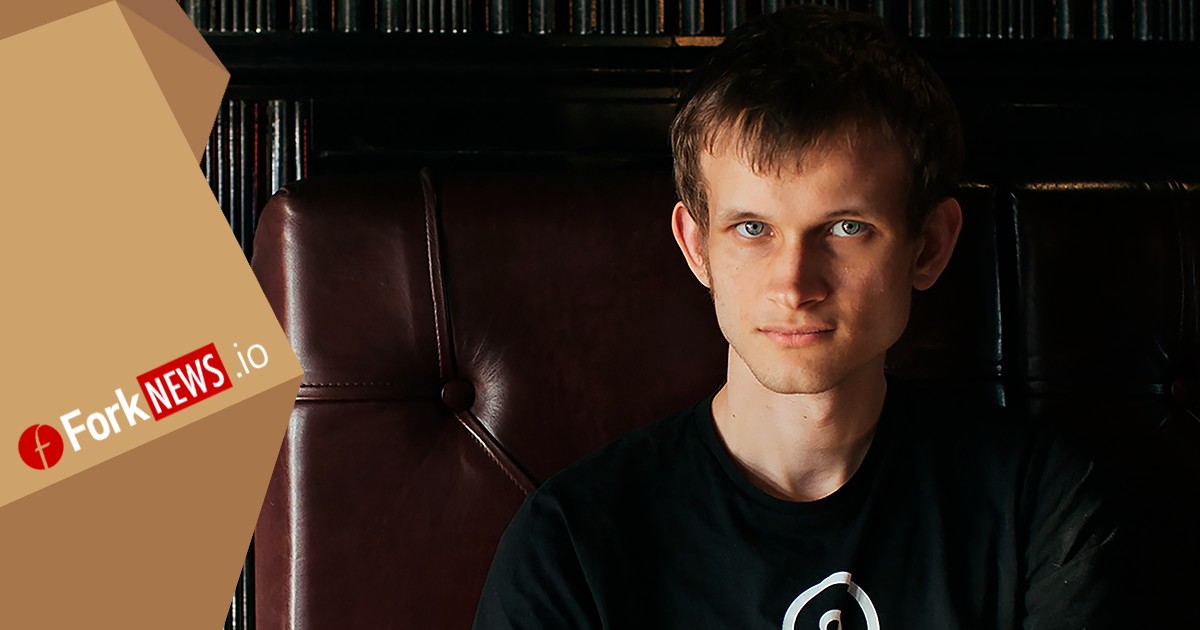
Ethereum is one of the types of cryptocurrencies, belonging to the so-called “second generation”. The number of people interested in this digital money and its uses is growing rapidly. After the well-known cryptocurrency Bitcoin, one of the most ambitious projects was the Ethereum system
In 2013, the first line of code for the new Ethereum payment system was written. The purpose of creating the new system was to expand the operating principle so that it would become as accessible as possible. Ethereum is not exactly a payment system. The developers themselves talk about it as an operating system for social purposes.
An interesting fact is that Ethereum was developed by a young genius who was not yet twenty in 2013. This man's name is Vitaly Buterin. He was born in Russia, in the city of Kolomna in 1994, but from the age of six he lived with his parents in Canada, where he studied. After graduating from school, Vitalik went to Switzerland; he lived in the city of Zug for three years. Then, at 17, he moved to Singapore, where he currently resides.
If you want to understand how Buterin became one of the best minds in the blockchain world, you have to go back five years, when he was seventeen. His father, an entrepreneur-programmer, spoke about the digital currency Bitcoin. Vitalik read about it on the Internet and took it seriously.
Like many of his peers, Vitalik played World of Warcraft, an online game in which you need to buy weapons and equipment. The problem he faced is familiar to many young gamers: how to buy an interesting weapon or gear without your own money. He had some pocket money, but lacked a means of payment that he could use on the Internet. He didn't have a credit card or bank account. A significant part of the world's population is in a similar situation. Even in the US, the land of credit cards, about 10 million households do not have a bank account. After his father's stories, he decided to earn bitcoins. Having earned his first twenty bitcoins through the Internet, Vitalik was very happy.
Of this money, he spent eight and a half bitcoins on purchasing a shirt. Now, at the current exchange rate, it is almost ninety thousand dollars. As Vitalik jokes, it turned out to be the most expensive shirt, and even that was lost on the train when moving to Switzerland.
He was inspired by the idea that several thousand people around the world, just like him, with the help of computers, could create an independent financial network on their own..
The idea of decentralization, cryptography, openness, transparency - he really liked all these principles and completely captured his attention. He came to the understanding that using blockchain for cryptocurrency is only the first, simplest application.
“Payment systems are about freedom,” says Buterin. “I started reading anarchist literature early. Socialist anarchists Bakunin and Kropotkin, but also Ayn Rand, a supporter of radical market liberal views.” He was especially interested in the debate between the leftist market critic Pierre-Joseph Proudhon and the economist Frederic Bastiat, who considered free market prices to be a manifestation of divine providence. The key point of dispute is the role of money: if money is power, and politics organizes power, it turns out that the one who controls the flow of money rules. “That’s why I’m interested in payment systems on the Internet,” explains Buterin.
“Today’s payment systems on the Internet are underdeveloped, payments are unsafe. Everyone must provide strangers with a huge amount of information about themselves: card number, name, address. Is this really necessary? We don’t write our address on every banknote.”
Buterin not only considers this state of affairs absurd - he is worried that he also has to pay for it. Each credit card payment involves multiple security and verification firms. They charge money for their services. There is a price to pay for lack of trust. The huge lack of trust online, reasoned seventeen-year-old Vitalik, leads to complex procedures that give rise to a multi-billion-dollar industry. This is the basis of business for companies such as Visa, Mastercard and PayPal.
In 2012, at the age of 18, Vitalik was already an authority on the Bitcoin scene. Together with friends, he founded Bitcoin Magazine. On the cover of the first issue there was a mask of the English revolutionary Guy Fawkes, also used by members of the Anonymous hacker network.
It soon became clear to Buterin that with the help of the blockchain it is possible to implement far more than just a monetary system. Until recently, blockchain was used only as a digital safe in which other types of valuables can be stored: cars, houses, stocks.. Wouldn't a decentralized registry of property rights plus a secure way to transfer those rights be a way to cut down on all the bureaucracy that currently handles title registration? Land registry compilers, notaries, entire administrative institutions?
“I realized that something could really come of this at my first Bitcoin conference in Seattle in 2013,” says Vitalik. “Real people of flesh and blood gathered there, united by one dream.”
After this conference, teaming up with a group of like-minded people, he organized crowdfunding. The total investment in Ethereum was eighteen million dollars in Bitcoin, which was equal to thousands of ethers. In Tel Aviv, he met developers who were already working on making his dream come true: they were developing a platform for smart contracts that would execute themselves, without legal procedures. Their execution was to be controlled by the blockchain. The guys from Israel became the basis of the team with which Buterin developed a new blockchain: an easy-to-use universal ledger for everything. And, importantly, more productive - like a motorcycle compared to a bicycle.
Buterin formulated the concept in a document combining ideas from politics, game theory and mathematics, and named his brainchild Ethereum - after Aristotle's idea of ether, the all-encompassing fifth element. The new blockchain was supposed to become just as ubiquitous and work on all devices.
He shared the idea with several acquaintances, and soon an army of highly qualified programmers gathered under his leadership. Many members of the Ethereum team have successful international careers behind them.
While many in the Bitcoin community see Buterin as a traitor, Silicon Valley is already turning its attention to him. The first was Peter Thiel, who became rich through investments in PayPal and Facebook. He founded a foundation that distributes scholarships to talented individuals in the digital field. Buterin, who until then had not earned any real money, received 100 thousand dollars from the Thiel Foundation.
At the age of 20, Vitalik Buterin conquered Silicon Valley. But for him this was just the beginning.
At the beginning of this year, unexpected requests came from Samsung and IBM. They expressed a desire to try out new software.. Then the World Wide Web Consortium (W3C) showed up with a serious proposal: to invite Ethereum to the “Global Payment Systems Commission” along with Google, Telekom, Apple and numerous large banks.
Finally, everyone began to understand that a multi-billion dollar monetary system could grow from the Bitcoin code in a few years. And Ethereum, by developing this technology, among other things, helped show this.
Currently, Buterin’s team is working to popularize the project. They want to convey the very principle of this technology to the maximum number of people. So that this area is taught to student programmers, so that this information is available to anyone.
That is, so that any company, or an ordinary programmer, regulator, understands this technology, its principles, capabilities and directions for use in order to extract as many benefits as possible from multifunctional applications.
In 17, Buterin was included in the top ten of Fortune magazine's ranking as the youngest and most influential person on the planet.
According to https://www.capital.de

You May Also Like
Donald Trump appoints Bitcoin advocate to lead White House staff
US President Donald Trump has named prominent Bitcoin advocate Mick Mulvaney as his new White House chief of staff. Trump is one of the most controversial figures in the world at the moment, and whether you love or hate him, the crypto industry stands to benefit greatly from having one of the biggest crypto enthusiasts wield influence over America's President.
A beautiful fairy tale from Qiwi?
The large Russian payment company Qiwi has become a pioneer in the development of blockchain in its country, with its CEO and main shareholder Sergei Solonin playing a major role in this. According to Rubase, the reason why he is so interested in cryptocurrencies recently became clear during his lecture at the Moscow School of Communication.
