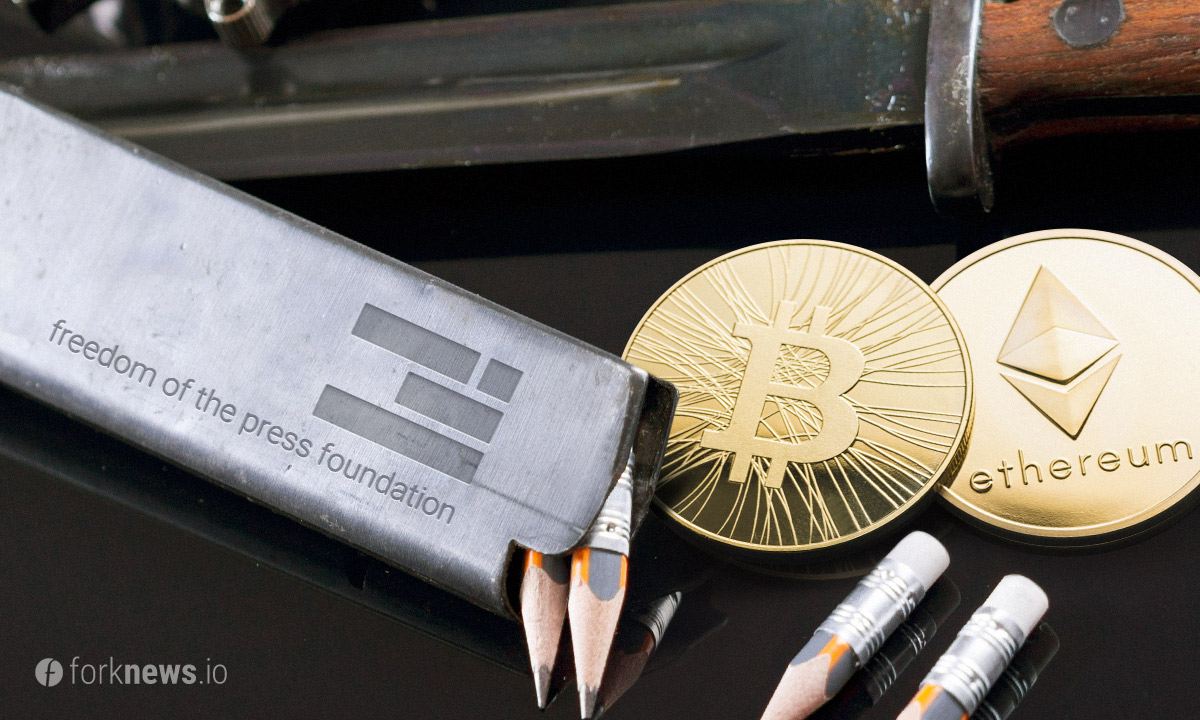
The Freedom of the Press Foundation, a nonprofit organization created to support free journalism, accepts cryptocurrency donations to protect the rights of independent journalists and public privacy.
Yesterday, June 18, blockchain company Mainframe announced a donation of 1,000 Ether coins (about $498,000) to the Freedom of the Press Foundation (FPF). The companies share common goals of protecting free speech, promoting the use of digital tools for safety, and preserving the public's right to open and honest information.
The donation will allow FPF to expand its mission to protect independent journalism and explore the use of decentralized technology to combat censorship. It also marks the first major cryptocurrency donation in FPF's history and the beginning of a new phase in the development of non-profit global institutions.
FPF has digital wallets for direct donations and accepts most cryptocurrencies as donations. Decentralized cryptocurrency serves as a good alternative to traditional payment platforms such as PayPal or Stripe, which can serve as a tool of pressure and manipulation in the hands of regulators. For example, in 2010, PayPal suspended donations to WikiLeaks, citing violations of its terms of use.
FPF currently leads the development of SecureDrop, an open information platform used by more than 60 major news organizations around the world, and trains thousands of journalists in digital security practices.
Trevor Timm, Executive Director of the Freedom of the Press Foundation, noted that the Foundation is very grateful to Mainframe and their community for their generous support of their work.
Founded in 2012, the Freedom of the Press Foundation is dedicated to supporting and protecting public interest journalism in the digital age. Its Board of Directors includes journalists, activists and whistleblowers, including Edward Snowden, Glenn Greenwald, Laura Poitras and Daniel Ellsberg.

You May Also Like
Russian blockchain startup HOQU is being checked by the police
The internal conflict of the company has gone beyond its scope and now the legality of the parties’ claims will be decided by the law enforcement agencies of the Russian Federation.
Another crypto fraud was exposed by the cyber police of Ukraine.
Cyber police detained a gang of crypto fraudsters consisting of four young residents of Dnieper, who created a network of fake web exchangers for converting cryptocurrencies.
