
Everyone who is part of the cryptocurrency community is primarily faced with the storage of bitcoin and cryptocurrencies. And this does not depend on whether you are going to accept coins as payment, use them for payments, or store them as an investment.
An important difference between cryptocurrencies in general and bitcoin in particular from bank money is decentralization. What does this mean in practice?
Each network node (node) stores a complete history of transactions in the network. And each network node can independently create a transaction and send it to the network. That is, there is completely no single center that controls what is happening and makes payments.
On the one hand, this ensures that same security and anonymity. No one can stop the payment or block the user's money. On the other hand, such a system gives rise to some technical problems. Today, the volume of the Bitcoin blockchain exceeds 120 gigabytes, and it will grow. It is already problematic to store such a volume even on an average laptop, and on mobile devices it goes beyond reality. In addition, the first blockchain download takes up to several days.
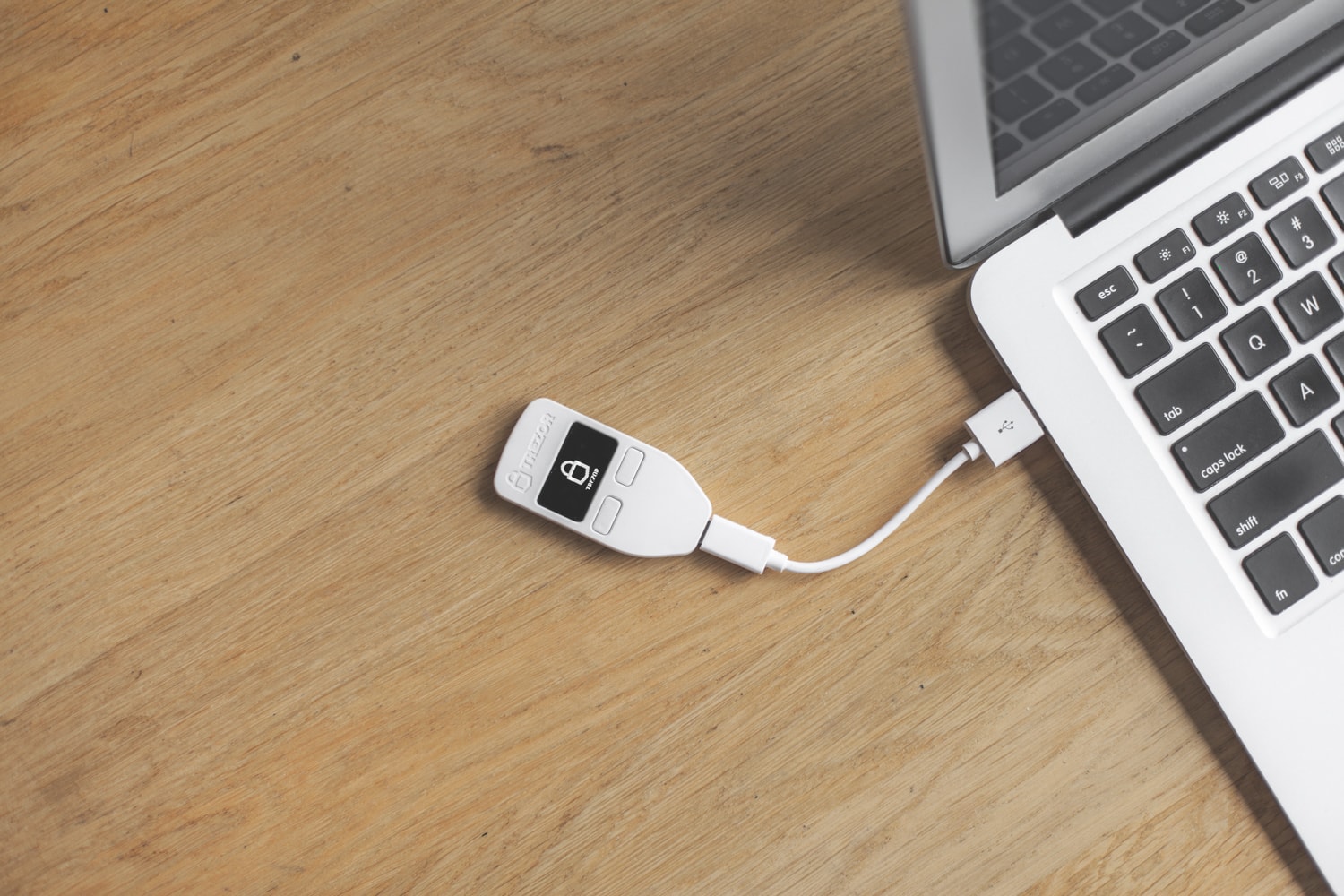
In addition, as we described in our articles " Since cryptocurrencies differ from banks and electronic money, such as webmoney, and wallets for them differ, both technically and in their philosophy of use. Conventionally, all solutions today can be divided into three main categories -Wallets installed on a computer in the form of a special program -Online wallets and storage -Hardware wallets We will describe each of the options in more detail and consider its advantages and disadvantages. When creating bitcoin, the developers immediately provided a program with which the user could manage his funds from his computer. The Bitcoin Core team supports and continues to develop the Bitcoin-qt wallet and its “console” version bitcoind/bitcoin-cli. The latter is more intended for deploying a full node on the Internet and for IT professionals. The wallet is cross-platform, that is, it exists for most common operating systems: Windows, Linux, macOS.. You can download it on official website. Cryptocurrencies such as DASH, Litecoin and Bitcoin Cash use almost the same software, with modifications for the corresponding cryptocurrency. Also, most serious altcoins - such as Monero and Ethereum also have similar programs in their arsenal, created by the developers of these cryptocurrencies. In addition to programs from the cryptocurrency developers themselves, there are solutions from third-party developers, such as Electrum, Armory and Jaxx. Advantages of software wallets - this is, of course, a higher level of security and full user control over their funds. If you store significant amounts of cryptocurrency, then this will be an acceptable solution. The disadvantages are, firstly, large amounts of disk space, which is not always convenient. Secondly, there is a lot of traffic that they create. With a mobile Internet connection, synchronizing such a wallet with the network becomes a very lengthy process. You also need to remember that when using a local wallet, anyone who gains access to your computer can get access to your money. This category includes various services available on the internet, such as bitgo, xapo, bitpay, blockchain.info, (not to be confused with blockchain technology). Such services allow you to register an online wallet, which looks similar to online banking or electronic payment systems like webmoney or Yandex.Money. Such a wallet is usually accessible from any web browser, and often as a mobile application. When using such a service, you do not need to download the blockchain of the cryptocurrency you are interested in; the entire infrastructure is provided by the creators of the platform. Often these wallets support multiple cryptocurrencies, for exampleblockchain.infosupports Bitcoin, Ethereum and Bitcoin Cash at the time of writing. Often, cryptocurrency exchanges provide similar functionality, allowing you to use your account as a wallet. The advantages and convenience of such services are obvious: when using mobile devices and weak computers, the user nevertheless receives full access to the capabilities of cryptocurrencies.. Also, quite often, such services combine the ability to exchange one cryptocurrency for another. Finally, some platforms offer functionality built into the cryptocurrency protocol, but not implemented in the underlying local wallets. For example, for bitcoin, this is the ability to create multi-signature wallets. But the disadvantages of online storage can often significantly exceed their advantages. The first and perhaps most important drawback is that you are actually transferring your money for safekeeping to a third party. And if a bank, for example, has licenses, is checked by the state and must have a certain reputation, then in the case of an online wallet, users for the most part are not even interested in who the owner is, whether there is a legal registration of this enterprise, and how secure the software of such a service is. The second, obvious disadvantage of such a solution is that all operations take place via the Internet, and if the creators of the wallet have not taken care of a sufficient level of security, your funds are at risk. To summarize, we note that online wallets are suitable for storing small amounts for current expenses, which should be on hand for quick payments. This category of solutions is the most reliable in terms of security, and in fact combines the features of local software wallets and sometimes online services. Hardware wallets are special devices, usually connected via USB to a computer. Sometimes such devices are also supported by smartphones. Examples of such devices: Trezor, KeepKey, Ledger. These devices are rarely larger than a credit card. The main task of such devices is the secure storage of wallet keys. Of course, a small device does not store the entire blockchain, so you need to install special software on your computer or smartphone. Often such wallets also interact with online services. However, private keys never leave the device itself. This category is perhaps the safest for storing large amounts, approaching “cold storage” in its security.. The main disadvantage of hardware wallets is the loss of access to money in the event of physical destruction or failure of the device, as well as the possibility of its banal theft. But the same danger exists in the case of a software wallet. However, almost all hardware wallets support archiving and recovery technology in different ways. We've covered all the major cryptocurrency storage solutions. In subsequent articles we will dwell in more detail on each of the categories and try to analyze solutions in each of the categories.Wallets installed on a computer in the form of a special program
Online wallets and storage
Hardware wallets

You May Also Like
Cryptomats: what they are eaten with and where they live
Cryptocurrencies are becoming more deeply integrated into our lives every day and, along with the usual payment terminals and ATMs, crypto ATMs have begun to appear on the streets of large cities. Let's try to figure out why they are needed and how to use them.
How much can a novice investor earn from trading? Part 31.
We continue the series of publications about trading in order to understand in practice how much a novice investor can earn using only the forecasts published on our website. To understand how useful they are, we decided to conduct an experiment and simulate a situation in which a person who only knows about trading that he needs to “buy cheaper and sell more expensive” tries to earn additional income in his free time from work by investing part of his funds in cryptocurrency trading
