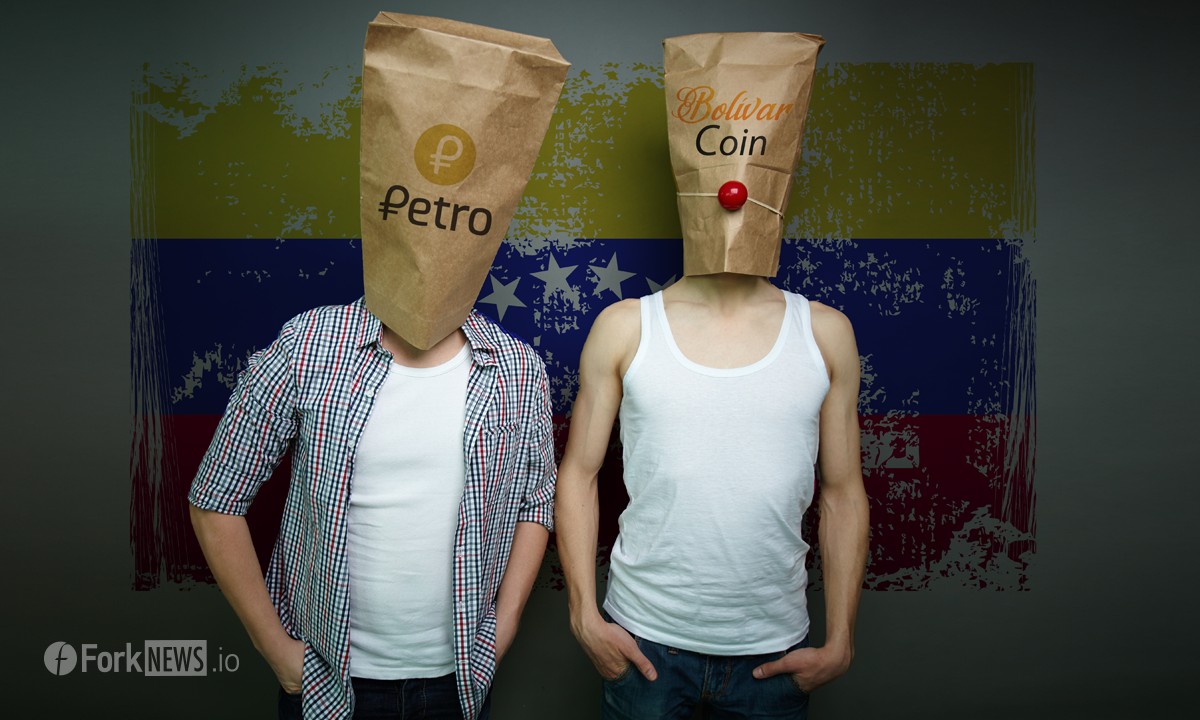
Last Thursday, Venezuelan President Nicolas Maduro raised the minimum wage in VES (sovereign bolivar) by 150% and the exchange rate for Petro, from VES 3,600 to 9,000, as the two indices are linked to each other. However, Petro has recently become mandatory for certain payments in the country, despite the increased cost.
This ill-considered step predictably led to a devaluation of the bolivar by 40%.
As a result, at the end of the week, the daily BTC trading volume on the local crypto exchange Localbitcoins exceeded $5 million. In the context of the financial crisis, many began to consider Bitcoin and other digital currencies as an alternative option for escaping poverty in Venezuela.
Even Petro, the state cryptocurrency, intended only for solving the crisis, has almost the same popularity as Bitcoin.
Despite on large oil reserves, Venezuela has had to deal with an increasingly severe economic decline, primarily due to collapsing crude oil prices. Thus, the crisis in Venezuela has generated an unprecedented level of inflation, and expert forecasts say that it could reach 1600%.
Inflation is obviously picking up pace and is accompanied by a depreciation of thebolivar: the 100 VES banknote now costs 2 cents. The crisis in Venezuela has rendered the bolivar a useless currency, which is why Bitcoin is increasingly being used here.

You May Also Like
Bitfinex will not list Venezuelan El Petro
Bitfinex, the largest cryptocurrency exchange, issued a statement banning transactions with Venezuela's Petro, the world's first national cryptocurrency. The exchange views Petro as an attempt to circumvent US economic sanctions against the Venezuelan government.
Central banks of 15 countries are ready to support the development of cryptocurrencies
A report published by the International Monetary Fund found that 15 different countries are considering joining the global fintech trend and adopting digital currencies as a payment method. In its report, the IMF identified two main reasons why they might make such a decision.
