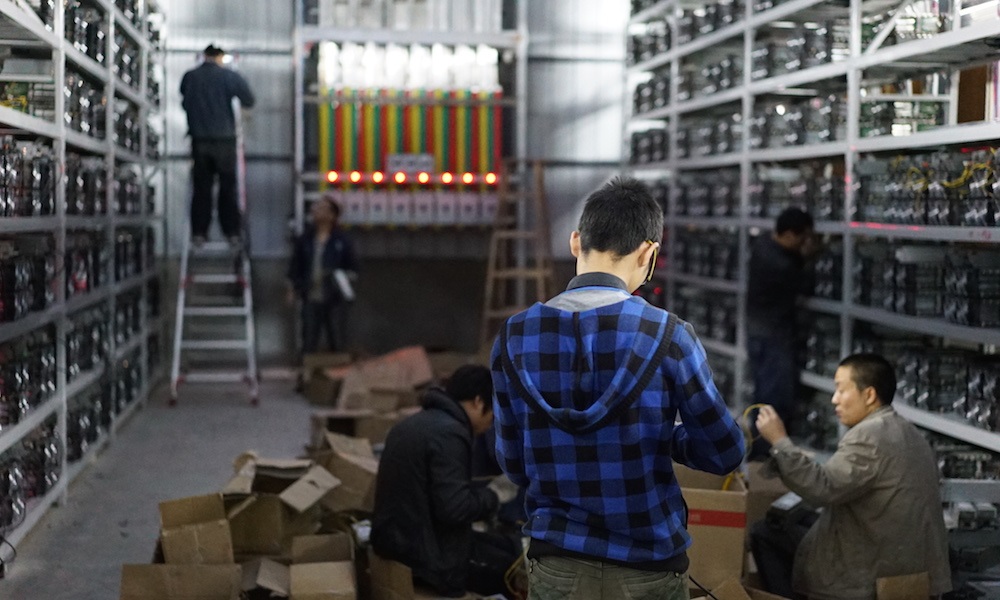
Despite all the restrictions on the use of cryptocurrency in China, mining is quite a popular phenomenon in this country due to the low cost of electricity.
Last year, the country's government banned initial coin offerings, prompting the closure of China's cryptocurrency exchanges.
This week, the government released a plan containing proposals to curb the growth of the country's mining industry. Despite all the steps taken by the Chinese government, Chinese miners are not even thinking of giving up. According to the news portal Bloomberg, Chinese miners will make good profits even if the price of Bitcoin falls to $7,000.
China has long been an ideal place for miners due to the oversupply of electricity in the Chinese market, as a result of which the price for it is very low. Most miners operate in remote areas of China without registering a legal entity. They take advantage of cheap electricity in regions where there are many coal or hydroelectric power plants. Some miners, in order to save money, buy electricity from the manufacturer, thereby violating Chinese law, which obliges consumers to buy electricity directly only from power grid operators.
According to analyst Sophie Lu, mining will always be profitable in China: “Taking into account the current price of Bitcoin, I can say that no matter the Chinese government’s pricing policy for electricity, the mining industry will always be profitable in this country.”
According to https://cointelegraph.com

You May Also Like
Central banks of 15 countries are ready to support the development of cryptocurrencies
A report published by the International Monetary Fund found that 15 different countries are considering joining the global fintech trend and adopting digital currencies as a payment method. In its report, the IMF identified two main reasons why they might make such a decision.
Belgium's financial regulator added 14 trading platforms to its list of suspected scams
The Financial Services and Markets Authority (FSMA) has added 14 new cryptocurrency platforms to its list of platforms believed to be fraudulent. The list of suspects now consists of 113 websites.
