
In their analytical articles, financial experts quite often operate with the concept of “Exchange Book” or “Dom of Deals”. These reviews often use terms such as “market depth”, “wall” or jargon such as “offers”, “prints”, “icebergs”. Those who are familiar with this stock exchange slang and actively apply it in practice can move on to our next news article. This publication is addressed to those who have come across these concepts, but still have not found t...
he time to understand them
There is quite a lot of information on the Internet related to the explanation of what “Market Book” is, however, many resources in their educational articles quite often rely on terms, the meaning of which is not always clear to the average user, and themselves require explanation. It is possible that this drawback will affect our article, but we will try to detail only the terminology that is key in this context.
Exchange order book is a list of limit orders registered on the exchange, presented in the form of a table. The upper part of the table contains sell orders, as a rule, they are colored red, they are called "asks" (English Ask - demand), and in the lower part buy orders are sorted, highlighted in green, they are called "bids" (English Bid - offer). Bids and asks are called “offers” (English Offers - price offer). The difference between the best ask and bid is called the spread.
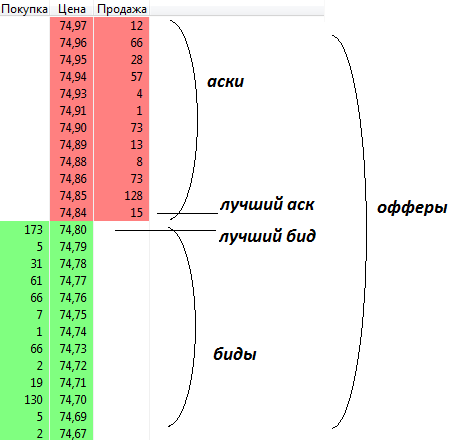
The number of positions for the best asks and bids that are displayed in the order book is called the “depth of the order book”. Sometimes the order book is presented in the form where the asks and bids are located next to each other.
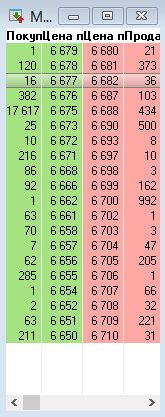
The appearance of the order book depends on the software that the trader uses to analyze price dynamics and trade on the stock exchange.
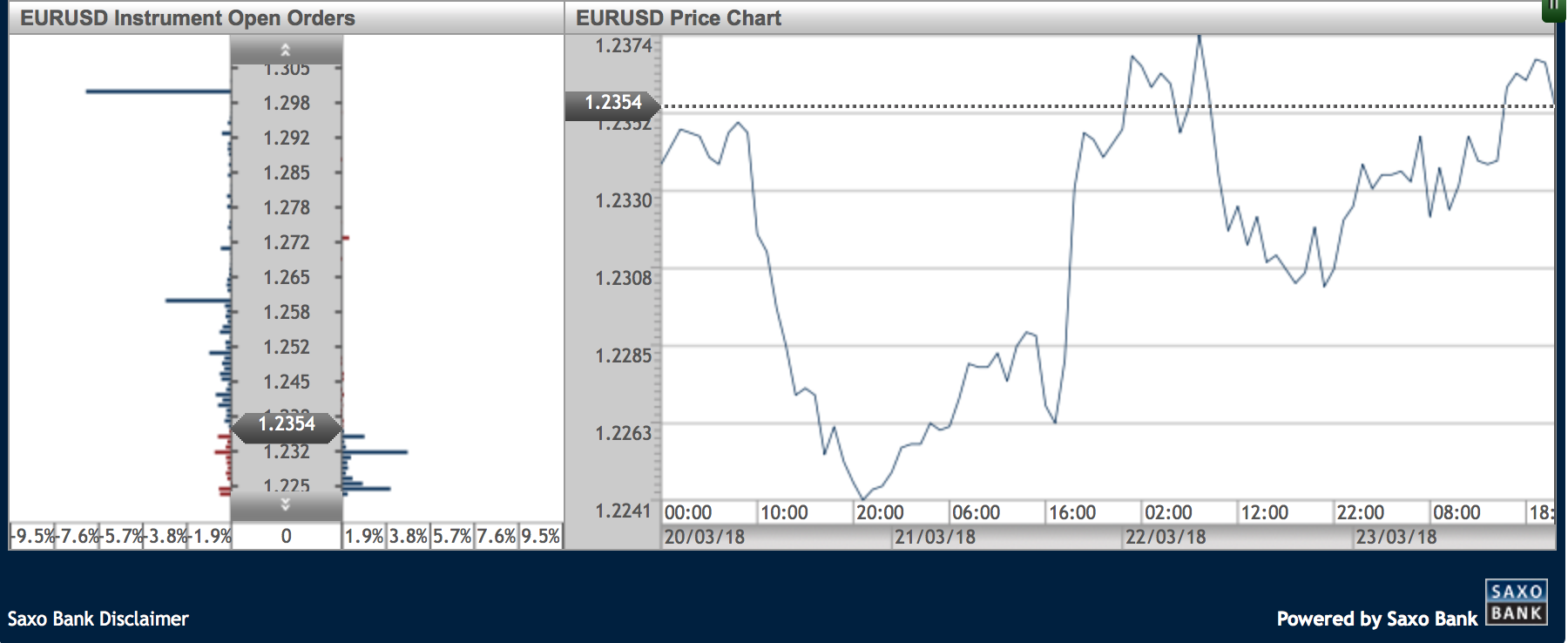
Sometimes, for ease of perception, digital information about volumes are presented in graphical form, as a histogram. This is how, for example, the order book from SAXO BANK looks like
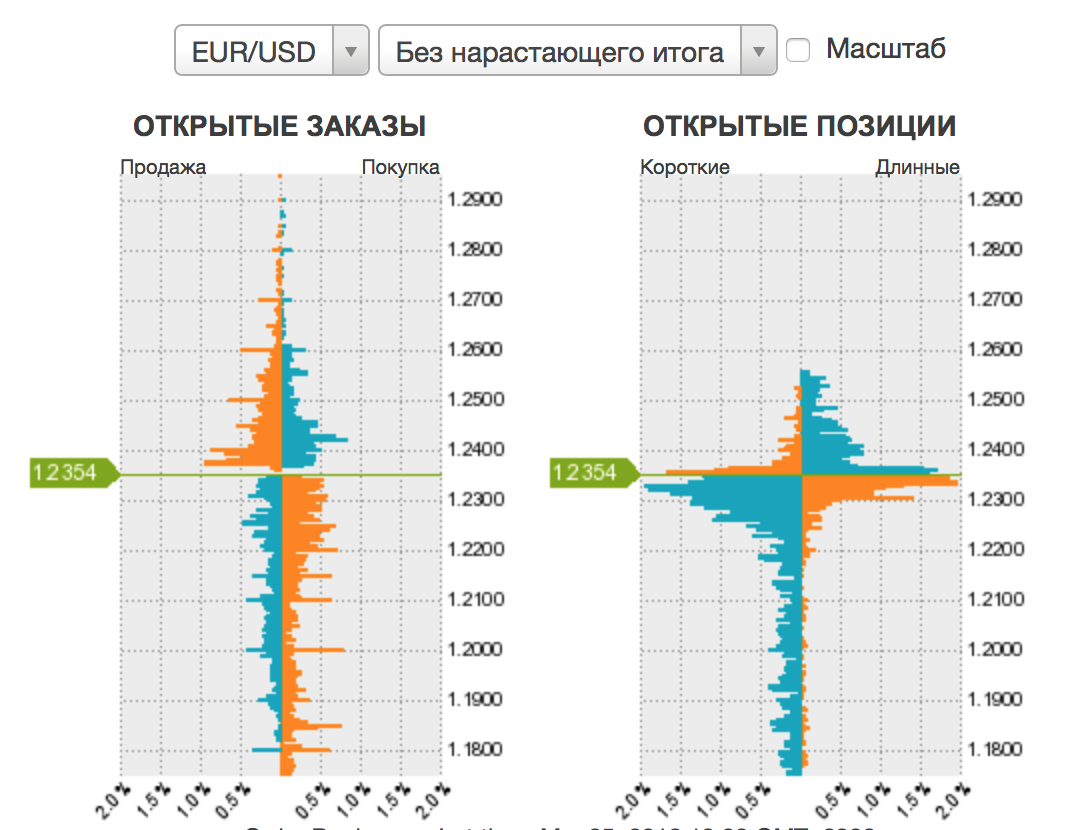
And this in the form of a glass, on the left, shows the ratio of asks and bids, and on the right of short and long positions.
Orders can be:
- market;
- limited (limit);
- in the form of a conditional order (stop order).
Market order is an order that is placed at the price at the current time. Such an order is executed instantly at the best price for the trader that exists at the moment.
A limit order is an order to buy or sell a specified volume of an asset, issued at a fixed price. Information about such an order is instantly sent to the exchange server and ends up in the order book... Such an order is executed in order of priority, only after the price reaches the specified level.
If the price in a limit order exceeds the market price, then such an order is executed instantly, not at the specified price, but at the best one, like the market price. The peculiarity of limit orders is that they may not be executed during a given trading session.
A conditional order is an application to execute an order under certain conditions. Once the specified event has occurred (the condition is met), then depending on the price, the conditional order turns into a market or limit order.
It is necessary to take into account that orders from different traders with the same price are aggregated in one record of the exchange book and are executed according to the FIFO (First input-first output) rule; the first order received will be executed first.
Transaction feed - this is a table that displays all executed orders indicating the specific time when they were made. Purchases are highlighted in green, and sales are highlighted in red.
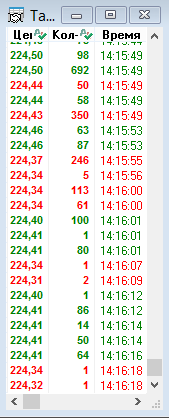
Print is an entry in the feed that contains information about how much of an asset was sold/bought at a specific price at the appropriate point in time.
Analysis of the feed helps assess the activity of exchange trading for the asset of interest to us. Based on the number of executed orders in one direction, we can conclude about the prevailing mood in the market. In real time, you can get a picture of the impact of news on the reaction of market participants.
Domware and Tape are effective analysis tools for trading. But they are not universal. They are indispensable for intraday trading on the market and are not very informative for medium- and long-term investments.

You May Also Like
Depth of Depth as an analysis tool - 2 (continued)
Based on the order book, you can classify the players currently present on the market. Analysis of their actions will help you make the right forecast and choose your own behavior strategy.
How altcoins followed Bitcoin
Many of you have long noticed how strongly the prices of altcoins correlate with the dynamics of the BTC/USD cryptocurrency pair. Today we are looking into the reasons for such a strong “family connection”
