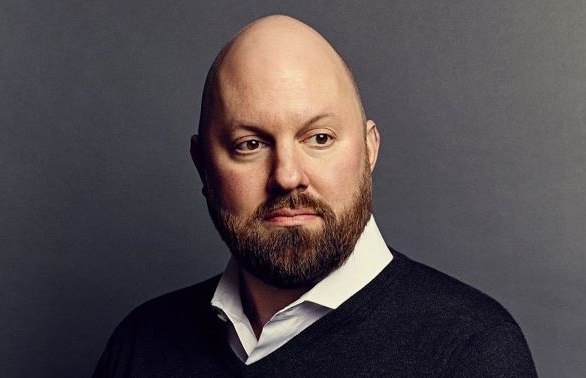
This is not to say that the topic of Bitcoin is not covered now, but the gap between what the media and the mass of ordinary people think about Bitcoin, and what a huge number of technologists think about Bitcoin, remains huge. In this article, I'll explain why Bitcoin is of so much interest to so many Silicon Valley programmers and entrepreneurs, and what I think the future holds for it.
( Warning: We draw the attention of readers that the author of the article does not share the concepts of blockchain and Bitcoin. Please make allowances for the fact that the article was written when blockchain technology was just beginning to gain momentum as an independent tool)
A mysterious new technology appears, seemingly out of nowhere, but in fact it is the result of 20 years of work by unknown people researchers.
Political idealists see in it freedom and revolution. The elite treat it with contempt and disdain, but the technologists are completely fascinated by it, see its potential, spend all their free time on it and spend all their nights understanding it.
Then new products, companies and industries appear to commercialize it. Its influence becomes more and more significant, and later many wonder why its capabilities were not obvious to them from the very beginning.
What technology are we talking about? Personal computers in 1975, the Internet in 1993, and Bitcoin in 2014.
First, Bitcoin is a fundamental breakthrough in computer science that is based on 20 years of cryptographic currency research and 40 years of cryptography research by thousands of researchers around the world.
Bitcoin is the first practical solution to a long-standing unsolved problem, called"The Problem of the Byzantine Generals". Quote from the original source defining B.G.P. (English: Byzantine Generals Problem): "[Imagine] that a group of Byzantine army generals are camped with their troops around an enemy city. Through available means of communication, the generals must agree on a general battle plan. However, one or more generals may be traitors who will try to confuse the others. The problem is to find a way to exchange information in such a way that the loyal generals come to a common decision."
In other words, B.G.P. poses the question of how to achieve trust between otherwise unrelated parties by transmitting information over an unreliable communication channel such as the Internet..
The practical result of solving this problem is that Bitcoin for the first time provides the ability to transfer from one Internet user to another a unique unit of digital property, guaranteeing the security of such a transfer, confirmation of its implementation and the undeniable legality of such a transfer. The consequences of such a breakthrough are difficult to overestimate.
What types of digital property can be transferred in this way? For example, digital signatures, digital contracts, access keys, digital ownership of any physical assets such as cars and houses, digital stocks and bonds... and digital money.
All this is transmitted through a secure distributed network that does not require an intermediary, such as a bank or broker. At the same time, only the owner of the asset can transfer it, only the intended recipient can receive it, the asset can only exist in one place at the same time, and anyone can at any time confirm ownership of all assets or any transaction that concerns them.
How does it work?
Bitcoin is a currency that is created and works only on the Internet. You fill your Bitcoin wallet by buying any number of slots with cash or selling goods and services with Bitcoin. You empty your Bitcoin wallet by selling Bitcoin to someone else who wants to fund their Bitcoin wallet. Anyone in the world can buy or sell through a Bitcoin wallet at any time convenient for them, without any permissions required. Bitcoin "coins" are simply slots in a Bitcoin wallet, like slots on a stock exchange, only more applicable to real-world transactions.
Bitcoin is a digital bearer instrument. This is a way of exchanging money or assets between parties without pre-existing trust: a string of numbers is sent via email or text message. The sender does not need to know or trust the recipient and vice versa. There are also no chargebacks, just like with cash, if you have it, you make the payment, if not, then no..
Bitcoin is a digital currency whose value is based on two things: the use of the payment system today, the volume and speed of payments passing through the wallet, and assumptions about the future use of that payment system. This is exactly what people don’t understand. The uncertain value of the Bitcoin currency means that people can use it, or rather people can use the Bitcoin currency and therefore it has a certain value.
At the moment, it is possible that the value of Bitcoin is based more on speculation than on actual payment quantities, but it is equally true that this speculation sets the price for the currency high enough to make payments in it actually possible. Bitcoin must have some value before it can collect any amount of real payments. The problem with new technologies is the same as with the question “which came first, the chicken or the egg”: new technology is not worth much until it is worth much. And so the fact that Bitcoin has risen in value, in part due to speculation, means that its usefulness is being realized more quickly than it otherwise would have been.
Critics of Bitcoin point to Bitcoin's limited use by everyday consumers and merchants, but the same criticism has been leveled against the PC and Internet. Every day, more and more consumers and merchants are using Bitcoin around the world. Their total number is insignificant, but it is growing rapidly. The ease of use of Bitcoin by all participants is increasing as Bitcoin tools and technologies improve all the time. Remember how difficult it once was to connect to the Internet; it is no longer so.
The objection that merchants will not accept Bitcoin because of its volatility is also incorrect. Bitcoin can be fully used as a payment system; sellers do not have to own Bitcoin or suffer from the volatility of its exchange rate. Any buyer or seller can use Bitcoin or any other currency at their discretion.
Why would any seller or online seller accept Bitcoin as payment if not many buyers are able to pay with it? My partner Chris Dixon recently gave this example:
"Let's say you sell electronics online.. Your margin is less than 5 percent, which means your 2.5 percent fee is half your margin. This money can be invested in a business, lowering the cost of goods for consumers, or paying taxes. The worst thing you can do with them is pay their bank. Another problem that merchants face is international payments. If you're wondering why your favorite product or service isn't available in your country, it's probably a payment issue."
Bitcoin is also attractive to merchants because it eliminates the risk of credit card fraud. This type of fraud is so motivating for scammers that they go to great lengths to steal customers' identities and credit card numbers.
Because Bitcoin is a digital bearer instrument, the recipient of the payment does not receive any information from the sender that could be used to steal money from the sender in the future, either by the same merchant, or by a criminal who steals this information from the merchant.
Credit card fraud is now such a huge problem for merchants, processing companies and banks that their fraud detection systems are set up to immediately stall transactions that look even slightly suspicious. The result is not only an inconvenience for consumers, but many online merchants are forced to refuse 5 to 10 percent of incoming orders - out of the blue. If customers paid in Bitcoin, such fraud would be impossible, and sellers could increase their sales without fear of being defrauded. Since these are already incoming orders, they provide the largest profit to the seller, and the overall profitability of the business of Bitcoin merchants increases dramatically.
Bitcoin payment protection from fraud would also be useful in the physical world of retail stores and their customers. For example, with Bitcoin, the massive leak of personal data of 70 million consumers would not be possible. just happened at the Target department store chain. Here's how it would work in the "real world":
You fill your cart with groceries and go to the checkout counter, just like you do now... But instead of handing the cashier your credit card to pay, you take out your smartphone and point the camera at the QR code displayed on the cash register. The QR code contains all the payment information, including the amount. All you have to do is press the “Confirm” button on your phone, that’s it – the payment is completed! In addition, in the future, your wallet will automatically convert your dollars into Bitcoin if you do not yet have Bitcoin.
The management of the department store receives digital currency, which they can immediately convert into dollars if desired. You're happy because you didn't give the department store any personal information that could be stolen by hackers. Only the criminals are dissatisfied. (Well, perhaps the criminals are still happy: they can try to steal money through the poorly protected computer systems of merchants. But even if they succeed, consumers do not risk suffering losses, fraud or identity theft)
Finally, I would like to argue with the assertion that Bitcoin is only a means for the “bad guys”, criminals and terrorists who strive to transfer money anonymously and with impunity. This is a myth, fueled largely by sensationalistic journalists and a poor understanding of technology. Like other things such as email, Bitcoin is pseudonymous rather than anonymous. Moreover, every Bitcoin transaction is forever recorded in a public ledger (blockchain). As a result, Bitcoin transactions are much easier for law enforcement to track than cash, gold, or diamonds.
What is the future of Bitcoin?
Bitcoin is a classic example of a positive feedback network effect. The more people using Bitcoin, the more valuable Bitcoin is to everyone who uses it, and the greater the incentive for the next user to join the technology. The exact same effect is observed in the telephone system, the Internet, and popular mass services such as eBay and Facebook.
In fact, this effect should be even stronger for Bitcoin, since it is four-way. There are four categories of participants, each of which increases the use of Bitcoin simply as a result of beneficial behavior for themselves.. These categories are (1) consumers who pay in Bitcoin, (2) merchants who accept Bitcoin, (3) "miners" who secure the network and process payments, and (4) developers and entrepreneurs who build new products and services on top of the Bitcoin protocol.
All four types of network effects play an important role in increasing the value of the system as a whole, but the fourth is especially important.
Across Silicon Valley and around the world, many thousands of programmers are now using Bitcoin as a building block for a huge number of new products and services, realizing ideas that were simply not possible before. At our venture capital firm Andreessen Horowitz, we see a rapidly growing number of outstanding entrepreneurs—with highly respected track records in the financial industry—who are right now building, or about to build, companies that take advantage of the Bitcoin protocol.
For this reason alone, new Bitcoin challengers are fighting an impossible battle. To displace Bitcoin now, a new type of digital money will have to offer very significant technical improvements and do it very quickly. Otherwise, the growing network effect will doom Bitcoin to its long-term dominance in this space.
One obvious and huge application for Bitcoin-based innovation is international money transfers. Every day, hundreds of millions of low-income people work in harsh conditions abroad to earn money they can send back to their families back home—more than $400 billion annually, according to the World Bank. Every day, banks and payment companies charge crazy fees, up to 10 percent and even higher, to send this money.
Moving these transactions to Bitcoin, which involves no or low fees, will provide a significant improvement in the quality of life of migrant workers and their families. It's hard to think of anything else with a faster and more positive impact on so many people in the world's poorest countries.
In addition, Bitcoin could become a powerful force that attracts many more people around the world into the modern economic system.. Only about 20 countries around the world have fully modern banking and payment systems, and the remaining 175 still have a long way to go. Therefore, people in many countries are deprived of products and services that we in the West take for granted. Even Netflix, an entirely virtual service, is only available in 40 countries. Bitcoin, as a global payment system that can be used by anyone, can be a powerful catalyst for extending the benefits of the modern economic system to virtually the entire population of the planet.
A third exciting use case for Bitcoin is micropayments, or ultra-small payments. Micropayments have never been possible, despite 20 years of attempts, because they are not cost-effective (meaning $1 and below, down to cents or fractions of cents) through existing credit/debit and banking systems. The payment structure of these systems makes such payments unviable.
And suddenly, with Bitcoin, everything becomes very simple. Bitcoin has the neat property of being infinitely divisible: up to eight decimal places now, but even more in the future. This way, you can specify as small an amount of money as you want, down to a thousandth of a cent, and send it anywhere in the world for free or almost free.
Think about content monetization, for example. The reason media businesses like newspapers have to charge for content is because they have to charge for everything at once (pay the price for all the content) or not ask at all (which we owe to the dreaded Internet banners). Bitcoin makes it economically viable to pay arbitrarily small amounts of money for an article, a section or hour of use, a video or archive access, or a news alert.
Finally, a fourth interesting area of use is public payments. I first read about this idea in an article a few months ago. A random spectator during a sports broadcast stood with a poster with a QR code on which was written “Send me Bitcoin!” He received $25,000 in Bitcoin in the first 24 hours, all from people he had never met before.. This was the first time in history that you could see someone with a sign, in person, on TV or in a photo, and then you could send them money with two clicks on your smartphone: scan the QR code on the sign and confirm the money was sent.
Think about the implications for protest movements. Today, protesters want to be on television so that people know about their motivation. Tomorrow they will want to get there because this way they can collect money just by holding signs in their hands that will allow sympathetic people anywhere in the world to immediately send them money. Bitcoin is the fintech dream come true of even the most seasoned anti-capitalist politicians.
There will be a lot of buzz around this new technology in the coming years.
For example, some prominent economists are quite skeptical about Bitcoin, although Ben S. Bernanke, the former chairman of the Federal Reserve, recently wrote that digital currencies like Bitcoin “could last quite a long time, especially if they promote faster, safer and more efficient making payments." In 1999, legendary economist Milton Friedman said, "The one thing we're missing that will soon be developed is reliable electronic money, a method by which funds can be transferred from A to B on the Internet even if A and B are strangers - a method by which I can take $20 and give it to you and you will receive it without even knowing who I am."
Economists who attack Bitcoin today may be right, but I agree with Ben and Milton.
Other than that, there is no need to harmonize regulatory and other issues, since the regulatory frameworks governing banks and payments in countries around the world did not expect the emergence of a technology like Bitcoin.
I hope I have shown you what a great future lies ahead for Bitcoin. This is not your average libertarian fairy tale or Silicon Valley bubble. Bitcoin offers a radical opportunity to reimagine how the financial system can and should work in the Internet age, catalyzing change that benefits everyone equally.
01/21/2014
By Marc Andreessen
Editor's Note:
Marc Andreessenborn July 9, 1971 in Cedar Falls, Iowa, USA.. American engineer, investor and entrepreneur.
Played a key role in the creation of the NCSA Mosaic browser, became one of the co-founders of Netscape Communications Corporation. Marc Andreessen's venture fund, Andreessen Horowitz, has invested approximately $50 million in Bitcoin startups. The company is actively looking for new investment opportunities in Bitcoin, but Mark does not personally own a significant amount of cryptocurrency.
According to https://dealbook.nytimes.com

You May Also Like
How much can a novice investor earn from trading? Part fourteen. Trading (continued)
We continue the series of publications about trading in order to understand in practice how much a novice investor can earn using only the forecasts published on our website. To understand how useful they are, we decided to conduct an experiment and simulate a situation in which a person who only knows about trading that he needs to “buy cheaper and sell more expensive” tries to earn additional income in his free time from work by investing part of his funds in cryptocurrency trading
Three Ways to Avoid Losing Your Cryptocurrency Assets
Investing in cryptocurrency is very tempting, you can hope to hit the jackpot sooner or later. However, investors should remember that it is not enough to simply buy cryptocurrency and store it in a wallet. There is a high chance of losing everything if you don't store it properly. The main advice is to learn from other people's mistakes.
