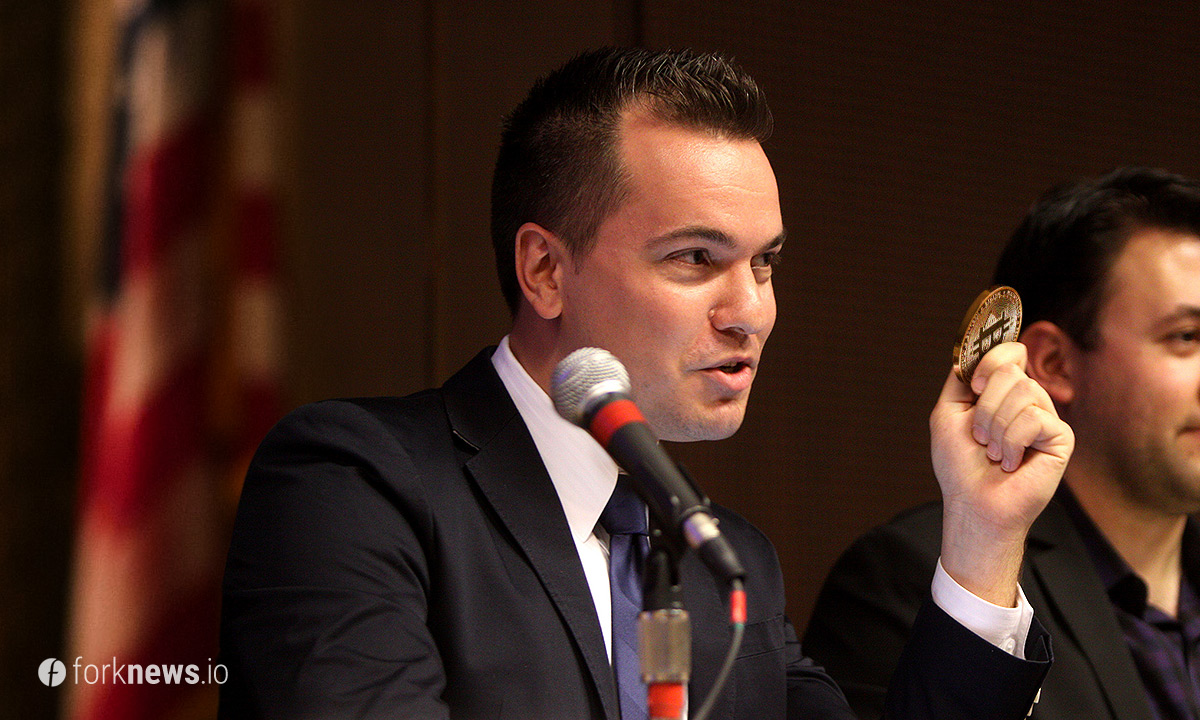
Republican Austin Petersen, a big supporter of cryptocurrency, prefers to receive donations in bitcoin for his election campaign, but cannot use them.
Austin Petersen, a Republican hoping to unseat incumbent Missouri Sen. Claire McCeskill, received a $130,276 (~20 BTC) bitcoin donation from a supporter during his campaign in November, but was forced to return it because Federal Election Commission (FEC) rules cap individual contributions at $5,400 per year.
Petersen, dark horse of the Republican Party, advised Virtue to create a political action committee, an organization that can donate unlimited funds to promote candidates as long as it files reports with the election watchdog and does not directly interact with a political campaign. According to CCN, Pietersen began accepting bitcoin donations last year through the cryptocurrency donation platform BitPay. In his interview with CCN, he said that cryptocurrency “represents the future of creativity and freedom in America.”
Notably, this was not the first time Pietersen was forced to return a large donation. His campaign twice rejected approximately $250,000 in donations for exceeding the FEC's limit on individual campaign contributions.
In February, Petersen accepted the largest bitcoin donation in federal election history—0.284 BTC, which was valued at $4,500, or $900 below the limit.
According to https://www.ccn.com

You May Also Like
The Conference.NFT Kyiv - the first Ukrainian NFT event
NFT or “non-fungible token” took over the cryptocurrency and art markets back in 2020, causing genuine surprise in the new digital world and leaving collectors and investors with their mouths open.
Chinese police arrested hackers who stole cryptocurrency
According to Xinhua, China's state-run newspaper, Chinese police have arrested three people suspected of stealing $87 million worth of Bitcoin and other cryptocurrencies.
