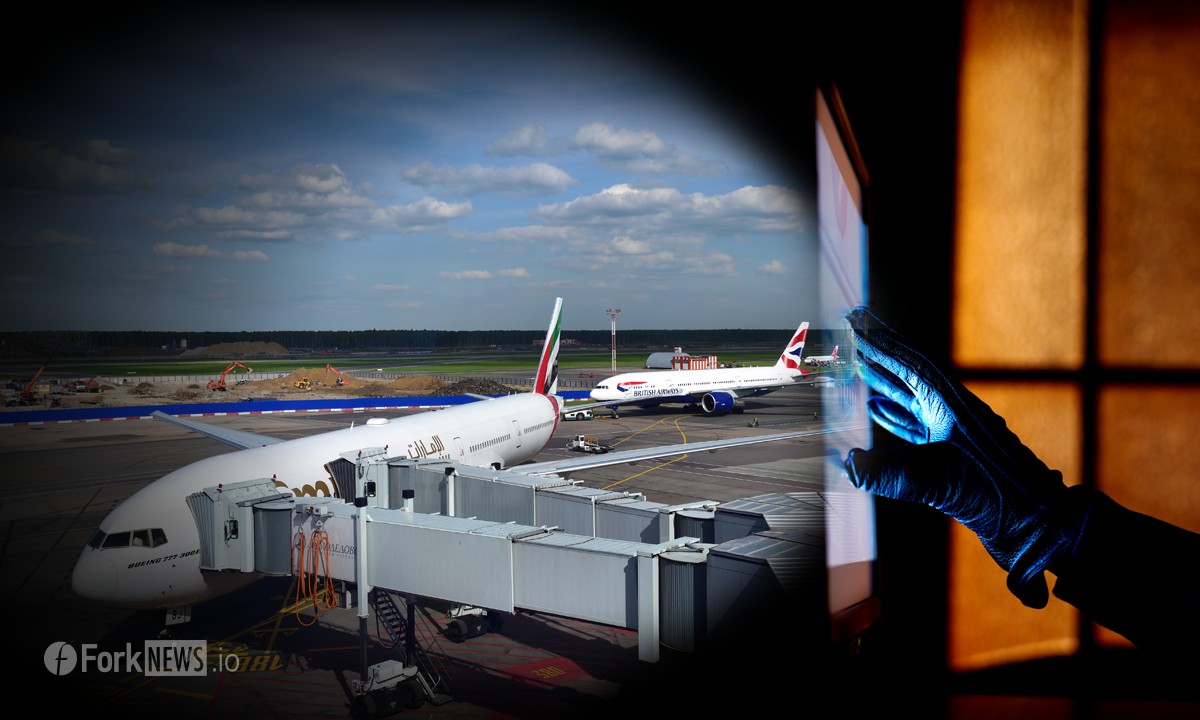
Bitcoin blackmailers threatened Domodedovo Airport to hack the system if several hundred coins were not transferred to them. The airport press service confirmed receiving an anonymous threat.
Hackers chose the Moscow airport as their target and demanded a ransom in Bitcoin. Cybercriminals focused on their technical capabilities to remotely disable airport navigation systems and threatened to use them if they did not receive a ransom. It is known that the criminals put forward their demands in an anonymous email sent to the airport contact center.
However, according to the general director of the R-Techno intelligence technology agency, such threats are a bluff of extortionists. The level of protection at Domodedovo and other airports in the country is quite high. Here we are talking more about psychological pressure than about a real technical threat. However, such demands and extortion of digital money are becoming increasingly popular. This is a definite challenge to the law enforcement system, which actually cannot figure out the real recipient of the cryptocurrency.
Despite the unlikely reality of the threat, the airport administration applied standard procedure and strengthened security measures in the terminals and on the airfield. The airport's press service emphasized that there is no threat to passengers and the airport continues to operate as normal. And in case of such situations, preventive measures are provided to ensure security.
It should be noted that this was a good choice of currency for ransom for security against the backdrop of rising prices of crypto assets.
Given the upward trend of Bitcoin and its price approaching the $9,000 mark, just a few hundred Bitcoins turn blackmailers into millionaires. In addition, the recipient is almost difficult to identify, which makes cryptocurrency beneficial for blackmail. Similar demands are increasingly coming from blackmailers.
Recall that in April of this year, cybercriminals blocked the website Ministry of Energy and Coal Industry of Ukraine, demanding a ransom of 0.1 bitcoin, which was approximately 900 dollars.

You May Also Like
Turkish police arrest suspects in attacks on Bitcoin wallets
The Turkish National Police's anti-cybercrime department has detained eleven people suspected of stealing bitcoins worth more than $80,000, local media reported.
The Sandbox hackathon Maff Metaverse will take place May 20-27
On May 20–27, an online hackathon will be held dedicated to the development of art objects in the promising metaverse The Sandbox, which is included in the TOP 100 most influential companies in the world.
