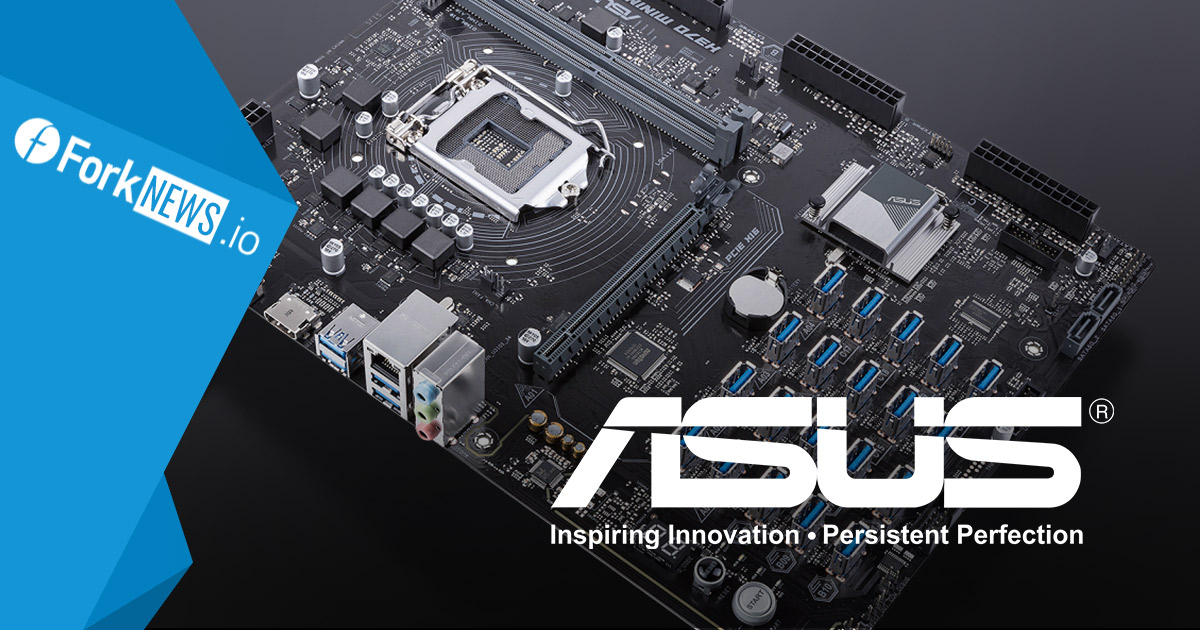
Mining hardware is either hardware used (inefficiently) for complex calculations, or specially designed expensive boards that can be used to mine Bitcoin and other cryptocurrencies. Asus offers, in their opinion, the optimal solution.
The H370 Mining Master is a basic motherboard that supports 20 GPUs, boards used for Ethereum and other less resource-intensive forms of cryptocurrencies. The processors are connected via PCIe-over-USB, and each port is individually monitored and managed by built-in diagnostics. This helps ensure that each GPU is working correctly and fully connected.
Less time maintaining your machine means more time mining, which is why the H370 Mining Master includes a suite of diagnostic features designed to make managing your platform easier. The main function is GPU health detection, which scans the system at boot and indicates whether each riser port is empty, connected to a functional GPU, or experiencing difficulty. The updated graphical user interface clearly identifies the location and status of each port along with an alphanumeric code that identifies it. On-board diagnostics are complemented by individual debug LEDs that light up when there are problems with certain system components, such as the processor or memory.
The boards also have a number of cryptocurrency tools that are enabled by default.
The board will be released in the third quarter of 2018 and will cost several hundred dollars - much less than the typical costs associated with custom hardware. Now you just need to connect all these GPUs to get the mining hardware working.
According to techcrunch

You May Also Like
Mining is now controlled by big players
Bitcoin mining revenues in the first six months of 2018 have already surpassed those of 2017, but the miners themselves are making little profit. This is reported in the weekly crypto report Diar.
Innosilicon's new Bitcoin miner is powerful, but GMO's B3 remains the best
Bitcoin mining is a very competitive industry. It has been developing exponentially over the past few years. Within nine months, many new members were added to the group of mining equipment companies such as GMO Group, Halong Mining and Ebang.
