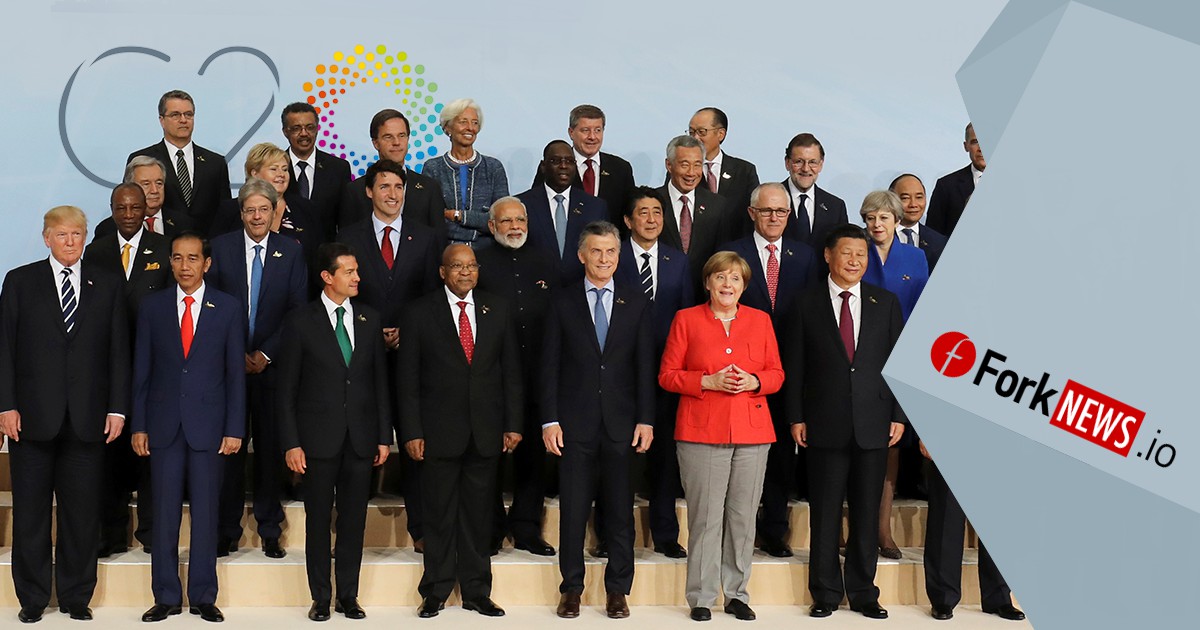
The position of cryptocurrencies weakened sharply in one day when Google announced its decision to ban advertising of cryptocurrencies and everything related to them on their sites. This has increased the community's excitement ahead of the upcoming G20 summit.
Following its biggest rival in ad sales, Facebook, Google will ban ads promoting cryptocurrencies, initial coin offerings and “other speculative financial instruments” starting in June.
But even more excitement in the community was caused by insider news from Bloomberg regarding the G20. According to information, next week in Buenos Aires ministers are going to voice their concerns about the security of the cryptocurrency market.
Central banks neglect cryptocurrencies. Firstly, cryptocurrencies are the exact opposite of what central banks do - regulation. Secondly, banks are concerned about the weak security system of cryptocurrencies. In January 2018, $500 million in cryptocurrency was reported stolen from the Japanese exchange Coincheck, and the decentralized nature of digital currencies only complicates investigations by authorities.
However, despite the dismissive attitude of most central banks, analysts believe that soon they will not be able to ignore the new reality so easily. In December, renowned economist and Blockchain CEO Peter Smith said banks would be collecting cryptocurrency to fund their balance sheets in 2018. Smith also added that banks will likely buy Bitcoin and Ethereum as reserves. Analysts who share this point of view are confident that it will be the G7 central banks - the United States, Canada, France, Germany, Great Britain, Italy and Japan - that will begin to buy cryptocurrency. If this happens, no doubt other central banks will follow suit.
Bitcoin's growing popularity among investors is another reason why global banks cannot continue to turn a blind eye to the digital currency. Last year, CME, the largest futures exchange, launched Bitcoin futures. Financial markets continue to embrace cryptocurrencies, and the strong recovery in the price of cryptocurrencies shows that people are supporting this new asset class.
Awareness of the benefits of regulated funds over cryptocurrencies is growing among the population.. Central banks need to take appropriate decisions to change their investment policies to manage reserves. In 2018, cryptocurrencies will not only help G-7 countries diversify their foreign reserves, but will also increase the efficiency of international transfers.

You May Also Like
Aksakov proposed regulating mining as a type of business
The head of the State Duma Committee on the Financial Market, Anatoly Aksakov, said that the government can classify mining as a type of entrepreneurship.
Binance is ready to cooperate with Russian regulators
Binance took the initiative to discuss the rules for conducting cryptocurrency transactions with the Central Bank after the publication of the regulator’s report on plans to completely ban digital currencies in Russia.
