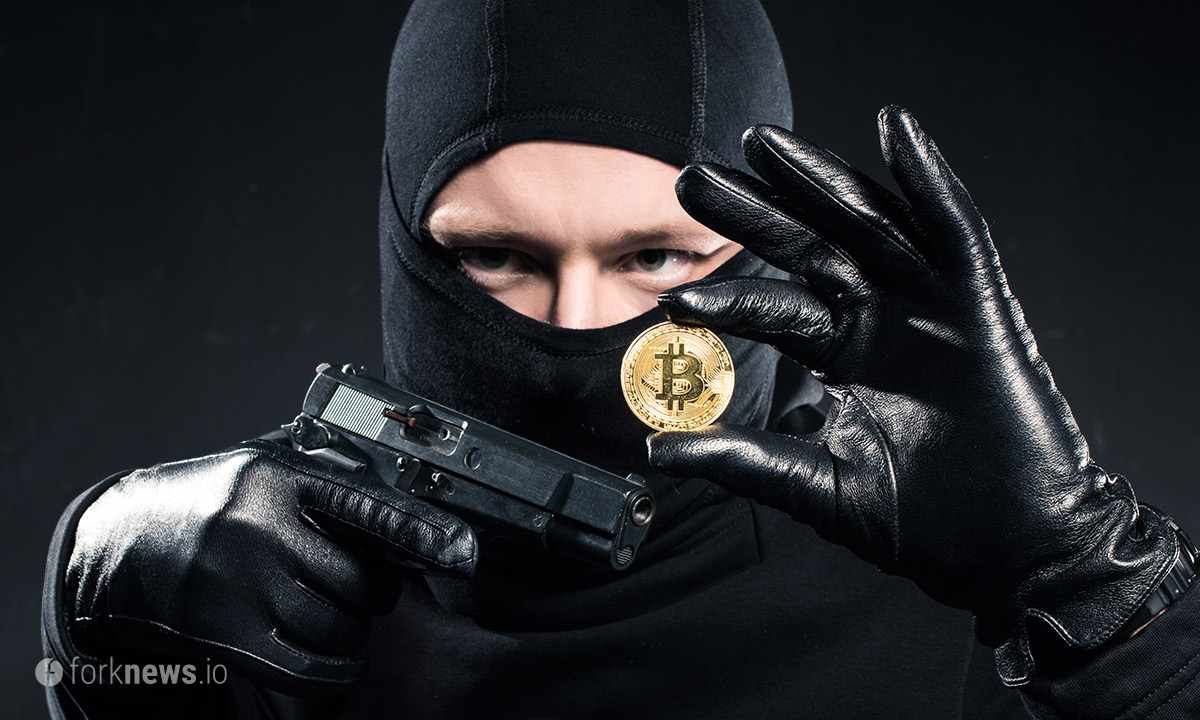
Cryptocurrency theft is common. From MtGox to DAO, cryptocurrency hacks prove the axiom: if it can be stolen, it will be stolen.
The current outbreak of cryptocurrency thefts, however, has been remarkable. Three thieves, for example, were arrested Tuesday in New York on suspicion of a $1.8 million cryptocurrency heist. The three are accused of armed robbery of the owner of an Ether cold storage wallet last November.
Darrel Colon, Alan Nunez and Luis Meza apparently kidnapped the victim to steal his money. Under false pretenses, Meza arranged a meeting with the owner of the wallet. When it was time to leave, Meza pretended to call an Uber to take the victim home. The Uber turned out to be a minibus in which Colon and Nunez were already sitting, armed with pistols. A couple of criminals demanded a flash drive with a wallet and keys to it. Colon, who allegedly pleaded guilty, told investigators that their guns were BB guns.
The victim spent two hours in a minivan with a bag over his head before he escaped, according to the report. During this time, the witness observed Meza and a fourth accomplice, Cesar Guzman, break into the victim's home, steal a black box, and use a flash drive to transfer funds to a personal account.
Although this is not the first armed robbery, Western media has highlighted the fact that not all cryptocurrency thefts occur online.
The arrest comes during an outbreak of exchanger and wallet robberies that has undoubtedly impacted the current state of the market. In April, Indian crypto exchange Coinsecure reported the theft of 438,318 bitcoins—approximately $3.5 million at the time. Last week, attackers managed to withdraw more than $35 million from the Korean exchange Coinrail. And at the end of January of this year, hackers hacked the Coincheck exchanger, and transferred $500 million in NEM cryptocurrency to personal accounts.
Jim Edwards, editor-in-chief of Business Insider UK, described the problem in simple words:
“There have been a lot of robberies of Bitcoin wallets and exchangers lately, hundreds of millions of dollars have been lost. For everyone to understand, if robbers came to banks, took that much money, and left with impunity - this would hit the headlines every day, all the media would sound the alarm, but on the Internet such robberies happen every week, and no one cares.”..
Perhaps the weak link in the cryptocurrency security chain is not the tokens themselves, but us. Kowala CEO Island Glover says, "Many exchanger heists could easily have been prevented. In the case of Japan's Coincheck, funds were irresponsibly stored in hot storage wallets connected to the Internet. The hackers only needed to obtain one private key to achieve what they wanted. The hack could have been prevented simply by using a hot wallet with multiple signatures. Alternatively, Coincheck could have stored most of the funds in cold storage wallets. This The same applies to the Bitfinex and Parity robbery. First of all, to solve security problems, we need clear regulatory frameworks to define clear rules under which exchanges must operate, as well as establish requirements for security protocols.”
According to https://www.ethnews.com

You May Also Like
Mobile trading apps are dangerous
Positive Technologies specialists, who develop software in the field of cybersecurity, conducted a study of the security of trading applications. The results were disappointing.
The “White Rabbit” threatens the anonymity of transactions on the Bitcoin network
Currently, IT fans, cyberpunks and hackers have gathered in Las Vegas to participate in two famous technical conferences: Defcon 2018 (Caesar's Palace) and Black Hat Arsenal (Mandalay Bay).
