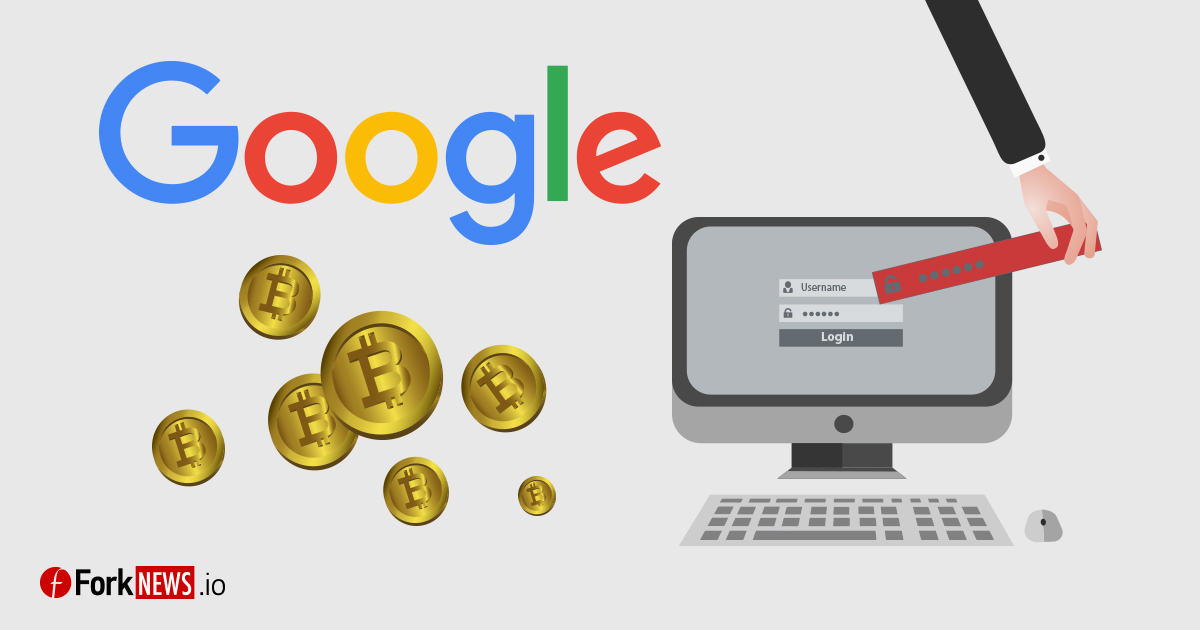
Mark Richer, director of advertising product management at Google, believes that the more information you post online about your cryptocurrency activities, the more likely you are to be subject to a phishing attack.
As Risher said at the Munich briefing dedicated to Safer Internet Day: “You are a real boon for cyber-attackers if you brag to the whole world about how much money you “raised” on Bitcoin and other cryptocurrencies. Mark said that he “directly feels that cryptocurrencies are designed to carry out phishing attacks.”
Mark began collaborating with Google in 2014, after the Internet giant acquired security company Imperium, which was once founded by Risher. Before that, he worked with Yahoo.
In addition, Mark noted that falling under a phishing attack is not a shame. If you have been fooled, you need to make this fact public as quickly as possible. It is much more dangerous to know that you are under attack and remain silent. In this case, the damage will be much greater.
Google's security system blocks more than 20 million email messages every day. Risher insists that the biggest threat to user security is phishing attacks.
At the same time, Mark added that if you take simple security steps, such as two-factor authentication, you can easily protect yourself from attack by intruders.
In fact, a long and complex password is not a guarantee of 100% protection. But this does not mean that you can choose a password by simply typing “4, 3, 2, 1”. If the password is very long, most likely the user uses it to log in to other resources. This means it is easy to attack. To guarantee your security, you must use a password manager, says Risher.
Subscribe to our news in Telegram

You May Also Like
ICO is hard to learn, easy to fight. Or how not to let yourself be deceived
ICO - Initial Coin Offering, what is hidden behind the magic of these “overseas” words that have been on everyone’s lips for quite some time? And why is the demand for investing in Blockchain startups not falling, if 90 percent of them are just a beautiful wrapper for fraudulent schemes to steal investor funds.
New day, new scam
Cryptocurrency scammers are now pretending to be John McAfee in order to steal Bitcoin and Ethereum from unsuspecting users. And here's an unexpected twist - scammers are offering a brand new Tesla Model 3 as bait for the victim.
