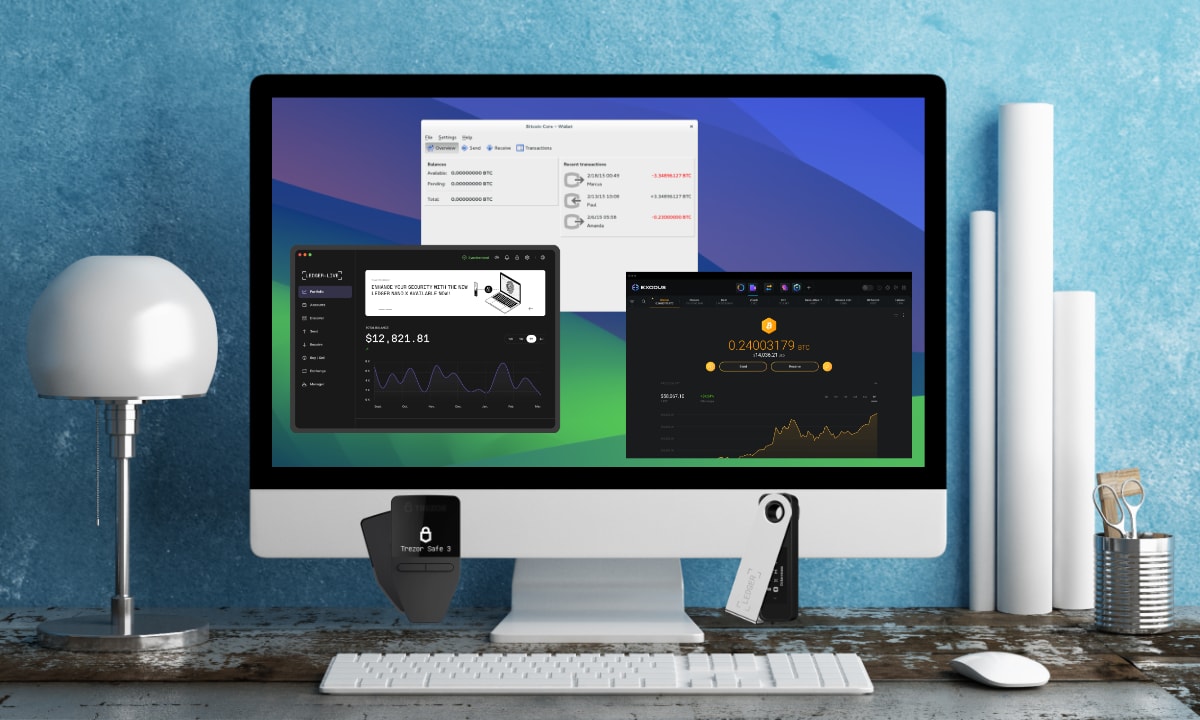
Crypto wallets play an important role in the secure storage and management of digital assets. When choosing a wallet, we suggest paying attention to a number of parameters, such as security, ease of use, and longevity on the market.
In this article, we will take a quick look at several popular crypto wallets, analyzing them according to these criteria.
Bitcoin Core(software)is the official wallet for Bitcoin, the development of which began since the launch of Bitcoin in 2009. This is one of the oldest and time-tested wallets. It provides a high level of security as users have full control over their private keys. The wallet also offers encryption and password protection features. Bitcoin Core requires downloading a complete copy of the blockchain, which can be time consuming and take up a lot of disk space. The interface is quite austere and can be difficult for beginners. Despite its reliability, Bitcoin Core is less popular among ordinary users due to its complexity and resource requirements, the presence of only one supported blockchain, but there are a number of features that only it can provide (naturally when it comes to Bitcoin).
Ledger Nano S/X(hardware):The company that released the Nano S and Nano X hardware wallets has been operating since 2014. It has established itself as a reliable manufacturer of secure hardware wallets. Ledger hardware wallets are considered one of the most secure. They store private keys in an isolated environment and support multiple authentication methods. Ledger wallets have a relatively clear interface and support a variety of cryptocurrencies. Nano X also supports Bluetooth, allowing use on mobile devices. Ledger Nano S and Nano X are among the most popular hardware wallets on the market due to their security and convenience.
Trezor(hardware), released by SatoshiLabs, hit the market in 2013 and was the first commercially available hardware wallet. Trezor offers a high level of security using encryption methods and isolated storage of private keys. The wallet also supports archiving using a passphrase seed. The Trezor interface is quite simple and user-friendly, suitable for both beginners and experienced users. The wallet supports many cryptocurrencies.. Trezor remains one of the market leaders in hardware wallets due to its reliability and convenience.
Exodus (software) was launched in 2015 and quickly gained popularity due to its user-friendly interface. The wallet gives users control over private keys and offers wallet encryption. However, unlike hardware wallets, it is less protected from physical attacks. Exodus' interface is intuitive and attractive, making it a great choice for beginners. The wallet supports over 100 cryptocurrencies and integration with hardware wallets such as Trezor. Exodus is popular among users due to its design and ease of use, especially among those new to the world of cryptocurrencies.
Trust Wallet(software)was created in 2017 and became the official wallet of Binance, one of the largest cryptocurrency exchanges. Trust Wallet provides a high level of security by giving users control over their private keys. The wallet also supports biometric authentication on mobile devices. The wallet is easy to use, supports a variety of cryptocurrencies, and offers built-in features for exchanging and staking cryptocurrencies. Thanks to Binance's support and its functionality, Trust Wallet has quickly become one of the most popular mobile wallets on the market.
Conclusion
When choosing a cryptocurrency wallet, it is important to consider your specific needs, comfort level, and technology. Wallets such as Bitcoin Core and Ledger offer high security, but may be less user-friendly for beginners due to their complexity and resource requirements. On the other hand, wallets such as Exodus and Trust Wallet offer an intuitive interface and ease of use, support for multiple currencies, but may have less security than hardware wallets in terms of protection against physical attacks and the presence of 2FA.
Regardless of your choice, it is always important to remember the security of your crypto assets and use all available measures to protect your private keys.

You May Also Like
Robinhood plans to launch a crypto wallet
Robinhood Markets announced the integration of a crypto wallet that allows you to move and store cryptocurrency.
The Handcash application will allow you to create your own payment system
The Handcash wallet team has announced plans to release an iOS version of the wallet this month. Along with the announcement, the developers announced the launch of a new PoS application called Pop.
