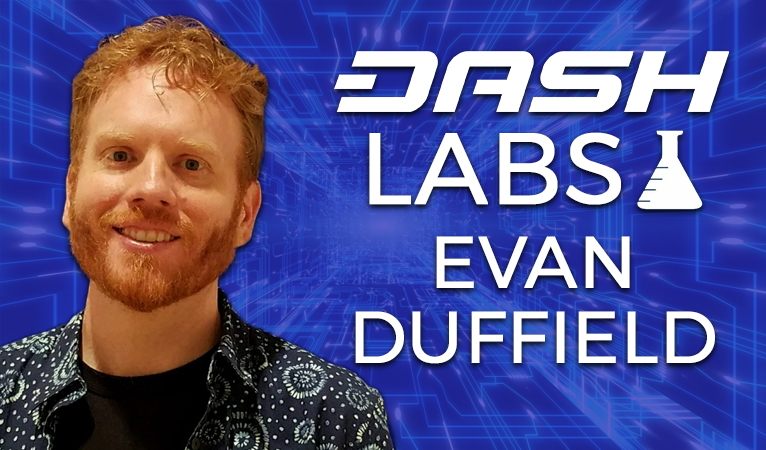
Among other altcoins, not the least popular among miners is Dash, based on the idea of absolute anonymity of e-commerce. Today, Dash ranks fifth among other cryptocurrencies.
The idea of introducing anonymity into Bitcoin came to the American programmer, software developer of iAcquire, Wells Fargo Bank and Warped AI LLC Evan Duffield back in 2012.
However, after Evan officially released ten options for the possible implementation of this idea, Bitcoin representatives refused him the opportunity to introduce the code into their system, because they wanted to leave the Bitcoin protocol unchanged. Then Duffield launched his own cryptocurrency system under the name Xcoin (later renamed Darkcoin) in January 2014.
After the implementation of several updates by the development team, Darkcoin was successfully tested in the fall of 2014 by Christophe Atlas, an internationally recognized expert in the field of cryptography. From this moment on, Evan Duffield opens the source code of his currency to the public.
Soon the developers will implement the functionality of instant transactions InstantX and carry out a total rebranding of the name - the name Dash is officially assigned to the cryptocurrency. The word Dash plays on both the concept of “digital cash” and one of the semantic meanings in English, denoting speed, swiftness, a throw.
During 2015, Dash is implementing a system of built-in decentralized voting, management and financing, which lays the foundation for the long-term development of cryptocurrency
In one of his interviews, Evan Duffield explained what he sees as the fundamental difference between Bitcoin and Dash.
"On the Bitcoin network, full nodes are run entirely by volunteers, and the Bitcoin software does not differentiate between the different nodes on the network. This is a problem because as traffic on the network increases, some of these volunteers decide that the costs have become too great and shut down their nodes. The result is that only large companies have sufficient resources to maintain the nodes - that is, there is a path towards centralization. In our case, the second layer of the Dash network (masternodes) receives a reward that allows owners of full nodes to constantly maintain its reliability. As the network grows, second-level operators will actually receive even more money, because they not only share the reward for new blocks with the miners, but will also benefit from the growth of the Dash rate... By building a project on this technology, we have opened up the possibility of instant transactions on our network, which are confirmed in 1-4 seconds. With this, we are building a new type of decentralized e-commerce." - said Evan.
To clarify, by masternodes, Evan means specialized nodes (or servers) that provide the process of mixing dash coins in the PrivateSend network, as well as the voting and confirmation process of payments.
Masternodes are managed by a community of volunteers, which does not have a single central authority. To activate each masternode used in the cryptocurrency network, a deposit is required to be paid in 1000 Dash. The work of volunteers managing masternodes is rewarded with a 45% commission taken from the miners' reward for each block found. In total, there are more than 3,000 masternodes operating today.
The operation of the Dash protocol is based on the X11 algorithm, which uses as many as eleven rounds of hashing, which have eleven different functions. The capabilities of the X11 algorithm are beneficial to users in a number of ways. The cryptocurrency is more secure from hacking than Bitcoin. Despite this, Dash mining is available to any user, even on their own computer. It is the most decentralized cryptocurrency, so all its users participate in the development of the network through a decentralized management mechanism.
But the most attractive thing for potential participants of the Dash system is PrivateSend, a function that allows you to maintain complete anonymity when making money transfers. The implementation of encryption based on PrivateSend increases the anonymity of transactions. by combining inputs from different users with the ability to organize multiple outputs. This mechanism significantly reduces the risk of direct tracking of transactions. And also the high speed of transactions, which is possible thanks to the InstantSend service. This functionality solves the problem of double spending without long waits for confirmation - the speed of transfers in Dash is from one to five seconds.
When asked whether he considers Bitcoin his competitors, Evans replied the following: “We imagine the world of altcoins as a huge testing ground with a lot of innovation... Dash, for example, has an emphasis on instant transactions, Ethereum has a specialization in smart contracts, and Bitcoin itself essentially acts as a reserve currency for all other cryptocurrencies.
Bitcoin is positioned in the same way as the US dollar, which works with other world currencies - it plays the role of a global reserve currency. That is, each cryptocurrency project can fill its own niche and provide some functionality that did not exist before, thereby creating new jobs and a thriving economy.
As such, we do not consider the Dash project to be a competitor to Bitcoin and think that we can coexist in harmony. If Dash becomes popular, then we will be able to take on the increased load that impacts the Bitcoin blockchain, serving most of the small transactions. This could give the Bitcoin project much-needed time to find a better solution to the network's declining number of full nodes. This problem has been going on for a long time, as a result of which the operation of the network is increasingly provided by centralized companies, which are gaining increased importance in the Bitcoin system."
In turn, we cannot help but note that Dash has one undeniable advantage over Bitcoin, namely the absence of the absolutely insane volatility of the latter.
Dash is showing slow but steady growth, which undoubtedly causes more confidence in this cryptocurrency. Since the beginning of the year, this the fork has approximately doubled. Its price on the day of publication of the article is $910 per coin, and the total capitalization has exceeded $7 billion.
Dash made its undoubted breakthrough after Apple officially allowed the use of this crypt in its App Store. After this news, the ratings of this fork rose from seventh to fifth place in just a few hours.
According to Ryan Taylor, CEO of Dash, Apple's decision to accept the altcoin demonstrates recognition of the growing demand and importance of this cryptocurrency. At the same time, he believes that this step was not easy for Apple, since the company always cares about the safety of users and ensures only reputable projects have access to its ecosystem.
According to https://bits.media

You May Also Like
Stellar Activity - blatant scam
Stellar Guard decided to start a series of publications analyzing and exposing fraudulent schemes. The first such material is dedicated to the Stellar Activity hard fork, which was scheduled for December 9, but never took place.
SQUID increased again by 2280%
The SQUID token grew by 2280%, despite a broken website and a scam warning.
