
Doctors around the world have rather mixed feelings about electronic health records (EHRs). On the one hand, doctors understand that they are needed to provide better medical care. On the other hand, current EHRs are bulky, clunky, and slow programs. Indeed, opinions about EHR differ, and opinions also differ about the choice of solution to the problem. One solution could be blockchain, the technology behind Bitcoin.
First, what are the benefits of an EHR?
Information is power. EHRs help doctors (relatively) quickly, reliably, and securely access a patient's medical history, prescription records, and past test results. Using this information, several specialty medical groups such as Mayo Clinic, Intermountain Healthcare and Kaiser Permanente have demonstrated measurable improvements in patient care. In particular, comprehensive EHRs have helped reduce medical errors, reduce average hospital stays, and improve clinical outcomes.
Simply put, hundreds of thousands of deaths from heart attacks, strokes and cancer could be prevented if everyone had access to electronic health records.
What are the disadvantages of EHRs?
First: the medical record system was developed back in 1972. It hasn't changed much since then. The structure and design of EHR applications are far from being user-friendly or intuitive. For example, it looks like this:
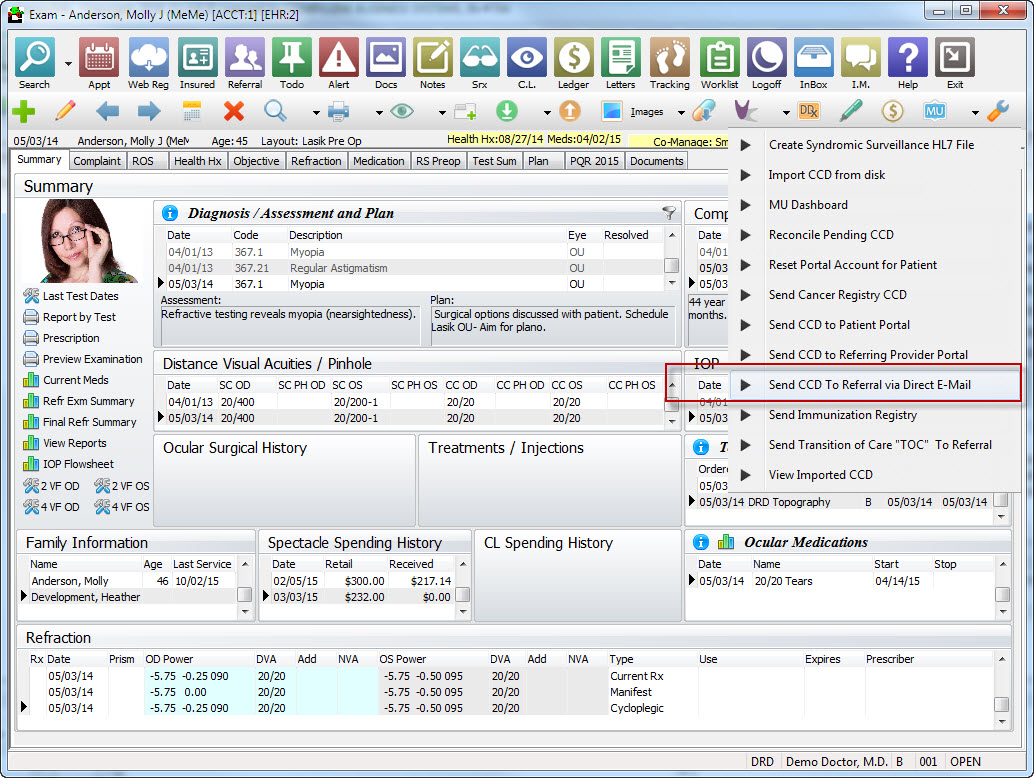
Important information, but incredibly difficult to understand. Due to design flaws in EHRs, physicians take much longer to enter or retrieve patient information than in the ancient era of paper-based medical records. Plus, most systems lack interoperability, making it quite difficult for doctors to obtain patient information from another hospital.
If your medical data is stored on the family physician's computer, this information can take a very long time to get to another hospital. Imagine that a person has a stroke or heart attack while visiting family out of town. Obviously, the hospital or emergency room will call your doctor asking about your records because: a) they don't want to give you a drug that might interact negatively with another drug you're taking; b) they do not want to order a test that you have already had, delaying the start of treatment while waiting for its results.
What happens next is simply mind-blowing. Vital information stored on your GP's computer will be faxed to another hospital.. (Those born after 1980 may not even know what it is). So even if the information is stored digitally, it is usually printed and faxed in case another doctor needs it.
Blockchain is a Possible Solution
To avoid medical errors and improve clinical outcomes, all doctors should have access to our medical information, as long as the information is kept private and secure. Blockchain technology can handle these demands.
To understand how blockchain can work in the healthcare field, it is useful to understand how the technology is used to transfer money. Whether you think Bitcoin is a pyramid scheme or believe it is a great investment, the technology behind it is private, secure and reliable. Its basis is the equivalent of an electronic public ledger, using timestamps to allow ownership to be established without the use of an intermediary such as a bank. So rather than allowing one institution to control your financial information, blockchain users use an open-access system that cannot be hacked, corrupted, or deleted.
Of course, transferring funds and treating patients are completely different concepts. However, since blockchain protocols are universal, all applications developed for healthcare will be compatible with the blockchain system without corrupting the data itself. Therefore, all doctors will be able to securely access the information, and it will always be with you, regardless of whether you have changed insurance companies, doctors, or health care systems or not.
Remember, blockchain technology specializes in securely storing information. These days, a hacker who breaks into an EHR system can obtain the data of millions of people, including their Social Security numbers and sensitive information. Blockchain data points are protected on an individual level by a digital public key and/or a more complex private key. Therefore, if someone decides to hack the blockchain-based EHR system, they will not be able to obtain this data.. Likewise, a doctor who has access to your medical records cannot look at the data of patients in the same hospital or any other without their permission.
This sophisticated yet intuitive technology could eventually become a replacement for all modern EHRs.
Why could blockchain technology replace modern EHRs?
A unified approach based on blockchain could in the future allow patients to be the owners of their information. It will allow information to always be with them - when going to a new doctor or to a new hospital - safely and securely. The information will be updated instantly after visiting the hospital and will be immediately available to all doctors who, with your permission, will have viewing rights. Of course, there are no similar products on the market at the moment. However, the important thing is that such ideas are quite real and feasible.
At some point, patients and doctors will no longer tolerate the shortcomings of current EHRs. And when they demand change, third parties will be ready to help them. And then, perhaps, they will develop an EHR system worthy of 21st century patients, and not the clumsy hulk we are riding on now.
As patients, we deserve to have our medical information available to us at all times. Blockchain technology can be a catalyst for this and make a huge difference in healthcare.
According to https://www.forbes.com

You May Also Like
Apple Veteran Joins Civic's Decentralized Identity Platform
Blockchain startup Civic has hired former Apple executive Philip Shoemaker as chief executive of Identity.com. Shoemaker will be responsible for the growth and development of this blockchain platform, the company said.
The Central Bank of England will provide a new payment system to blockchain companies
The Bank of England is undertaking a complete overhaul of its interbank payment system and will open the network to fintech firms that process transactions via the blockchain network.
