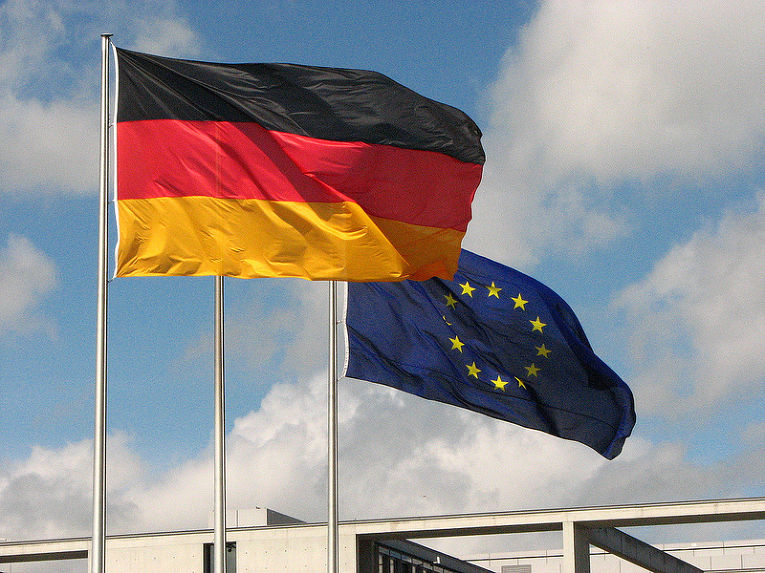
We continue the series of publications on the legal status of cryptocurrencies in the EU zone, choosing Germany as the object of our today's research. A country that is the main donor to the European economy and perhaps the main player in the arena of the entire European Community.
Germany is usually associated with high-quality automotive manufacturing and developed industry.
But this does not mean at all that the German authorities are not pioneers and instigators in other areas, such as cryptocurrency. Germany has taken the lead in this matter and left its other European “colleagues” far behind. And there are several weighty arguments for this.
The German Ministry of Finance (Bundesministerium der Finanzen) legalized bitcoin back in 2013, legitimizing the terminology of “digital currency” in relation to it. Then the German government stated that it does not classify bitcoin as electronic money or a so-called functional currency (including foreign currency).
But, starting from 2017, according to the classification of the updated national regulatory framework,bitcoin in Germany is more of a “Rechnungseinheit”, that is, a “financial instrument”.
It should be noted here that the federal government and parliament of Germany, having amended the Banking Code, for the first time recognized bitcoin as “private money”, certain “units of financial accounting”, thus classifying them specifically as financial instruments.
Following the banking legislation, corresponding changes followed in the tax (Income Tax Law), where the purchase and sale of bitcoin was recognized as private trade transactions and began to be classified as a tax on incomes. Tax on such transactions is charged only if 12 months have not passed between the date of purchase and sale of the cryptocurrency. Thus, the income of individuals received from the sale of digital money is now not subject to income tax if the period between purchase and sale transactions is 1 year or more.
Meanwhile, the tax on the increase in the market value of capitalis not levied for cryptocurrency mining, but is applicable only in relation to shares, bonds and other securities that were purchased for the purpose of further resale on the market and obtaining material benefits. Since bitcoin mining is just a process of creating the value of currency units, in this case only an income tax is applied...
Companies involved in cryptocurrency transactions are treated as financial companies in Germany and must meet clear licensing requirements. In particular, the authorized capital of such companies must be 730,000 euros or more, and the management of the company must have the appropriate professional qualifications and report to the German Federal Financial Supervisory Authority (German: Bundesanstalt für Finanzdienstleistungsaufsicht (BaFin). As a result, Germany today has the largest and most innovative bitcoin community called "Bitcoin Kiez" with its center in Berlin, which is a kind of a business association that unites Europe's largest network of crypto-platforms with the aim of promoting and expanding the influence of cryptocurrencies not only in Germany, but throughout the world.
After a detailed determination of the status of bitcoin, Germany became the first country in Europe that has a clear and sufficiently comprehensive set of regulations in relation to bitcoin and other cryptocurrencies. Bitcoin itself in Germany began to be legally accepted for payment not only in the retail trade network, but also in banking and in the world. corporate sector. At the same time, this trend tends to grow, due to which cryptocurrencies in Germany, compared to the rest of Europe, will become more and more legitimate.

You May Also Like
French financial regulator bans advertising of cryptocurrency contracts
Based on a new anti-corruption law adopted last year, it is prohibited in France to advertise, promote or otherwise promote the conclusion of cryptocurrency contracts that pose risks. Such contracts include CFDs, futures, options and other complex financial products.
$3 million in stolen electricity = $14.5 million in Bitcoin
A Taiwanese miner surnamed Yang was recently arrested and accused by authorities of illegally mining 100 million yuan ($14,500,000) in cryptocurrency. Young used $3.2 million in stolen electricity to power the mining rig.
