The creator of the Bitcoin cryptocurrency, Satoshi Nakamoto, remains the most mysterious billionaire on the planet. This is one or more people whose identity(s) are unknown to anyone. More precisely, they are not known to the general public. However, we cannot even be convinced that Satoshi has billions.
Although we don't know who is behind the name, we know what he (or she) did. Satoshi Nakamoto invented Bitcoin, publishing it through a mailing list in November 2008.
The name was first mentioned in 2008, when the website metzdowd.com published the article “Bitcoin: A Peer-to-Peer Electronic Cash System.” It described in detail the system created by Satoshi Nakamoto. Its main features were the absence of centralized management and the ability to make money transfers between two persons without the intervention of a third party. At the beginning of 2009, it became known that Nakamoto had released the first version of a Bitcoin wallet and launched the Bitcoin network. After that, in 2009, he released the first version of the Bitcoin software client and, together with other programmers - again through mailing list - worked on this project, and by the end of 2010 he gradually disappeared from the radar of the cryptocurrency community.
Despite such cooperation with other developers, Nakamoto never said anything about himself personally. He was last heard from in the spring of 2011, when he reported that he was "moving on to other things."
In Japanese, "satoshi" means "clear-minded, quick-witted, wise." "Naka" can mean “within” or “connection.” "Moto" - "source" or "foundation". All these meanings can be successfully applied to the person who started a large-scale movement by creating a smart algorithm. The problem is that each of these words can have multiple meanings.
We cannot know for sure whether he was Japanese. We cannot even say that it was “he”. It could very well be “she” or even “they”.
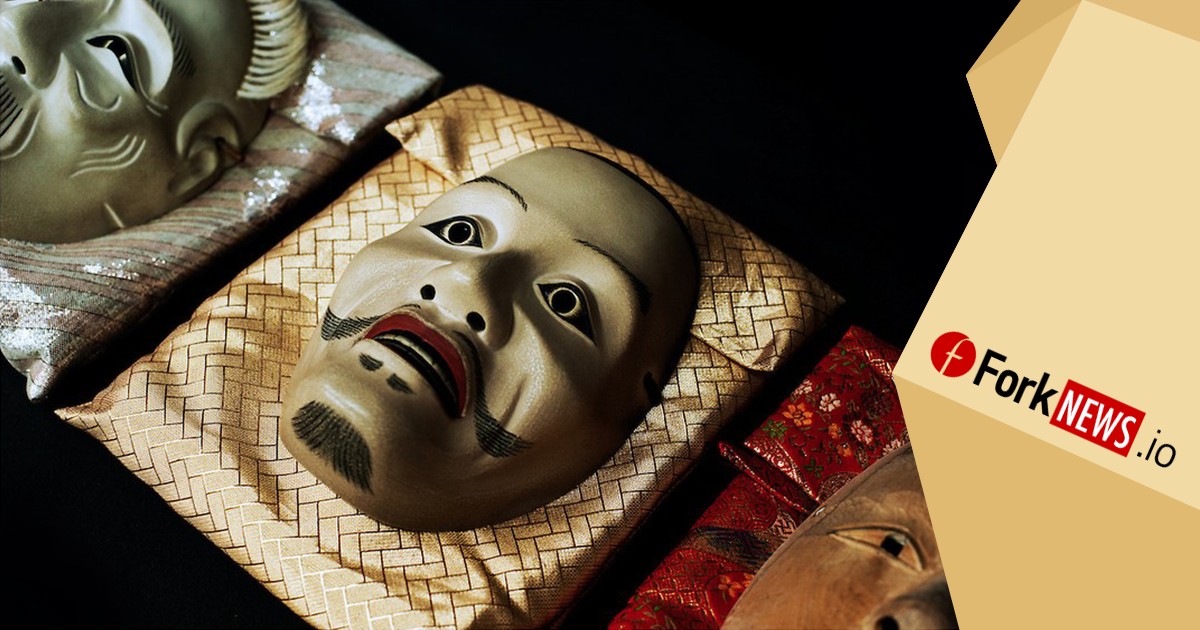
The search for an answer to the question of who is hiding under the mask of Satoshi is actually no less fascinating than the answer to this question. Dozens of individuals, foundations and organizations put forward their "candidates" that this person is the True Nakamoto.
Joshua Davis of the New Yorker magazine suggested that Satoshi Nakamoto is Michael Clear, a graduate of Trinity College Dublin who specialized in cryptography.
He came to this conclusion after analyzing 80,000 words that Nakamoto wrote online and tried to discover linguistic clues..The analysis showed that this person has excellent command of the English language, writes in a bright and clear style and makes very few typos. In addition, Joshua included Vili Ledonvirt, an economic sociologist from Finland who previously worked in game development, among the candidates.
But both of these people did not acknowledge the authorship of Bitcoin. In 2013, speaking at a web summit, Michael Clear publicly stated that he was not Satoshi.
According to the famous Internet entrepreneur and investor Alexander Muse, who cites his sources in the Ministry of National Security, specialists still managed to de-anonymize Satoshi using the total wiretapping systems PRISM, MUSCULAR and stylometry. However, no one checked the reliability of the source - and it is far from a fact that the NSA was not mistaken in its calculations. Simultaneously with the linguistic analysis, an analysis of the program code was carried out. He concluded that the developer of the program is “a world-class programmer with deep knowledge of C++ and an extensive background in cryptography, economics and P2P systems.”
Why did the NSA bother with such a project? Muse's source says the Obama administration was initially suspicious of the Bitcoin project. It was suggested that Satoshi Nakamoto could be a Russian or Chinese agent, and Bitcoin itself threatens the global financial system. Knowing Satoshi's identity should have helped establish his motives. It is unknown what the results of the investigation are. Or they are not made public.
Also of interest is the linguistic research of Adam Peneberg, a professor of linguistics at New York University. Back in 2011, he conducted a linguistic analysis of Satoshi’s texts.
During his investigation, Adam Penenberg studied Satoshi Nakamoto’s texts for several months and checked his specific phrases. In the end, the journalist was lucky - he discovered that a specific combination of words [computationally impractical to reverse] was found on the Internet only 26 times, mostly copies from that very document. But there is another document with the same combination of words. This is US Patent Application No. 20100042841 Updating And Distributing Encryption Keys, published in the public domain on February 18, 2010.. This application describes a cryptographic system based largely on the same principles as Bitcoin technology. One fact attracted the attention of the researcher. The patent application was filed on August 15, 2008, and the bitcoin.org domain was registered on August 18, 2008 - another coincidence.
The authors of the patent application are three people - Neil King, Charles Bry and Vladimir Oksman. Further investigation made it possible to presumably determine the identities of these people. All of them are the authors of several more patents close to Bitcoin technology. Neil King and Charles Bry are residents of Munich, and Vladimir Oksman may be a programmer of Russian origin who lives in New Jersey and works at Samsung.
Neil King fits the linguistic-psychological portrait of Satoshi Nakamoto best, says the author of the investigation. Judging by his Facebook profile, he is a highly educated and fantastically read man, and has reviewed 46 books on Amazon, including astronomy, biology, cryptography, linguistics, literature, mathematics, philosophy and physics. Moreover, these reviews are written in an excellent literary style, very cleanly, without a single extra word or typo, just as Satoshi Nakamoto writes. However, like other potential co-authors, Neil King denies his involvement in Bitcoin. Five years ago, to a direct question, he gave a very lengthy answer and said that he had never heard of Bitcoin at all and had to study the Wikipedia article.
A cryptologist who has not heard of Bitcoin is about the same as a journalist who does not know about Twitter, says Adam Penenberg. And we, perhaps, agree that such behavior looks quite suspicious.
In 2013, Rootstock smart contract security specialist Sergio Lerner conducted a thorough analysis of the initial transactions and convincingly proved that from January 3, 2009 to January 25, 2010, almost only one person was engaged in mining, and the absolute majority of the coins mined at that time are still stored with him.
Perhaps, that this same person was the creator of cryptocurrency, whom we know under the pseudonym Satoshi Nakamoto. But this is just a guess..
Recently, University of California professor Bhagwan Chaudhry proposed nominating Bitcoin creator Satoshi Nakamoto for the Nobel Prize in Economics. However, as reported by the Royal Swedish Academy of Sciences, his candidacy will not be considered.
The organization's press officer, Hans Reuterskold, said that the prize in the field of economic sciences in memory of Alfred Nobel will never be given either anonymously or posthumously.
The Bitcoin community will certainly be upset that Nakamoto will not receive the prize for his merits and innovations, since it would be foolish to assume that for the sake of the prize The creator of Bitcoin will reveal the secret of his identity. On the other hand, if Satoshi opens up to the public, there will be a wave of legal requests from disgruntled governments, businesses and central banks around the world whose business models are significantly threatened by Bitcoin.
Therefore, if the promise of the Nobel Prize was one of the attempts to lure the creators of Bitcoin out of the shadows, then it is doomed to failure.

You May Also Like
Tim Draper: Bitcoin price will be measured in six figures
Back in 2015, billionaire investor and entrepreneur Tim Draper predicted that Bitcoin would reach $10,000 by the end of 2017. In April 2018, he made another stunning prediction when he said that the first cryptocurrency would be worth $250,000 by 2022.
Fortune chooses the best
Fortune published its annual “40 Under 40” ranking, which lists the most influential entrepreneurs who have not yet reached the age of forty. The new ranking includes several personalities from the field of cryptocurrencies and blockchain.
