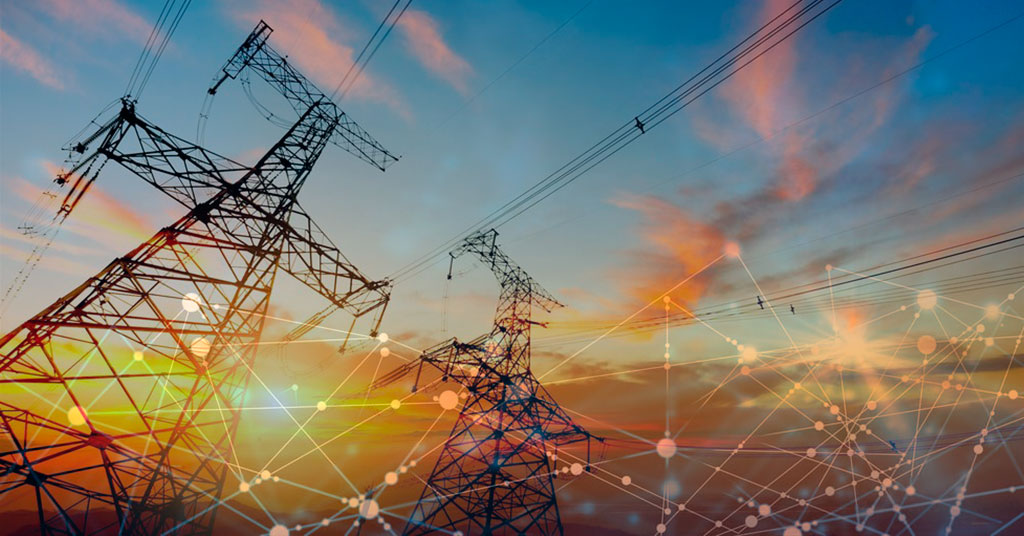
German technology conglomerate Siemens has announced its intention to invest in LO3 Energy, an American startup focused on creating smart grids based on blockchain technology for local energy trading.
Energy startups around the world have begun using this technology to sell excess electricity to small companies and individuals. In particular, a distributed registry allows homeowners equipped with solar panels and electricity storage systems to independently manage their electricity reserves. But despite this, it will be primarily large corporations that will be able to succeed in the new energy market.
“Just as the Internet has changed the approach to communications, so blockchain is changing the approach to transactions. The energy and utilities sector is no exception,” notes Stephen Callahan, vice president of energy and utility systems at IBM.
So far, there are two application scenarios for blockchain in the energy sector. The first allows small electricity producers, utilities and users themselves to sell excess electricity. The second scenario involves the use of tokens that can be used to pay for electricity. Smart contracts also provide new opportunities for all market participants.
Thanks to blockchain, the “Internet of Electricity” is being formed, which helps save consumers money and changes the approach to electricity production.
Many companies are already experimenting with energy blockchain. Among them are giants BP, Shell and IBM, as well as small startups. Small companies often offer experimental services, but do not develop full-fledged programs. Because of this, experts fear that the new market will be captured by large corporations.
LO3 and Siemens teamed up at the end of 2016 to build a local smart network in Brooklyn. The LO3 system allows you to buy and sell energy—for example, from rooftop solar panels—to your neighbors or anyone else who wants to buy it.
LO3 users install a high-resolution meter that can measure electricity consumption at different times of the day. They also get an app that allows them to set up requests to buy and sell certain types of electricity, such as solar or wind power.
LO3 gets revenue from transaction fees and also wants to use all that user data to connect local power grids to larger ones..
We would like to remind you that one of the first to use this technology was Power Ledger, an Australian startup that used blockchain technology to create a P2P network of renewable energy sources and raised $17 million through an ICO.
Power Ledger managed to sell 100 million POWR tokens for a total of $17 million in August 2017. The system was already tested in Western Australia last year, and in the summer it was first used in the real world at a residential complex in Fremantle. Power Ledger became the first company in Australia to provide an electricity trading system that bypasses distributors.
According to https://chaining.ru

You May Also Like
NEO launched nOS test server
The launch will allow app creators to upload their NEO dApps to the platform. The NEO network itself is capable of running decentralized applications, but nOS expands these capabilities. The main user feature of nOS is the dApp Gateway, which functions as an application store. .
Gifto switches to using NEM technologies
Blockchain startup Gifto, which offers a consumer token for family, friends, and fans, on Wednesday announced a partnership with blockchain platform operator NEM. According to the agreement, Gifto will be testing the NEM blockchain in the coming months to analyze the scalability of its services. Gifto currently operates on the Ethereum blockchain, but the company is considering alternative options.
