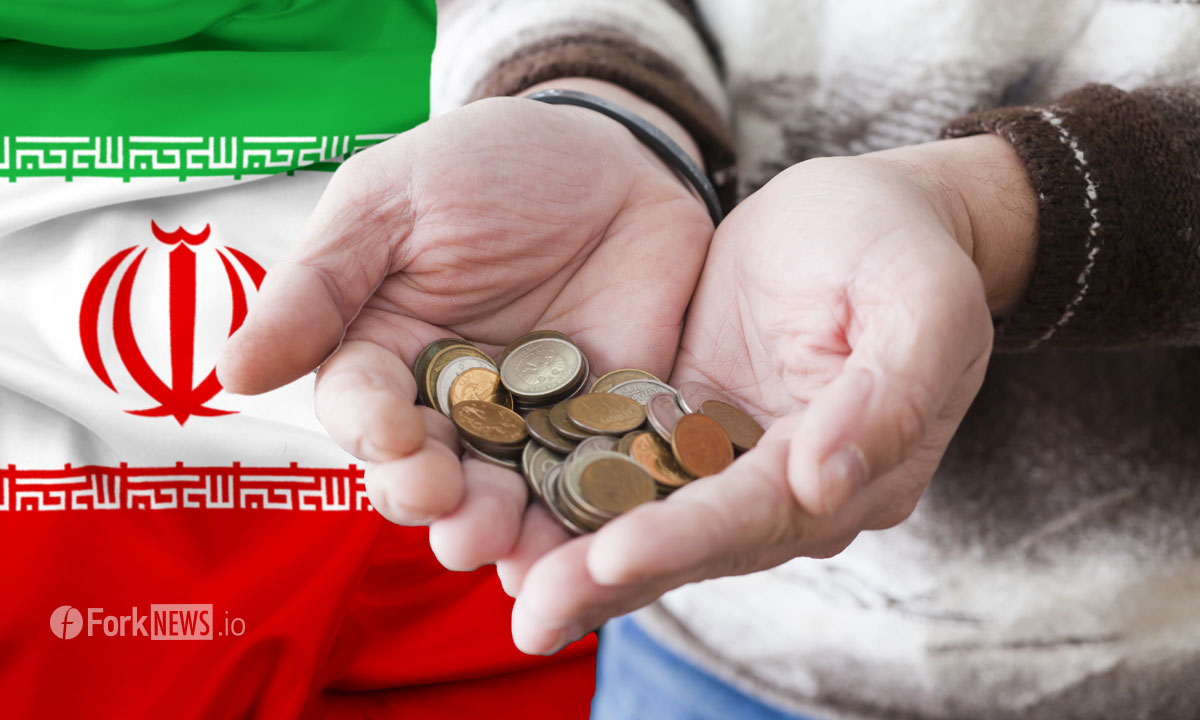
The Iranian rial has lost almost half its value on the unofficial market since the start of the year. The government is making attempts to stabilize the exchange rate, but against the backdrop of looming US sanctions, Iranians are desperately buying up affordable fiat, gold and cryptocurrency.
The Iranian rial (IRR) has fallen 50% since April this year, with its latest record low hit last week at 111,500 against one US dollar. Iran's national currency is in crisis. Already fragile due to ongoing economic and political uncertainty, the rial fell in value following US President Donald Trump's decision to reinstate economic sanctions against Iran effective August 7.
Against the backdrop of such a decline, cryptocurrencies are being considered as an alternative solution. However, the official cryptocurrency policy in the country is ambiguous. On the one hand, the Central Bank of Iran banned cryptocurrency transactions, and censored even international cryptographic sites. On the other hand, while the Central Bank is trying to prevent its citizens from purchasing Bitcoin or Ethereum, the Iranian government has repeatedly stated that it plans to launch government crypto bonds and is preparing the way for national cryptocurrency.
Despite all the bans, the population last year withdrew about $2.5 billion from the country to purchase crypto assets abroad. Now these funds are being confiscated by Washington, according to the chairman of the Iran Blockchain Community.
News coming from the country is scanty, but crypto enthusiasts from Iran claim that cryptocurrency is in great demand. Against the backdrop of a record low for the national currency, the population is trying to save their savings. The country is experiencing a rush of demand for any cryptocurrency. In an attempt to hedge their funds, within a few hours all sell orders and coins are bought up, even the most dubious altcoins.
At the same time, the government itself publicly declares that it is working on the legalization of crypto assets, the creation of a national cryptocurrency, and the promotion of crypto trading, hedge funds and mining in the country. Official plans to create a national digital currency have already been approved, although the technical details are not yet known.
Against the backdrop of disappointing economic news from Iran, this situation with crypto assets looks logical. Perhaps US sanctions will make Iran the first country to introduce blockchain technology into the economy.

You May Also Like
KuCoin gives users the opportunity to pay for cryptocurrency with a credit card
Singapore-based cryptocurrency exchange KuCoin has partnered with Israeli financial services company Simplex to give users the ability to purchase cryptocurrency using credit and debit cards.
Spendbch.io launches open source application to test the BCH network
The maximum block size on the Bitcoin Cash blockchain is 32 MB, which is significantly larger than the block size of most modern blockchain networks. This large block size will increase BCH throughput. Until May of this year, the BCH blockchain consisted of 8 MB blocks. Now community members want to test the network by sending a huge number of transactions on the BCH blockchain over a 24-hour period.
