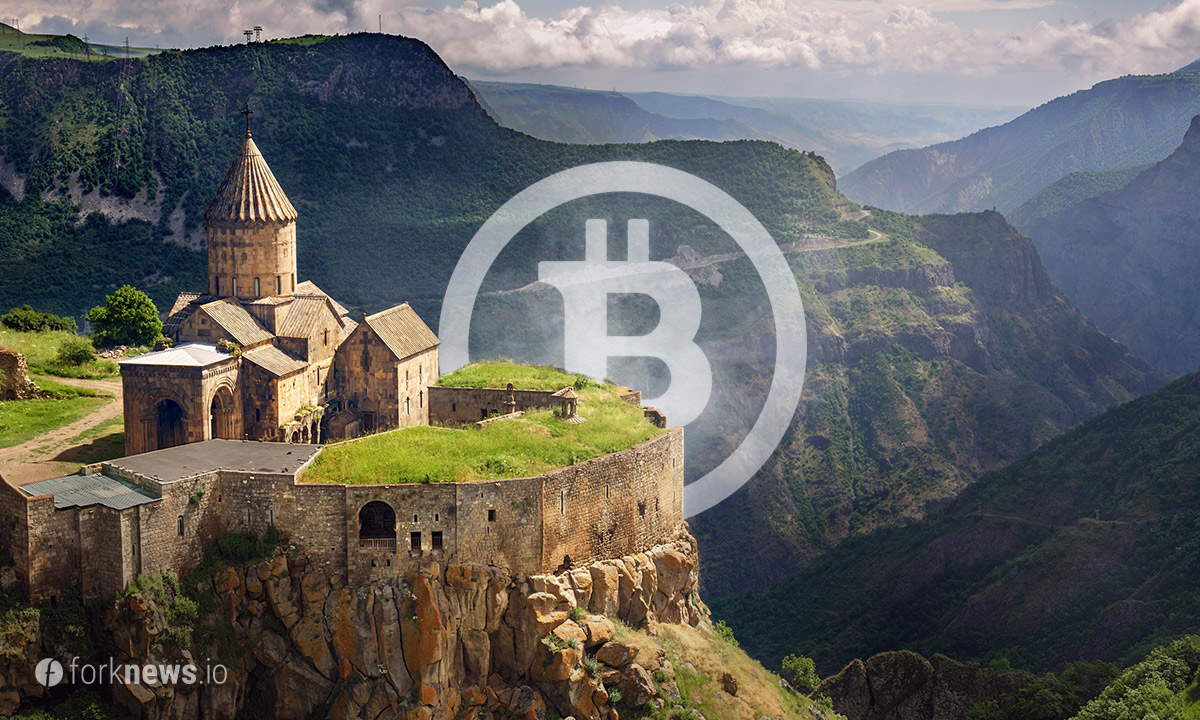
Armenia simply could not remain on the sidelines for long, while its neighbor, Georgia, began to gain momentum in its cryptocurrency business. Therefore, it is not surprising that literally over the past 3 years, crypto fever has also captured the minds of Armenians. As a result, today’s Armenia is another one of the most prominent contenders for the title of center of the digital industry.
In Armenia, as in Georgia, thanks to the low cost of electricity, businesses based on cryptocurrency mining have been and remain popular.
But the secret to the success of mining lies not only in cheap electricity. The fact is that representatives of the Armenian government, and even the opposition, have a very loyal attitude towards this type of business in the current realities.
Today, according to the current legislation of Armenia, there is no regulation of the crypto industry as such, and digital currencies, including Bitcoin, cannot be classified as electronic money. Moreover, in the spring of 2015, the Central Bank of Armenia even issued an official warning to citizens about the need to refrain from using cryptocurrencies until they are officially recognized.
Indeed, until recently, cryptocurrencies remained without due attention in the national legal framework. It is for this reason that the opposition parliamentary faction “Yelk”, represented by its deputy Edmon Marukyan, in February 2018 came up with a “soft” initiative to legalize the cryptocurrency mining market to begin with. The bill “On Digital Technologies” they developed contained very liberal regulatory mechanisms, the key ones of which are the following:
- ensure the right to engage in mining for any adult citizen or legal entity;
- the absence of licensing or any other permit restrictions;
- tax amnesty until December 31, 2023 inclusive;
- the possibility of registering additional types of tax, customs or other benefits in order to create equal economic conditions for representatives of the mining industry.
If the bill “On Digital Technologies” is adopted, Armenia could become the second country after the Republic of Belarus to legalize cryptocurrency mining. However, in March 2018, the Armenian government sharply criticized this bill, saying that it does not contain specific legal norms regulating the sphere, it only concerns the processes of mining, issuing and selling cryptocurrencies, while digital technologies are a broad concept.. At the same time, Minister of Economic Development and Investment Suren Karayan said that the adoption of this bill is inappropriate, taking into account the international position on this issue, at least until a unified and comprehensive approach is created in the world.
However, an example of a successful combination of both public and private business interests in Armenia is the recent implementation by the Armenian concern Multi Group and the Swedish company Omnia Tech of a joint project to create one of the world's largest mining pools. This farm should consist of about 150,000 node units of equipment aimed at providing BTC/ETH mining.
Information: The Multi Group concern was founded in 1998 and includes various multi-industry enterprises with a total number of employees of about 25,000 people. It belongs to the oligarch, the head of the Tsarukyan parliamentary faction, Gagik Tsarukyan.
In addition, Omnia Tech has no less ambitious plans to create a Blockchain startup development center in Armenia. Thus, after the successful launch of the mining pool, Omnia Tech also intends to create other high-tech projects in Armenia, which will be joined by more than 500 foreign companies, including Facebook, Google, Amazon. The amount of investment in new projects in the next 2 years could amount to more than 2 billion US dollars.
According to the top management of Multi Group, their concern will assist Omnia Tech by providing production facilities and technical support for the project. This will be a kind of Fintechnopark and Data Exchange Center.
On the part of the state, the successful existence of the mining center is ensured by the creation on its territory of a Free Economic Zone with zero tax rates and an electricity tariff, from which VAT will be deducted. Plus, the authorities met halfway on the issue of stable energy supply by the Hrazdan Thermal Power Plant, which agreed to create special conditions for the mining pool. The corresponding agreement was signed between the management of the TPP and Multi Group represented by the managing partner of the company “ECOS-M” Ilya Goldberg.. According to the signed agreement, the Hrazdan Thermal Power Plant provides, at reasonable rates, an autonomous source of energy with a starting capacity of 50 MW, with a gradual increase up to 200 MW.
An interesting point is the fact that cryptocurrency mining will be carried out not only in the interests of the owner, but also in the interests of third-party investors.
Well, a reasonable government an approach and a loyal tax burden can truly work wonders. And it may well be that very soon Armenia will gain a leading position in promoting innovative startups not only in the South Caucasus, but throughout the world.
It is possible that Armenia, along with other EAEU countries, will be the main “leader” in developing a common approach to regulating cryptocurrencies. Thus, the authorities of Belarus, Kazakhstan and Kyrgyzstan, which are also members of the Eurasian Economic Union, are already taking active steps to appear on the modern world map of cryptocurrency states.

You May Also Like
South Korean authorities are not going to ban cryptocurrency trading
Finance Minister Kim Doong-yong said the government has no plans to close exchanges, refuting controversial comments from government officials in South Korea, the flagship cryptocurrency market, and reassuring investors.
Brazilian authorities oppose free circulation of Bitcoin
The end of 2017 and the beginning of 2018 was marked by a series of harsh attacks from national regulators in a number of countries around the world. Unfortunately, Brazil is next on the list of “conservatives” who zealously opposed the unregulated circulation of Bitcoin.
