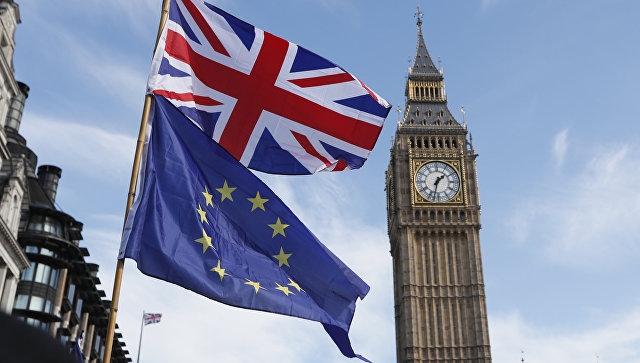
We continue the series of publications on the legal status of cryptocurrencies in the EU zone. Today the object of our research is Great Britain. A country that has the most advanced legislation in the field of regulation of exchange-traded financial instruments.
The authorities of the United Kingdom, like the government of Germany, were the first in all of Europe to appreciate the powerful potential of Blockchain technology and other cryptocurrencies based on it.
In terms of terminology, the UK has assigned Bitcoin the legal status of “foreign currency”. Let me remind you that Germany equated the well-known cryptocurrency to a unit of financial accounting, calling it either an “investment instrument” or “private money”. "foreign currency" led to tax regulation of income and losses of crypto-transactions by analogy with foreign money. At the same time, speculative transactions with bitcoin are not subject to any taxation, since the UK tax service has not yet fully decided on the tax status of transactions involving digital money, considering that their legal assessment should be carried out in each individual case individually.
The bulk of European cryptocurrency exchanges have an English “registration”. This is due to the fact that London, along with New York, Tokyo and Hong Kong, is one of the generally recognized centers of the global financial system and stock trading. It is in England that the largest number of the world's largest financial institutions are concentrated.
As a result, the increasing influence of the cryptocurrency market on the UK economy over the past three years forced the English government back in 2015 to seriously think about a strict exchange rate peg between bitcoin and the pound sterling. The goal is to strengthen the national currency and take control of the turnover of crypto-exchange transactions.
Further, the Central Bank of England, in search of an alternative to state regulation decided to study, with the involvement of experts, the possibility of creating and implementing a separate national cryptocurrency. In this regard, the UK Ministry of Finance in December 2017 ordered the country's Government Communications Center to conduct a corresponding study. During 2018, this study should answer questions about the possible risks that bitcoin can create to the economic security of the country...
This fact indicates that the country's Ministry of Finance, studying Blockchain technology and the possibilities of its use, is obviously considering the most suitable ways to legalize work with digital currency.
It should be noted that in addition to the UK, central banks of other countries - China, the UAE, Saudi Arabia, Estonia, Belarus and Ukraine - are also working on the creation of a national cryptocurrency. By the way, the first bitcoin billionaires, originally from the UK, are brothers Tyler and Cameron Winklevoss, who allegedly own 100,000 BTC.
Barclays Bank, one of the largest financial holding companies in England and the world, has begun negotiations with Fintech companies, as well as with the UK Financial Conduct Authority (FCA) regarding the introduction of bitcoin to the global market. According to experts, Barclays strives to make Bitcoin as safe as possible and independent of external factors.
Despite the positive changes towards the legalization of cryptocurrencies, the UK Treasury still intends to begin offensive and aggressive measures in 2018 against the widespread use of Bitcoin in the country. The formal pretext for such countermeasures on the part of the state is very simple and similar in originality to other countries. This is the fight against money laundering, as well as the fight against terrorism and tax evasion.
It is expected that the “witch hunt” will begin with a mass mailing of messages to miners, traders and other market participants about upcoming measures to regulate the cryptocurrency market. After this, a short transition period will be provided for adaptation. At the same time, the main regulatory efforts of the UK authorities will be aimed at identifying traders simultaneously with a thorough check of their activities.
Summarizing today's analysis, we can say that the largest players on the world stage are seriously concerned about the problem of establishing the dominance of bitcoin over fiat money. And the fight of conservative whales against cryptocurrencies will be waged by the hands of regulators and fiscal officials.

You May Also Like
Legal status of cryptocurrencies in the world: nonsense or legal innovation?
The legal leapfrog that has developed against the backdrop of futile attempts by regulatory authorities to regulate the “unregulated” cannot but attract attention. But in fact, all this excitement and hype, artificially inflated by state regulators around bitcoin and altcoins, can best be described in the words of Kozma Prutkov, “No one will embrace the immensity.”
Regulation of cryptocurrencies in the EU using the example of Greece
We continue the series of publications on the legal status of cryptocurrencies in the EU zone. Today the object of our research is Greece. A country that will very soon be chosen for so-called bitcoin tourism.
