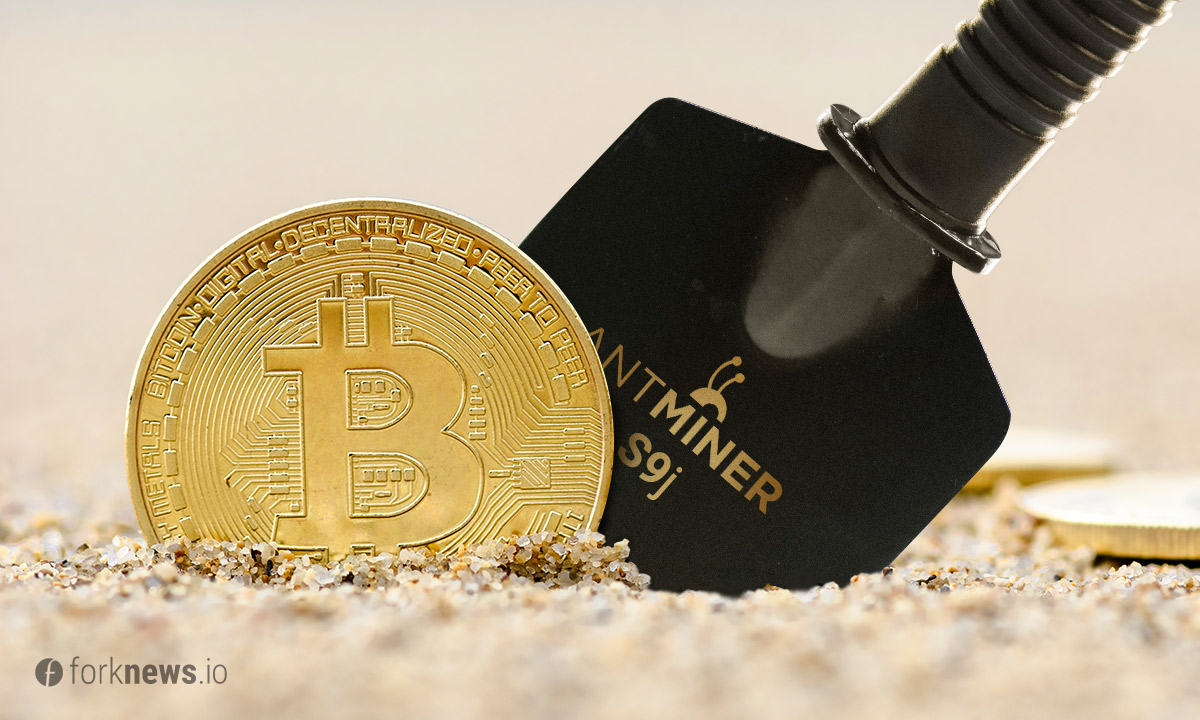
One of the leading ASIC manufacturers and mining giant Bitmain has announced the release of Antminer S9j. The new ASIC miner is not much different from previous models.
The new model was traditionally presented on Twitter. The official website states that delivery of the new model will begin from August 11 to August 20, payment for equipment is accepted in Bitcoin, Bitcoin Cash, Litecoin and US dollars; the first batch is intended for the fastest customers.
The model itself is based on the SHA-256 algorithm and is designed for mining Bitcoin and Bitcoin Cash, as previously released.
The previous Antminer S9i model provided a hashing power of 14 TH/s with an energy consumption of 1265 Wh and a price of 654 US dollars.
The new machine is slightly more powerful: Antminer S9j provides a hashrate of 14.5 TH/s, but consumes more electricity - 1350 Wh. The price of the new ASIC miner is noticeably lower - $535. Or $625 for a miner with a built-in power supply. The weight of the device is 5.5 kg, or 8 kg for the version with a power supply.
Perhaps the company was pushed to such a hasty release by new products from competitors.
Last week, another major manufacturer of mining equipment, Innosilicon, also launched a new ASIC miner, created in partnership with Samsung. The new Innosilicon T2-Turbo hardware with a hashrate of 24 TH/s and an integrated 7-nanometer chip has great potential.
Perhaps, the desire not to give up positions in the market is also associated with the approaching IPO. Bitmain plans to conduct an initial public offering in August and complete the IPO before the end of this year.

You May Also Like
$3 million in stolen electricity = $14.5 million in Bitcoin
A Taiwanese miner surnamed Yang was recently arrested and accused by authorities of illegally mining 100 million yuan ($14,500,000) in cryptocurrency. Young used $3.2 million in stolen electricity to power the mining rig.
Bitcoin miners earned more than $15 billion in 2021
Mining the first cryptocurrency brought record profits this year.
