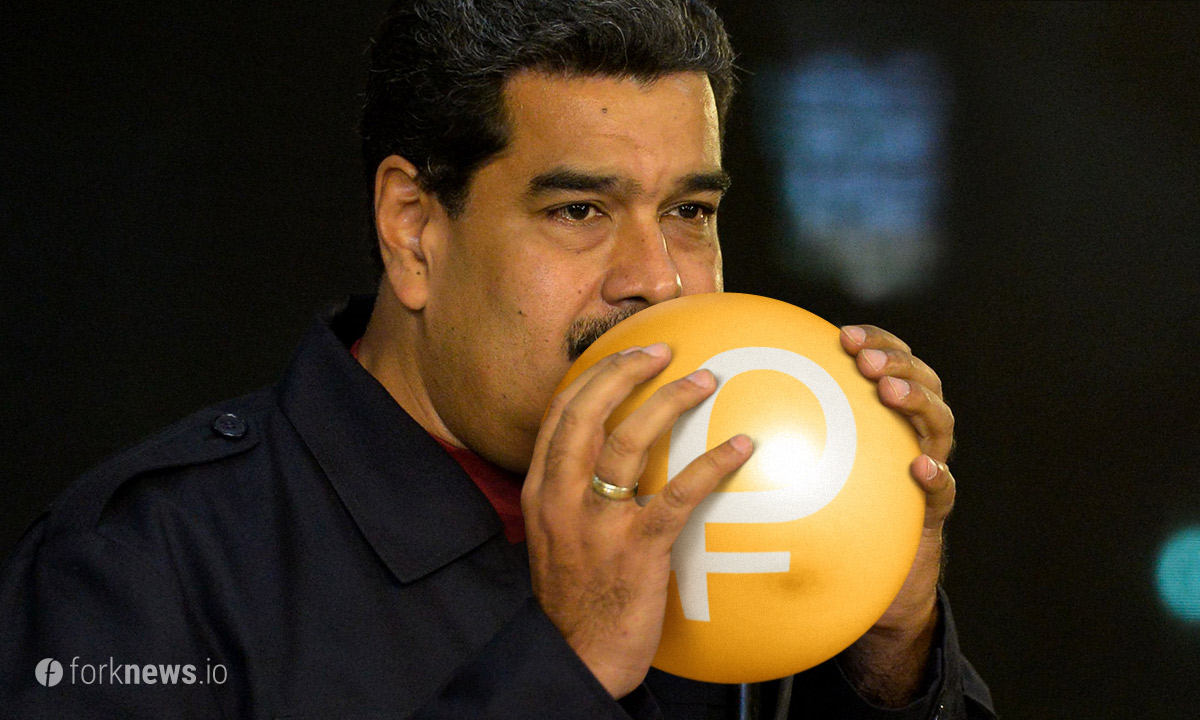
According to a Reuters report last week, Venezuela's oil-backed cryptocurrency is largely unused and the government, despite promises, is doing nothing to put its oil reserves to use in this space.
Petro cannot be purchased on any major exchange such as Coinbase or Bitfinex and is not accepted by retailers as a means of payment. On online forums, Reuters employees were able to locate several petro owners. Petro transactions are anonymous, but their frequency and volume are very low even during various government announcements.
Venezuela President Nicolas Maduro said the initial coin offering on March 20 raised more than $3 billion, but the cabinet minister involved in the project told Reuters that at the time of the ICO, the coin was still in development and no one could use it. The Superintendence of Cryptoassets, the government agency spearheading petro's development, does not have a physical office and their website is down.
Petro was launched in February, at the same time an announcement was made about the creation of the world's first sovereign cryptocurrency. Petro is developed on the Ethereum blockchain and is designed to prevent the effects of inflation and foreign sanctions. After the ICO and the launch of petro the price of the bolivar continued to fall rapidly. At the moment, one bolivar costs 0.000004 USD.
Presumably, each petro should have been backed by one barrel of oil, the price of which is currently approximately $70. In the case of petro, this oil remains untapped somewhere underground.
The government claims that the Atapirire region contains $5.3 billion in oil reserves, but even so, the government does not have any infrastructure or tools nearby to extract these resources.
According to theverge.com

You May Also Like
Cambodia plans to introduce a national digital currency
At the ASEAN Blockchain Summit, it became known that Cambodia is preparing to issue a national cryptocurrency. This is not surprising considering the fact that the Cambodian crypto community is constantly growing. The possibility of introducing a digital currency in Cambodia was announced after the launch of the Venezuelan ElPetro.
The Central Bank of Israel is “not recommended” to issue its own cryptocurrency
A research group created in November 2017 by the head of the Central Bank of Israel to study the feasibility of the bank issuing its own cryptocurrency, this week released the results of the study.
