On the night of February 24, the Russian President announced the start of an operation “to liberate the occupied territory,” essentially declaring war on Ukraine. The stock, foreign exchange and cryptocurrency markets immediately reacted to the military actions.
Crypto market capitalization fell to $1.6 trillion. for the first time since August last year.
Bitcoin dropped to $34.3 thousand, losing 8% per day. Ethereum - $2.3 thousand, minus 12%, as well as BNB $335. The majority also found themselves in the red zone:
- XRP lost 11% (to $0.63),
- Solana fell by 10% (to $80),
- Cardano fell by 16% (to $0.76).
The Russian stock market is falling. The Moscow Exchange opened with the index falling by 11.37% and amounting to 2734.10 points.
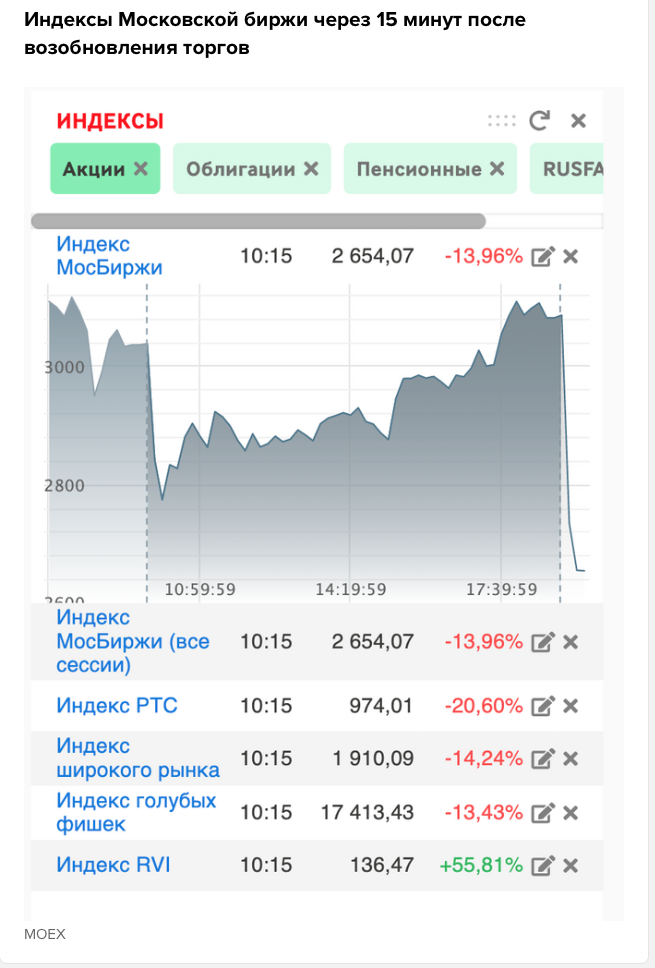
The RTS Index at the same time fell by 16.09% - to 1029.28 points.
European, American and Asian markets reacted with a fall at the end of trading on Wednesday against the backdrop of military news from Ukraine.
Oil increased in price by more than 5%. Brent is trading above $102 per barrel, WTI - $96.8. The price of gas in Europe immediately increased by 35%.
The ruble fell to its lowest level in 2016. The dollar rose to 90 rubles, the euro more than 100. This is the first time such a rate has been observed since December 2014. The Central Bank decided to begin foreign exchange interventions to support the ruble exchange rate.
The escalation continues. By 10 a.m., the Ukrainian General Staff reported that “five planes and a helicopter of the aggressors” had been shot down. The Russian side denies losses and announced the destruction of Ukrainian air bases.
Subscribe to ForkNews on Telegram to stay up to date with news from the world of cryptocurrencies

You May Also Like
Globacap issues first FCA-regulated equity tokens
Technology startup Globacap has announced the issuance of digital tokens representing ownership of shares. This “tokenization” process was carried out on the Globacap blockchain platform under the supervision of the UK Financial Conduct Authority (FCA) as part of the FCA's sandbox program, under which firms can test innovative products.
Metaverse from Zilliqa will be launched in a month
The Zilliqa blockchain has announced its new metaverse called Metapolis, which will appear next month.
