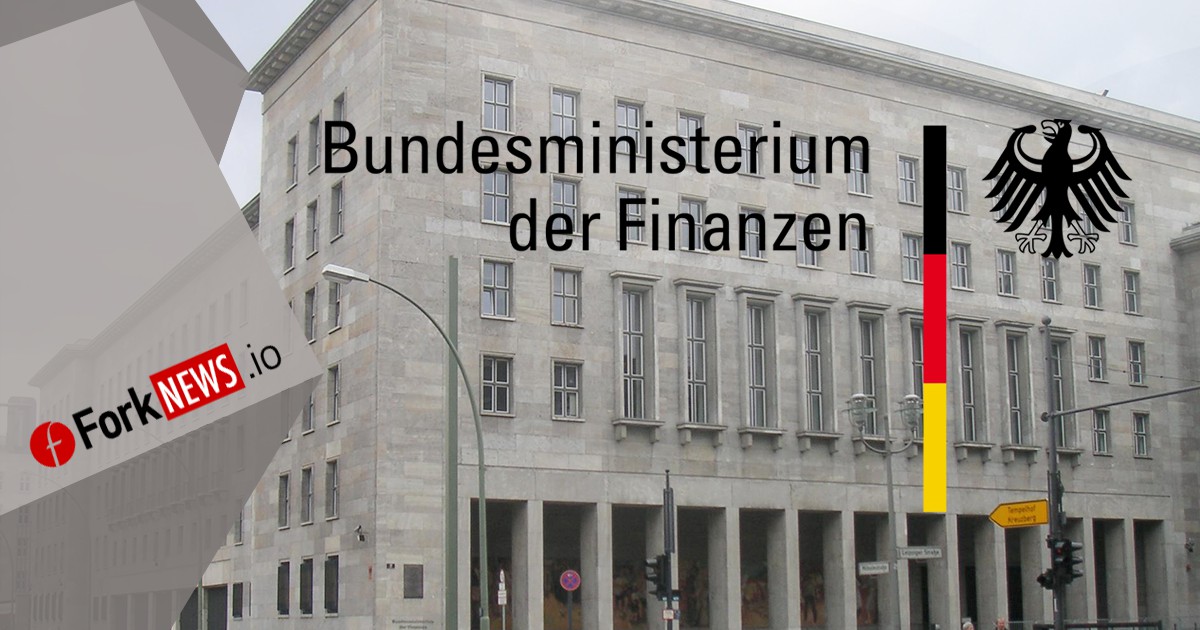
Representatives of the German Ministry of Finance made an official statement that the department will not tax cryptocurrencies if they take part in transactions as a means of payment, Coindesk reports.
This means that if you decide to have a cup of coffee in Germany and pay for it with Bitcoin, you will not have to pay taxes, unlike in the United States.
The German government decided to classify Bitcoin and other digital currencies as equivalent to legal tender for tax purposes when used as a means of payment.
The guidelines of the Bundesministerium der Finanzen are based on resolution European Court of Justice on VAT 2015. The document considers providing exceptions for certain types of transactions that involve digital currencies for countries within the European Union.
This means that converting Bitcoin to fiat or vice versa becomes a “tax benefit.” If the buyer pays for a service with digital currency, the EU VAT clause applies to the price of the token at the time of the transaction.
At the same time, the act of conversion itself, according to the same EU regulation, is a “provision of services.” This means that the intermediary party of the currency exchange is not subject to tax. However, this rule does not apply to exchanges or exchanges.
A large number of aspects of the cryptocurrency system will also not be subject to taxes. Thus, a miner who received a bonus reward will not pay tax, since his services are voluntary.
According to https://www.coindesk.com

You May Also Like
British regulator is investigating Sorare's activities
The UK Gambling Commission (UKGC) has warned that fantasy football blockchain platform Sorare does not have a UK gambling license.
The IMF again criticized the legalization of Bitcoin in El Salvador
In the report, El Salvador: 2021 Article IV Mission Staff Final Statement, the IMF praised El Salvador's efforts to promote "financial inclusion and growth" but criticized the tool the country's government is using to achieve this goal.
