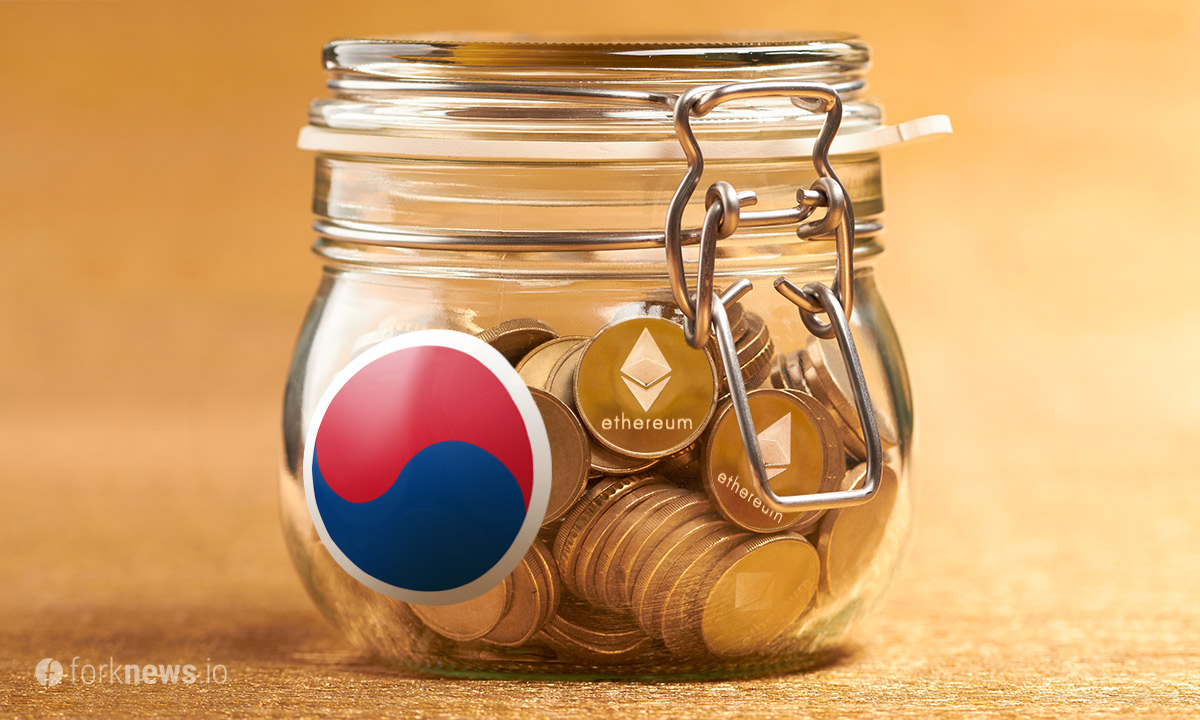
According to data from the South Korean central bank (BOK), the outstanding balance of virtual currency accounts at national commercial banks stood at $1.79 billion at the end of December 2017.
The BOK report suggests that the figure of less than $2 billion is equivalent to about eight percent of total deposits. According to the bank's analysts, the country's brokerage companies control crypto resources worth about $23.27 billion. Therefore, the report states that cryptoassets do not pose a threat to traditional local financial markets. South Korea has one of the largest crypto communities in the world, with over 20 digital currency operators and billions of dollars in crypto money in circulation. According to CoinMarkeCap, nearly $600 million (89,128 BTC) and $121 million (18,097 BTC), respectively, are spent daily on the two leading exchanges, Bithumb and Upbit.
The Central Bank of Korea believes that investment in digital currency assets remained low, even during the cryptocurrency rush in late 2017, when the price of Bitcoin soared to 20 000 dollars in mid-December.
The global market capitalization of all cryptocurrencies traded on exchanges during that period amounted to $900 billion. Of these, Bithumb accounted for more than $6 billion. Bithumb is a publicly registered cryptocurrency exchange and must disclose its financials to investors, which is why this information was published in the first quarter of this year.
Such official conclusions about the absence of a risk for the traditional financial market from cryptocurrency appeared almost simultaneously with statements by the Financial Services Commission (FSC) about the adoption of cryptocurrencies and plans to join the introduction of the G20 “unified” transnational crypto rules.
Korea confirmed the G20’s multilateral vision for the future of crypto regulation for the country’s domestic crypto market. There have been positive news about the softening of the official position of Korean regulators since the beginning of the year. In particular, plans to lift the complete ban on domestic ICOs, a draft new classification of industry standards and recognition of crypto-platforms as regulated financial institutions.
According to https://www.newsbtc.com

You May Also Like
El Salvador created a Bitcoin trust for currency exchange
The trust will allow local entrepreneurs to instantly convert bitcoins into US dollars.
Kazakhstan is preparing to increase the tax on mining
The President of Kazakhstan insists on strict regulation of crypto-mining, inspection and licensing of all data centers and increasing taxes on cryptocurrency mining.
