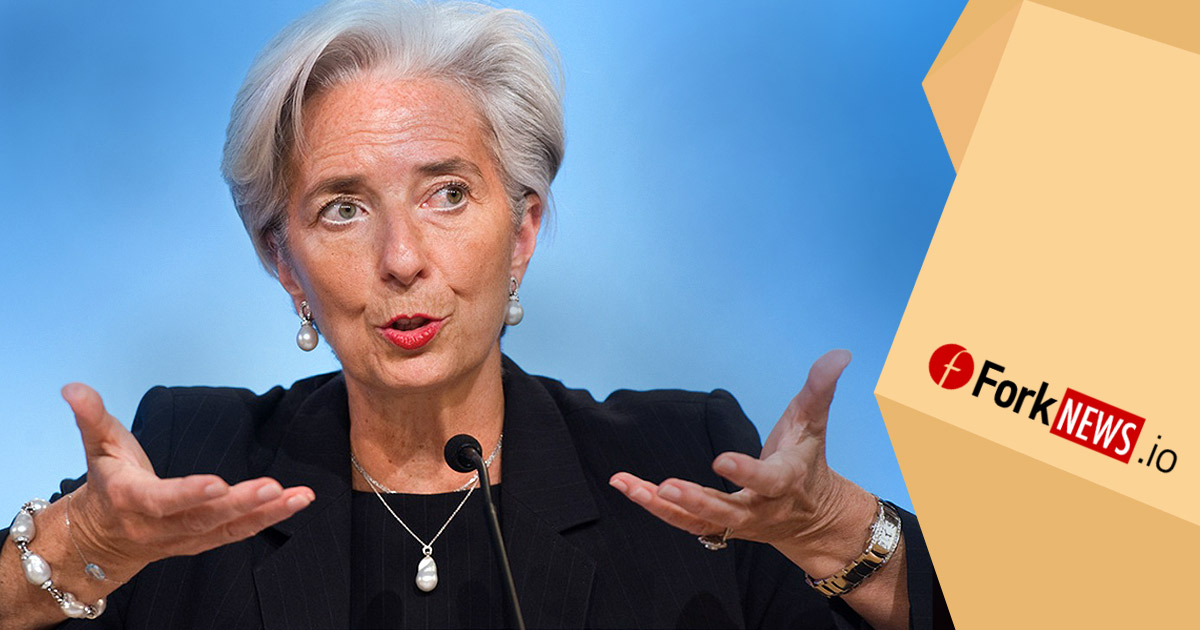
International Monetary Fund chief Christine Lagarde said regulators could monitor the financial system more effectively and share information more quickly if they used blockchain technology, which allows transactions to be authenticated without the need for them to be administered or guaranteed by a central authority.
Cryptocurrency allows you to make payments faster and cheaper, but also hides significant risks. This technology should not be allowed to be used for money laundering and terrorist financing, and there must be appropriate regulation for this.
Lagarde believes that cryptocurrency could influence the emergence of new weaknesses in the global financial system, as evidenced by rapid growth and price fluctuations.
Bitcoin, the best-known cryptocurrency whose price surged more than 900% last year to reach almost $20,000 before Christmas, has since fallen by almost half. “It would be unwise to abandon cryptocurrency; We must recognize its potential, but we must also recognize the risks associated with it,” says Ms. Lagarde.
Mark Carney, governor of the Bank of England, also admires the technology, but also points to the need for regulation. He stated that anarchy cannot reign in cryptocurrency trading and that cryptocurrency has still not fulfilled its main function - the function of money. However, the central bank is testing different ways to use blockchain technology in the UK payments system.
Carney believes that at this stage it is unlikely that international measures will be taken to regulate digital currencies, and therefore this task will fall on the shoulders of each country individually.
According to https://www.theguardian.com

You May Also Like
The Central Bank of Russia came out “categorically against” cryptocurrencies
The Central Bank of Russia has once again confirmed its negative attitude towards the idea of accepting cryptocurrency in the country.
British police seized $435 million worth of cryptocurrencies
Over the past five years, UK police forces have seized approximately $435 million in cryptocurrencies from criminals.
