
Cybersecurity company Check Point Research has warned that cases of theft of digital funds from users who access their crypto wallets through Google search engine sites have become more frequent.
Check Point Research has published data from which it follows that since the beginning of November, the creators of fraudulent sites have stolen almost $500 thousand worth of cryptocurrencies.
A large-scale phishing campaign was initiated through the search engine of the Google platform.
Its distinctive features:
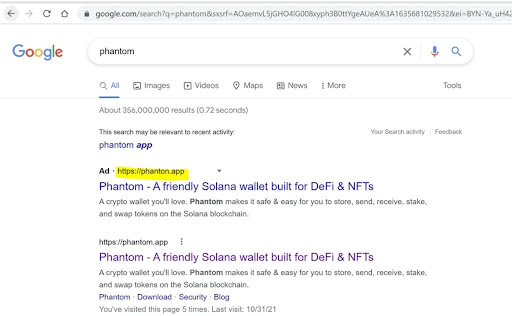
- The transition to a deception site is carried out through an advertising banner or pop-up window.
- Using fake URLs in search engines to steal passwords from previously created crypto wallets.
- Completely copied design of the official website.
- Using Google advertising campaigns to make phishing websites rank higher in searches than the original ones.
- Almost imperceptible differences in names sites.
Most often, crypto investors lost their funds when trying to download or install new wallets on PancakeSwap or Uniswap exchangers. But cases have been recorded when the theft occurred at the time of currency exchange.
It is not yet known for certain how many phishing resources for stealing cryptocurrency are already operating on the Internet. There are daily complaints on Reddit and Twitter that users are losing everything when they end up on fake sites for their digital storage.
To minimize risks, just follow two simple rules: do not access wallets or install them through advertising banners, and also use only verified URLs saved in your browsing history.
Subscribe to ForkNews on Telegram to keep up to date with news from the world of cryptocurrencies

You May Also Like
$18 million was stolen from NFT platform Lympo
Hackers withdrew $18.2 million worth of LMT tokens from the hot wallets of the sports NFT platform at the time of the hack.
Criminals are 'vulnerable' when converting cryptocurrencies to fiat
US customs officials say cryptocurrency helps track criminals
