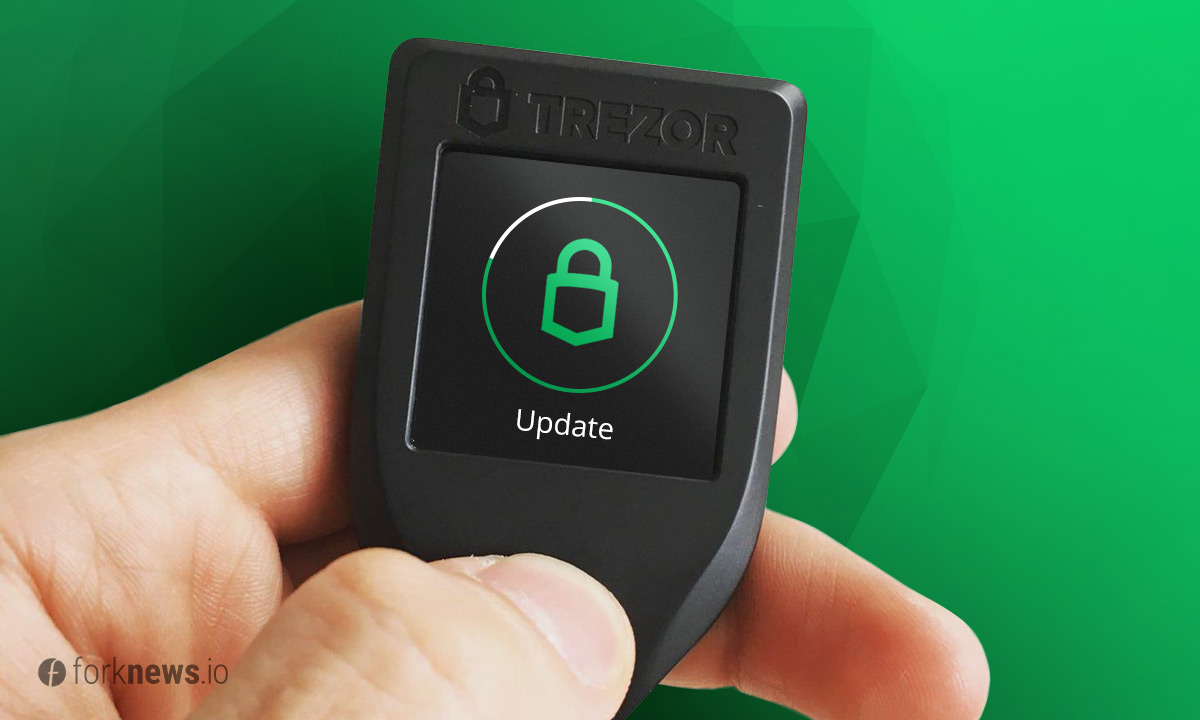
On June 26, Trezor published news about updating the firmware of devices and services. Trezor One and Trezor Model T have received updated software, as a result of which these products will receive new functions and settings that reflect changes in the value of cryptocurrencies. The Trezor device is now compatible with the Zcash Overwinter update and will also support the CashAddr address format.
Trezor Model T is a next-generation hardware wallet designed to improve security and user experience. It has a touch screen and a fairly fast processor. In turn, Trezor One is one of the most popular hardware wallets in the world. Trezor claims to be the first to release a hardware wallet.
The company will also expand the list of cryptocurrencies supported by both devices. For example, the firmware update for the Trezor Model T will include support for NEM and Link, as well as other cryptocurrencies. Trezor One has also learned to recognize new coins and tokens.
The interface of the Trezor Wallet has undergone updates, adding a new expanded set of functions to it:
- users will now be able to export transaction history to PDF
- the estimated conversion to fiat has been updated
- two new cryptocurrencies have now been added to the interface - Dogecoin and Vertcoin.
For users Trezor One: If your Trezor One is running a firmware version lower than 1.6.1, we strongly recommend updating it to the latest version as soon as possible.
According to blog.trezor.io

You May Also Like
Facebook wants to integrate NFTs
Facebook's Novi wallet, which is under development, will be able to support non-fungible tokens.
Best Bitcoin Wallets 2018 for Android
If you decide to get into Bitcoin investing, choosing a good Bitcoin wallet should be one of the first and most important steps. In this guide, we have listed the best wallet apps available for Android phones and devices.
