
The third round of the Global Blockchain Network Assessment Index followed as scheduled and was no longer as surprising to the crypto community. EOS is still the leader in the ranking, and Bitcoin is not even in the top 15.
The rating, released with the support of the government, China Electronic Information Industry Development (CCID), evaluates public blockchain networks according to three parameters: technology, accessibility and innovation.
CCID released its first ranking back on May 16, where Ethereum took first place.
The second rating list was released on June 21, and EOS overtook Ethereum, becoming a leader. Surprisingly, NEO, China's version of Ethereum, has yet to come out on top despite full government support.
A new set of rankings released yesterday kept EOS and Ethereum in the same places. EOS is still at the top, despite all the difficulties the project faced when it launched its mainnet.
The new CCID ranking list looks like this:
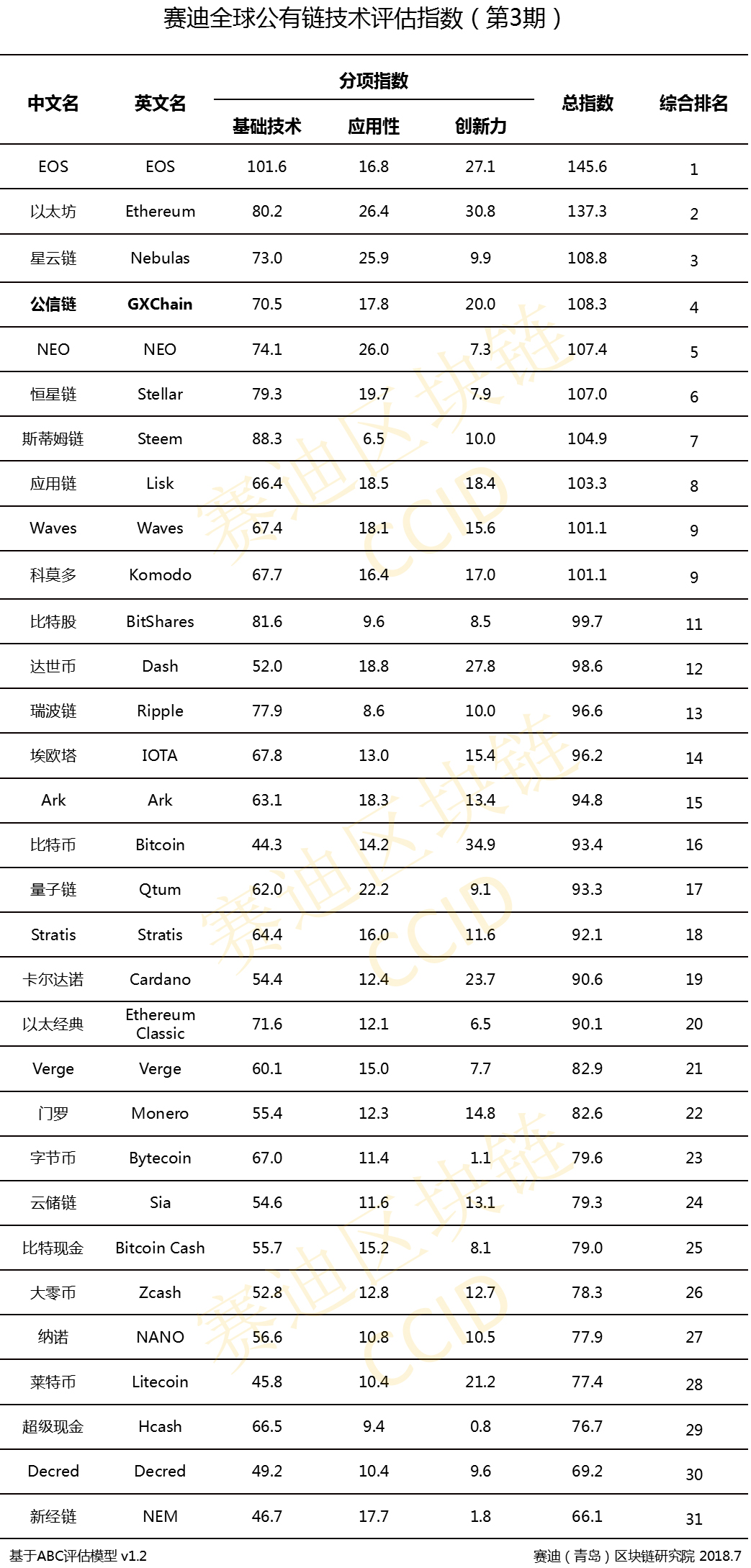
Continuing the trend of the previous month, Bitcoin did not even earn a place among the 15 blockchain projects. The first cryptocurrency rose just one notch and froze in 16th place. This ranking, of course, raises many questions, since it evaluates the technology of the first cryptocurrency at only 44.3 points, which is a very low indicator for the CCID report.
Judging by the rating, experts give preference to blockchain networks using DPoS models. Indeed, the use of this protocol makes it possible to significantly reduce the cost and speed up of transactions, but at the expense of some decentralization of the network. The exception in all three reports is the Ethereum network, which currently uses the Proof-of-Work (PoW) algorithm.
The top 20 included BitShares, Dash, Ripple, IOTA, ARK, Bitcoin, Qtum, Stratis, Cardano, Ethereum Classic.

You May Also Like
Roger Ver doesn't believe BCH will fail
Roger Ver, one of the most famous cryptocurrency proponents and often referred to as the Jesus of Bitcoin, is having difficulty leading the “second coming of the world’s largest cryptocurrency.”
A new version of Bitcoin Core has been released
To mark the 10th anniversary of Bitcoin, the development team released Bitcoin Core 0.17.0. The seventeenth generation of the original Bitcoin client software launched by Satoshi Nakamoto almost a decade ago.
