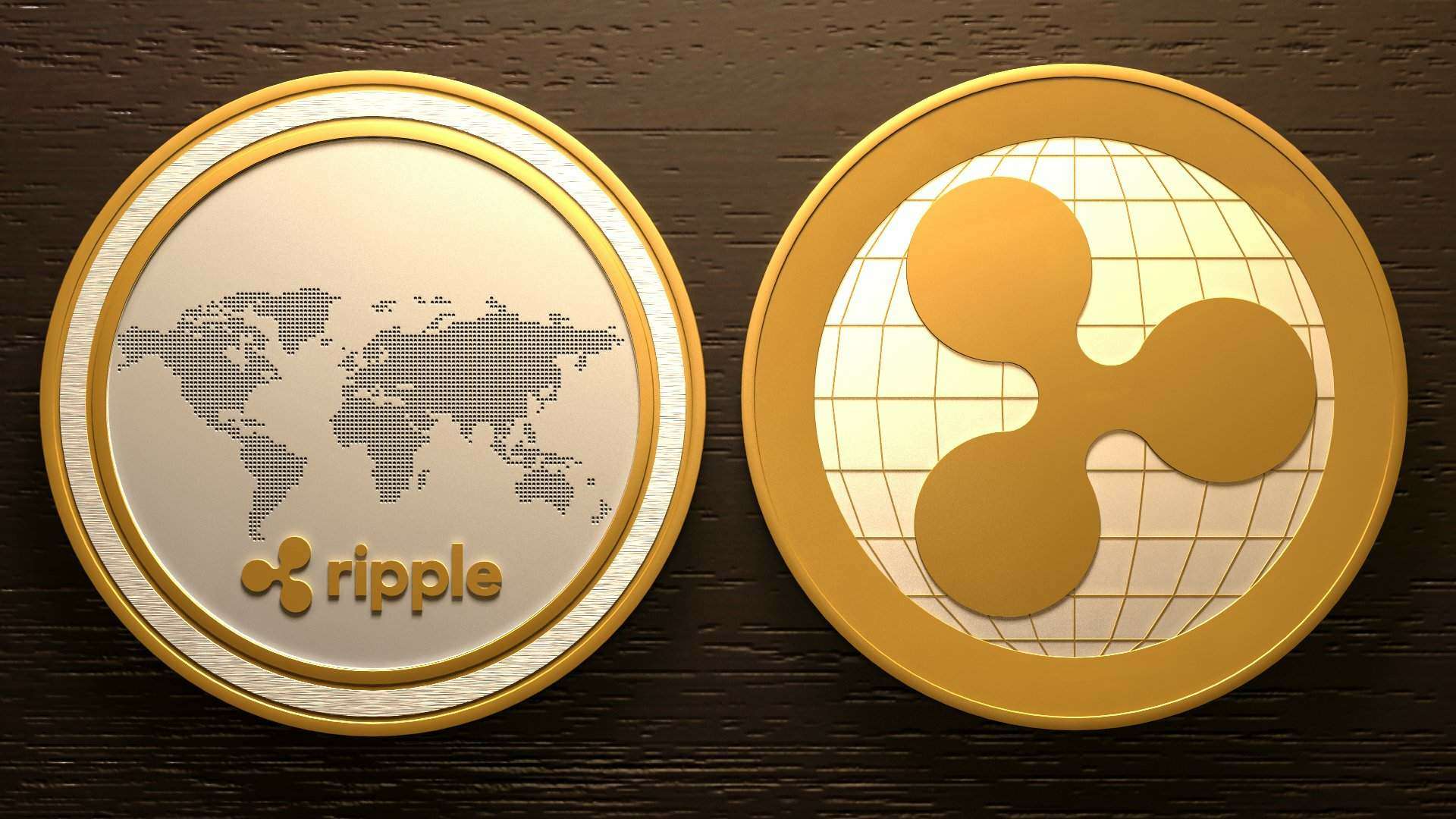
Today we'll talk about Ripple. This currency is not a crypto in the usual sense; it has a number of features and nuances. The creators, using blockchain technology, offer the world a bold and unusual solution in the financial world. We consider Ripple more of a convenient financial service, a tool in the banking sector.
One of the developers of Ripple, Nick Sheily, characterizes his brainchild as follows: “There are many difficulties and misinterpretations associated with understanding the essence of Ripple. Therefore, I propose to start from the opposite - let’s first show what Ripple definitely is not. I am forced to start from this point, because Ripple is too often compared to Bitcoin, with which it is not connected at all... Its code base is in no way connected with Bitcoin and has nothing to do with it, it uses other solutions, concepts and developments that are giving rise to a completely new economic reality. Continuing this comparison: Ripple is not only a decentralized cryptocurrency, like Bitcoin, but at the same time it is also a distributed currency exchange and lending system, thanks to which it can be used as a distributed exchange for any type of currencies and goods, virtual or real."
Initially, the Ripple Labs company did not plan to create its own separate cryptocurrency, but was aimed exclusively at the banking sector. The developers wanted to provide banks with a unique form of payment. The new technology makes it possible to carry out internal payments and international payments between banks as quickly and safely as possible, and at the same time as cheaply as possible.
Ripple has a relatively large issue volume - 100 billion coins and they are all already in circulation. The coin is divided into 1 million parts. The name Ripple itself translates as “ripples on the water”, and part of the coin is called “drop” - a drop.
The developers insist on the version that Ripple is older than Bitcoin, and that its development was already underway in 2004, long before Satoshi Nakamoto presented his brainchild to the public.
Ripple went through two stages of its formation. The first is an individual project by Rain Fugger, who decided to create a new method of mutual settlements via the Internet with fundamentally new properties. It was a peer-to-peer p2p network of equal participants who could open “lines of credit” to each other and carry out mutual settlements, where the movement of funds was carried out through chains of mutual trust, which are dynamically calculated within the framework of such a cryptosystem..But the most powerful and unexpected part of the system is credit lines with an advanced system of mutual settlements, which would allow for multi-stage exchanges in the mode of complete rejection of the monetary system.
To promote such an unusual form of mutual settlements, large investments were required, which the founding father simply did not have, so the network never became widespread and was stuck in its development at the expansion stage.
The second birth for Ripple is the arrival of serious investors in the project investors from the banking sector, who had previously been interested in Bitcoin, and only in 2011 turned their close attention to Ripple, which stood out from other cryptocurrencies.
In 2012, multimillionaire Jed McCaleb (creator of the file-sharing network eDonkey and the largest Bitcoin exchange Mt.Gox), invited world-famous investors who invested in the creation of the company RippleLabs, which opened a second wind for XRP. The range of attracted star investors ranges from the famous venture fund Andreessen Horowitz to giants like Google ventures.
The new project began developing a new generation distributed exchange based on the classic ideas of Ripple. And this has brought very “tasty” fruits to date.
Now XRP is experiencing a revival, although without the news hysteria inherent in the world of cryptocurrencies as a whole. Today, the market capitalization of this project is $77,930,804,072, which puts it in confident third place after Bitcoin and Ethereum. Exchange rate on the date of publication of the article 1 XRP = $ 2.01.
Let us note several features of Ripple
1. This cryptocurrency is not considered by the developers as a full-fledged means of payment for goods and services. Unlike Dash, for example, you won't find a list of online stores, gas stations, and eateries that will accept your XRP as a means of payment. We think that this will not change in the future.
2. The Ripple project is supported by large banks and Internet giants like Google, which already gives reason to doubt: is this system so decentralized if financial circles are so interested in it? For example, at the beginning of 2017, the National Bank of Abu Dhabi (UAE) showed interest in Ripple, and now joint work is underway with some Japanese banks (Daiwa Next Bank, Mizuho Bank, Nomura Trust, Sumitomo Mitsui Trust and ORIX Bank).
3.. The cryptocurrency uses its own protocol - the Ripple Protocol consensus. The attacks and problems that Bitcoin had at one time simply will not work here. It is possible, however, that XRP is not yet of much interest to hackers. But then a logical question arises: if in the future the system to which global banks are connected is hacked, what consequences will this lead to?
4. The basis of the ideology of this project is that each Ripple participant can issue their own currency. Moreover, the only security for this currency will be the personal reputation and guarantees of the system participant. (In fact, this is what the Central Bank of any state does when it prints its money on paper.) That is, decentralization is expressed in the fact that each participant has his own “decentralized printing press” and can create a currency named after himself.
How this approach differs from anarchy and why the developers consider it truly democratic is not yet clear to us.
5. The speed of transfers is very high. To confirm transactions, there is no need to wait until the next block is found, as in BTC, so transaction confirmation occurs very quickly, almost instantly.
6. No mining. The Ripple system does not waste electricity to calculate useless hashes. Some insignificant part of XRP pre-mining will remain with the main developer - RippleLabs. The remainder of Ripples is purposefully distributed to specific segments of its target audience in the form of grants and sponsorships.
7. The main competitor for the right to work with banks is Swift. And it is precisely this moment that seems to us the most vulnerable point for the Ripple system as a whole.
But realizing the vulnerability of the former will not prevent us from enjoying the spectacle of the battle of a young Scotch terrier with an old rhinoceros.

You May Also Like
Situation in the crypto market from June 20 to 24: Markets expect some stabilization in the future
Over the weekend, we saw that the breakdown of the $18,000 - 20,000 zone looked and felt like a capitulation of the entire market, which reset everyone who wanted to “pick up” BTC near the round $20,000 level. Review and forecast from traders of the KickEX exchange.
Stablecoins: another cryptocurrency bubble?
According to a recent report from Blockchain, 57 new stablecoins are preparing to hit the market. Recently, stablecoins have been gaining more and more popularity, however, criticism towards them is also growing. There is also a belief that they may turn out to be a new bubble.
