The desire to regulate cryptocurrencies is an attempt to respond to an unconventional phenomenon using traditional methods, but governments are not ready to so easily give up control over means of payment.
Currently, the electronic currency Bitcoin does not have a specific legal status not only in Russia, Ukraine, Moldova and the countries of the former CIS. The question of how to legalize and regulate what is essentially a supranational system is acute for all financial and legislative structures around the world.
Today, the Jamaican monetary system, in place since the late 1970s, which is characterized by constant fluctuations in exchange rates - they are set by the market, not individual states, is being disintegrated. It is possible that over the next five to seven years the world will move into the era of digital currencies, which will replace the Jamaican system, which is a vestige of the economic system of the last century with its global financial crises, with its bet on the dollar. Now in the world there is no clear attitude towards cryptocurrencies. Opinions are often heard that this is another financial bubble that will definitely burst.
But this is an erroneous opinion, since people who say such things do not understand the specifics of digital currencies. Digital currencies, including Bitcoin, are developing based on blockchain technology. In fact, Bitcoin is issued in proportion to the participants who are part of this system - each participant is part of a constantly renewing matrix. Digital currencies cannot be used like the dollar for an inflated issue; cryptocurrency, for example, cannot be used to finance the budget deficit.
By and large, cryptocurrencies today are like Schrödinger’s Cat, that is, they are in a superposition when they exist and at the same time they are not in the legal field.
Western regulators, such as the European Central Bank (ECB), the Federal Reserve System (FRS) of the United States, have so far refrained from any strict regulatory documents, because they do not yet understand globalism and the direction vector of this process, and they are currently trying to take a position of wary observers.
But some regulators, especially in developing countries and in countries experiencing a financial crisis, are already taking certain steps to protect controlled space of national currencies. And some national banks are already concerned about creating their own national digital currency..
For example, in Japan, by 2020, when the summer Olympics will be held in the capital of this country, Tokyo, they plan to introduce the J-Coin currency. At the same time, it will not replace the Japanese currency - the yen, but will run in parallel with it. In addition, its rate will be tied to the rate of the Japanese national currency.
Estcoin in Estonia, Thaler in Belarus, Karbowanec in Ukraine, Petro in Venezuela, whose national currency - the bolivar - is depreciating literally by leaps and bounds, and various cryptopesos, cryptoyuan and cryptorubles, which do not yet have an official name and are in the process of development. It is clear that the release of such cryptocurrencies is caused by the desire to somehow counteract Bitcoin.
However, electronic (digital) currency is not the same as cryptocurrency. More precisely, cryptocurrencies are a subtype of digital money and have a number of distinctive features.
The value of digital currencies is usually tied to traditional national currencies, sometimes to gold and other precious metals, while cryptocurrencies have a floating rate.
National digital currencies can be controlled and therefore will be regulated by national banks, while with cryptocurrencies the main idea is that their rate is determined solely by the balance between supply and demand. That is, there is no single control center that could influence their cost and volume.
Michael Corbat, CEO of Citigroup, is convinced that in the near future digital currencies will be issued at the state level by all countries as a response to the threat of Bitcoin. He shared this prediction during the financial summit held in November in New York. On the other hand, the prospects for the development of such currencies are unclear, since they will not inherently differ in anything from fiat currencies.
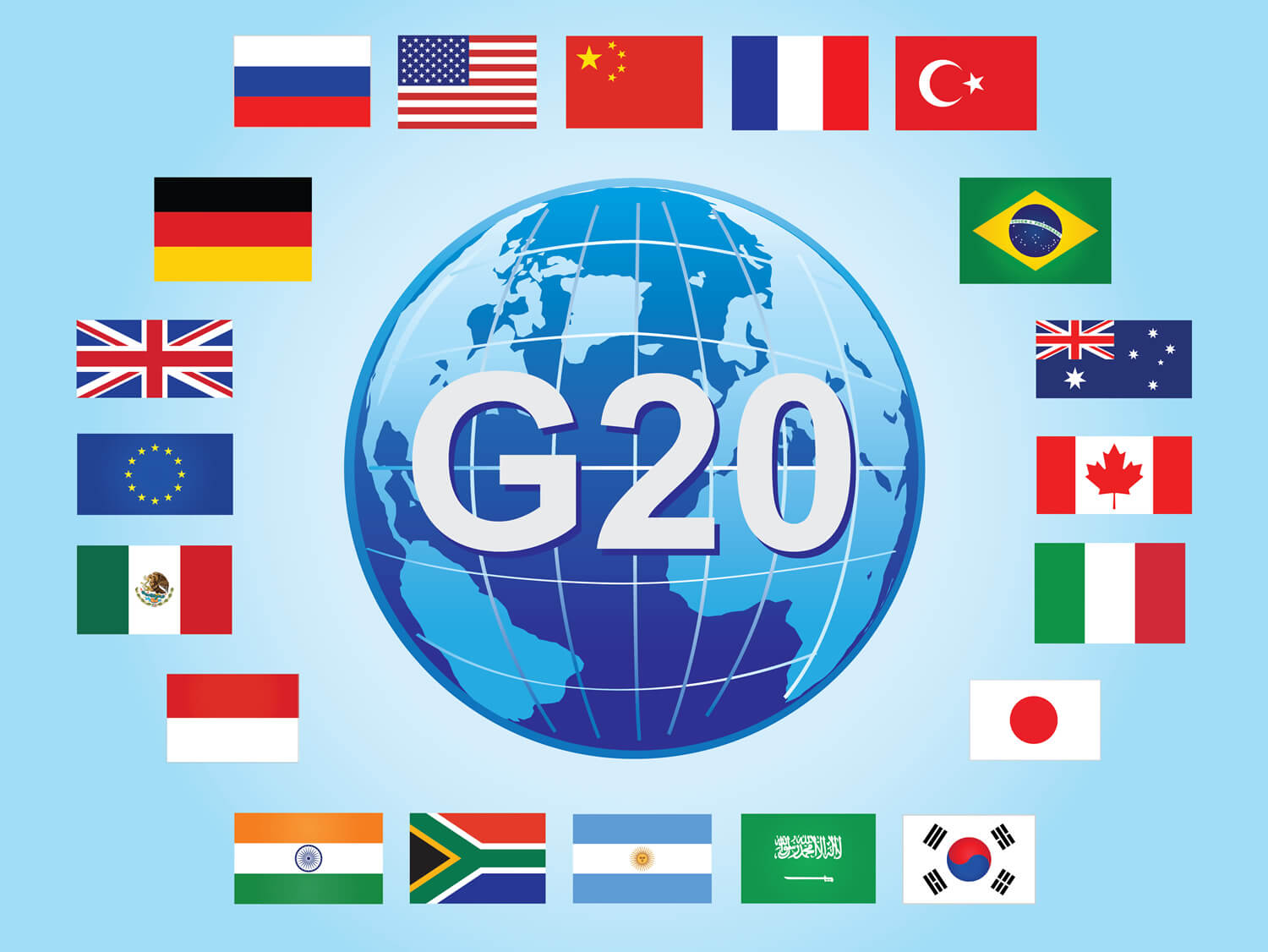
In fact, the position towards Bitcoin, the possibility of regulating it and coordinating actions to prevent a threat to the global financial system, in our opinion, will be developed at the G20 summit in Argentina in 2018.
This was called for by French finance minister Bruno Le Maire, who made an official statement..
"I am going to suggest to the next country that holds the G20 presidency, Argentina, that at the G20 summit in April we all discuss the issue of the Bitcoin currency," he said. "There is an obvious danger of speculation. We need to look and analyze this issue, and see how we and all other G20 members can regulate Bitcoin."
It is clear that the main issues will be discussed, what is called "beyond the margins" of the summit and in on the sidelines, and much of what is said there will not be accessible to the general public. Rather, a basic unified strategy to confront Bitcoin will be developed.
Some of the financial analysts of cryptocurrencies predict an increase in rates against the backdrop of this event. What better advertisement for something that does not want to be recognized and that does not exist in the legal field than to discuss it at the most important world summit?
Even those who did not yet know about Bitcoin and its benefits will now be informed.

You May Also Like
Analysis of Stellar Lumen, EOS, Litecoin and Bitcoin Cash as of 12/17/2018
Over the weekend, altcoins were mostly in a sideways range. But now, after a short recovery, the downtrend may resume
Analysis of cryptocurrency pairs BTC/USD, XRP/USD and ETH/USD as of December 19, 2018
The overnight bullish momentum could end in a deep pullback. Is it possible to continue growth after such a pullback?
