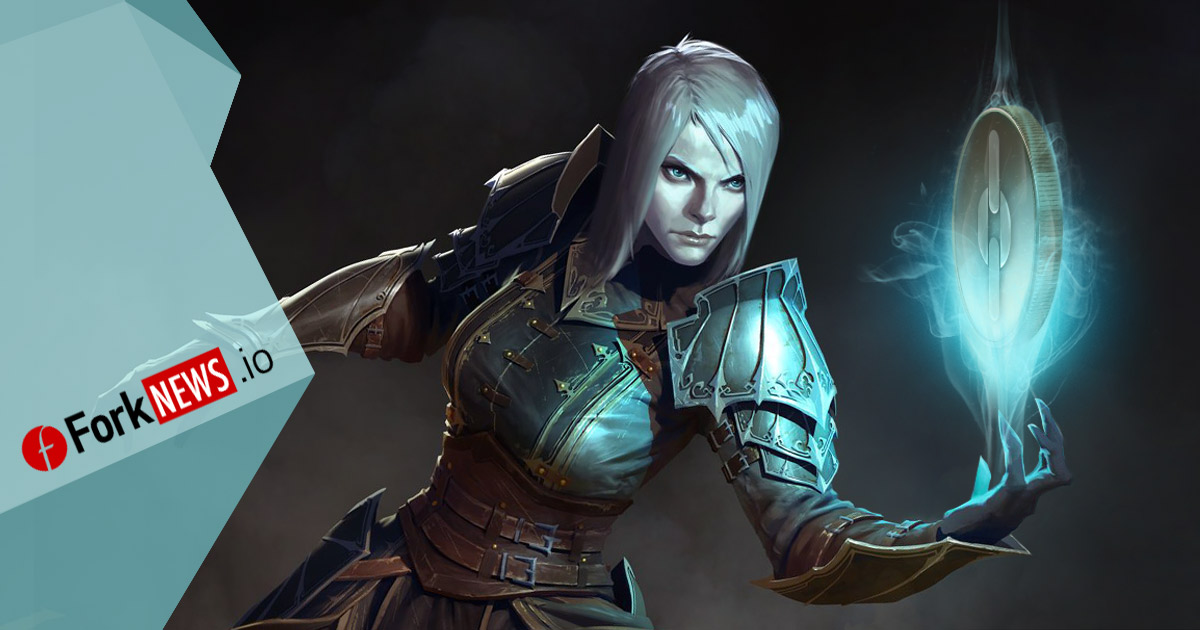
We spend a lot of time talking about cryptocurrencies and not enough time talking about digital cats. I spent a few days attending the Game Developers Conference in San Francisco and was amazed at how quickly the gaming industry is embracing the virtual item sales sector.
Of course, the idea of people spending real money on virtual items is far from new. Tencent Holdings Ltd., Activision Blizzard Inc., Valve Corp. - these companies sell digital costumes, gems, weapons and characters to millions of people.
I'm a huge Overwatch fan, and (as embarrassing as it is) I spent about $15 buying chests from which I pulled out costumes for my digital characters. Blizzard convinced me that a skin for Moira or Orisa costs the same as three cups of coffee. Times change.
Last year, the release of Star Wars Battlefront II caused a real scandal. The confusing pricing system has caused a surge in political activity - because of the game! Many called for a boycott of all the publisher's games, wrote emails with complaints and even held pickets. It seemed that Electronic Arts had committed a major crime.
Developers are still trying to understand where the boundaries of what is available are. However, the savvy executives I spoke with argue that low prices and charging for unique skins keep players engaged and satisfied. But the ability to purchase items that provide an advantage over other players is frowned upon in the gaming community.
The beauty of digital goods for businesses—and the threat to everyone else—is thatthe game creator has complete control over all the items that exist in his universe. This is no longer a vertical monopoly, but a universal one.
Why are the skins we buy still owned by Blizzard? Where is the justice? Why can’t a player simply resell a digital item?
The blockchain project called CryptoKitties, which recently received another investment for a total of $12 million from Union Square Ventures and Andreessen Horowitz, has a simple idea - people want complete ownership of their digital items. The idea is to decentralize virtual cats. And this idea is not as crazy as it seems at first glance. It is completely solvable with the introduction of blockchain technology into the entertainment economy.
Doubling down on techno-futurism, this is truly a logical vector for the development of the gaming economy, since most material goods are already produced by robots..
Designers and company owners sell circus items not for productive purposes, but for entertainment. And this is already happening today. Although most of America's coal mines have long been closed, you can always mine empirite on Argus in the World of Warcraft universe.
According to http://www.business-standard.com

You May Also Like
WhatsApp is developing a payment system
After recent news that Facebook is going to engage in cryptocurrency developments, representatives of the WhatsApp subsidiary announced the creation of a new digital payment system.
The son of Google CEO became interested in Ethereum mining
When the cryptocurrency community discusses adoption, the names of large organizations and prominent executives often come up. Therefore, it is not surprising that crypto enthusiasts are so excitedly discussing the statement of Google CEO Sundar Pichai, who announced that his son has become interested in cryptocurrencies, namely Ethereum (ETH).
