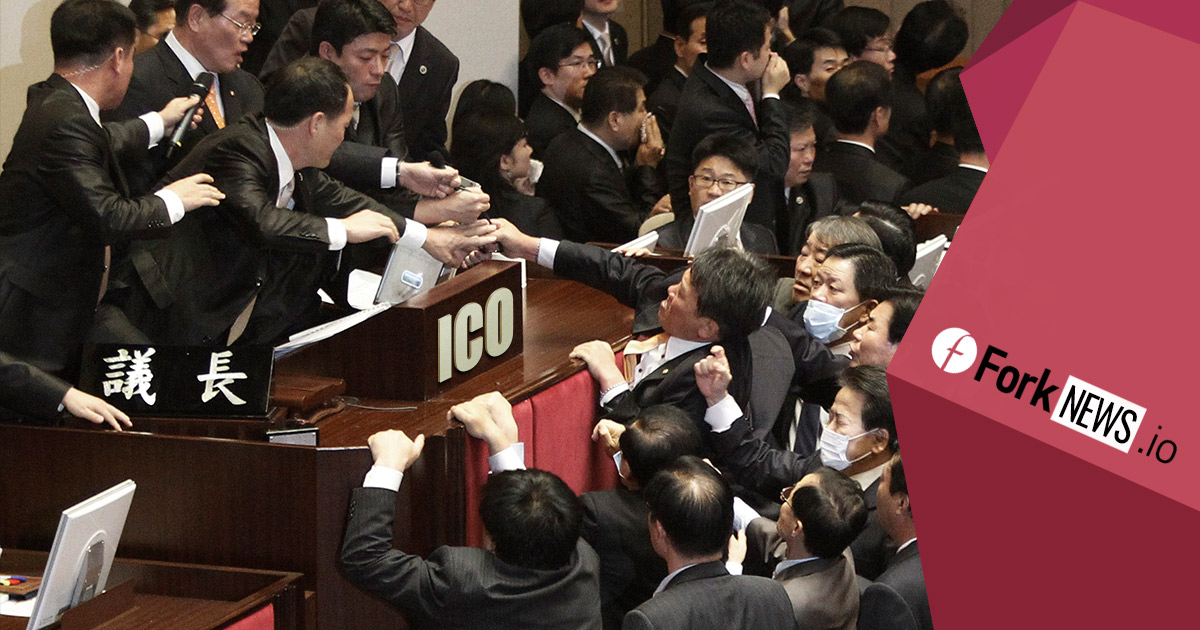
A group of South Korean lawmakers, led by a politician from the ruling political party, is developing a regulatory framework to legalize initial coin offerings (ICOs), thereby seeking to lift the government's ban on initial coin offerings (ICOs).
The representative of the ruling Democratic Party of South Korea, Hong Yu-Rak, has the support of 10 other legislators in the Korean Parliament and intends to present the final draft of the law by the end of the year.
During a scientific-practical conference at the National Assembly in Seoul on ICO and blockchain technologies, the lawmaker said that the bill was preceded by joint research by his office and the Korea International Trade Association (KITA). Hong noted: “This is the first parliamentary challenge to the government's ban on domestic seed coin offerings, introduced late last year to cool speculative investments in digital currencies such as Bitcoin.”
The bill does not seek to legalize unrestricted ICOs, but is intended to help remove uncertainties for public organizations and research centers involved in the promotion and development of blockchain technology.
Under the bill, approved ICOs will be subject to strict oversight by the Commission. financial services (FSC) and the Ministry of Science and ICT, the newswire reports.
Last year, South Korea banned all ICOs. However, as reported by local media, financial authorities last month discussed plans with the country's tax agency, the Ministry of Justice and other relevant government departments to ensure certain conditions for ICOs in the country.
Meanwhile, the current ban has forced many domestic corporations to move capital abroad.
South Korean domestic companies are creating subsidiaries and starting to sell their tokens abroad, in countries such as Singapore, Hong Kong, Switzerland and Japan. For example, chat app operators Kakao Corp and Naver have set up subsidiaries in Japan. Hyundai BS&C, a subsidiary of the Hyundai Group, launched its ICO in Switzerland. Recently, one of the country's largest crypto exchanges, Bithumb, also unveiled its plans to launch an ICO in Singapore.
However, the FSC confirmed that no matter where the ICOs are located, Korean companies must still be subject to national regulations. Although “current laws do not prohibit ICOs from abroad,” emphasized FSC Chairman Choi Chong-ku.

You May Also Like
Texas suspended the activities of two mining companies
Texas Securities Commissioner Travis J. Iles has taken emergency action against mining company promoters who aggressively recruit sales agents through LinkedIn, Facebook and other online marketing channels.
The G20 summit noted the need to regulate cryptocurrencies
The G20 summit ended with the signing of a final declaration, in which there was also a place for crypto-assets. The leaders of the countries came to a consensus on the prospects of digital technologies and the advisability of uniting for global regulation of cryptocurrency activities.
