This publication is intended for beginners in stock trading and covers generally accepted, basic concepts on the stock exchange. If you are a trader who has made at least one trade, you will already be familiar with the terms described here
When exactly they began to use the images of Bull and Bear in stock exchange terminology is not known for certain. One version of their appearance takes us back to the beginning of the 18th century, and is associated with the work of the Scottish physician and satirist, member of the Royal Society, John Arbuthnot. In his work The History of John Bull, dated 1712, the main character John Bull gets into a fight with another character nicknamed Bear outside the London Stock Exchange (although the exchange was officially founded only in 1801, its history dates back to 1570). The nature of their fight corresponded to the names of the heroes and the habits of real animals, which was noticed in North America by organizers of fights between real bulls and Californian grizzly bears. The Bull (English Bull) tried to pry his head up and throw the Bear (English Bear), and he, in turn, tried to knock down and press his opponent down to the ground. This epic battle of the characters in Dr. Arbuthnot's pamphlet served as the prototype for the name of the opposing participants in stock exchange trading - Buyers and Sellers.
Buyers (Bulls) are confident that the price of the asset they are purchasing will rise, and therefore, having bought now, they can sell it at a higher price, while making money on the difference in price.
Sellers (Bears) believe that the price of the asset they have will decrease and they are in a hurry to sell it at a higher price, so that later, when prices fall, they can buy it back cheaper.
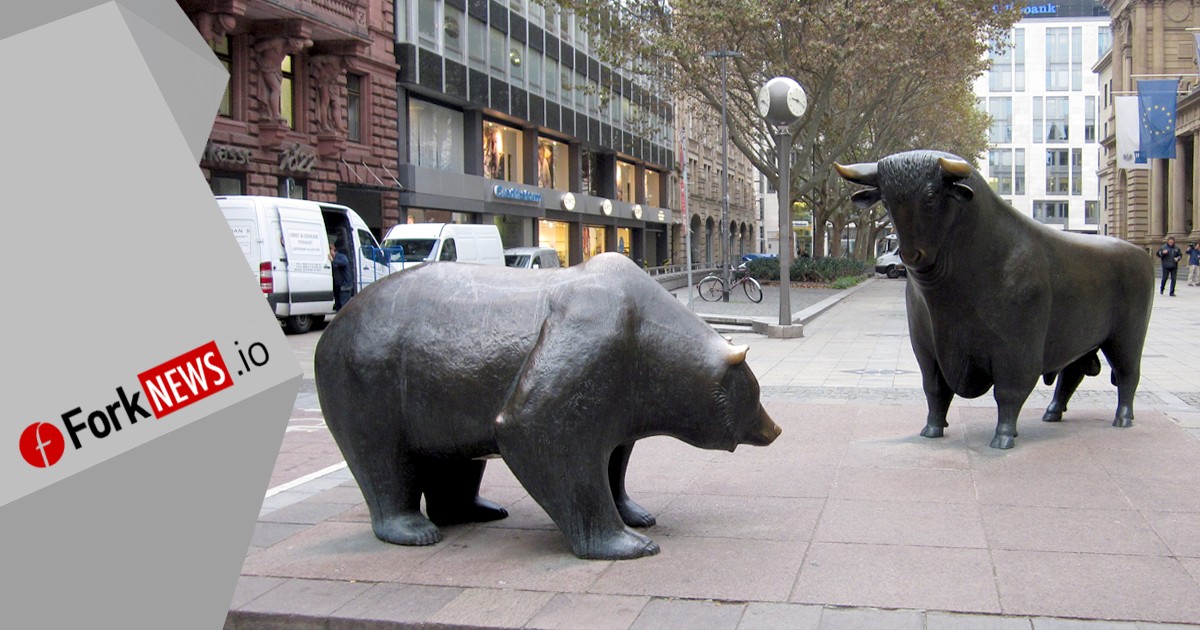
Bulls and Bears have become firmly established in stock exchange terminology to denote not only players, but also other concepts associated with the rise and fall of prices in the market. A downward trend is called bearish, and an upward trend is called bullish. Negative news leading to a market recession is bearish, while positive news is bullish. In Germany, opposite the building of the Frankfurt Stock Exchange, there is a monument to the Bull and the Bear, as a symbol of the constant struggle between the two elements of the market - growth and fall. There are monuments to the stock exchange representative of wildlife - the Bull - in both New York and Shanghai.
Buyers and Sellers, with their activity on the stock exchange, move prices, just as Demand and Supply shift the price of a product, depending on the predominance of one of them. This mechanism was described in 1960 by Campbell McConnell and Stanley Brew in their joint work Economics...
In modern conditions, the technique of gambling/speculation on electronic exchange platforms is significantly different from what it was in the good old twentieth century. And with the entry of cryptocurrency assets onto the exchange, entire strategies are being developed to reduce or increase their value. Participants in such market speculation can be not only real traders, but also bot programs.
The technology of a sharp increase in price is called “Pump” (English: Pump - pump up). This is a deliberate purchase of an asset aimed at short-term appreciation. It requires a fairly large supply of resources and clear coordination in the actions of major players - participants in the pump. Schematically, the algorithm can be described as follows: at the initial stage, a certain volume of a crypto asset is purchased, then the news background is carefully prepared and rush demand is created. An artificial increase in price, provoked by “purchases,” clearly confirms the value of the asset by the continuing rise in the exchange rate. At the next stage, sell orders are placed at a predetermined price level. By the time ordinary players just enter the market with purchases, pumpers sell them assets at an “inflated” price, which then sharply deflates.
“Dump” (English Damp - drown out) - the deliberate sale of assets with the aim of artificially reducing the exchange rate.
Thus, we have come close to meeting other inhabitants of the exchange fauna.
Whales are large and experienced players on the exchange, capable of moving prices on the market in the right direction. 
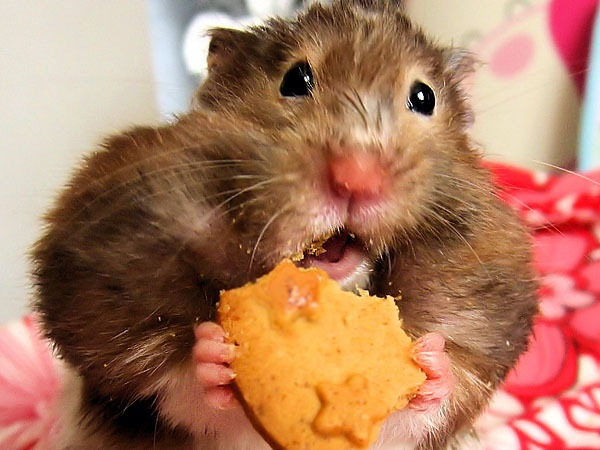
Hamsters are traders who make mistakes when trading, succumbing to panic and hype in the market.
Wolves are traders with extensive experience who practically do not make losing trades.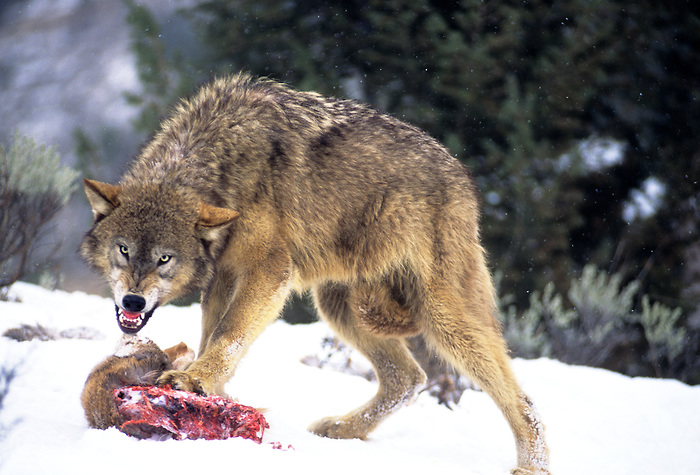
In order to move prices in the chosen direction, Whales can sell their assets slightly below the market price by opening instant sell orders. This will cause the price to decline faster, creating the impression of a sharp decline.. Next, Keith monitors the reaction of traders who may follow Keith’s example and also start selling the asset. The price will accelerate its fall and will soon reach a level acceptable for Keith to purchase the asset. As a result of China's "purchases", the price will return to its previous level.
Having a sufficient amount of an asset in reserve, you can force the price to move in the desired direction, without even making transactions, using bluff tactics. In a simplified way, it can be represented as follows: pending orders to buy or sell are placed, forming a wall in the exchange book of quotes.
Wall is a large order that can stop the fall or growth of the exchange rate.
Book is a set of nearby orders for the counter purchase and sale of an exchange asset. Otherwise called a book order.
Passive orders - established orders at a certain price different from the market price. They remain in the order book unexecuted until the market price reaches them.
Aggressive ordersare orders to buy or sell that are executed instantly, at the price of the asset at the current moment. Such orders move the market, and the larger the order, the more the market will move.
Ordinary traders, analyzing the book of transactions, believe that the price will not rise or fall due to the wall there, and place their orders to buy or sell in the order book based on this. In reality, when the market price hits the wall, it disappears. The whales simply cancel their large order. Thus, the rate moves in the direction desired by the Whale, and the trader, who did not expect the price to move in this direction, closes trades in panic at a loss, while the Whales sweep away assets at reduced prices, or dump it at the highest price, at the “high” (English High - height), after which the price returns to its original state.
Losare traders who close transactions at a loss (English Loss - loss)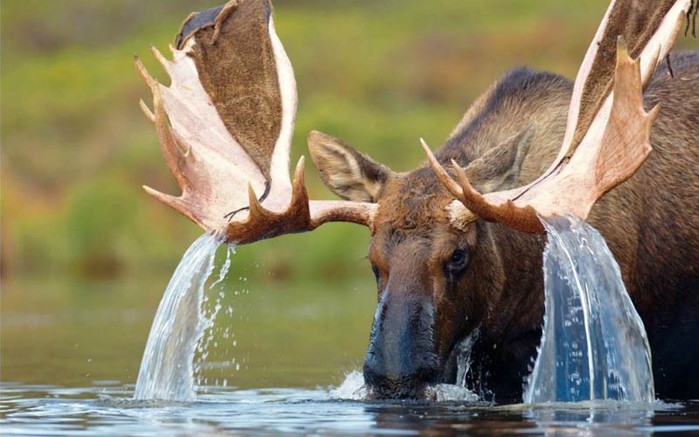
These are just some typical representatives of the animal world that are used in unofficial stock exchange terminology.
You can find here pigs, chickens, sheep and even exotic lemmings.

You May Also Like
How much can a novice investor earn from trading? Part fourteen. Trading (continued)
We continue the series of publications about trading in order to understand in practice how much a novice investor can earn using only the forecasts published on our website. To understand how useful they are, we decided to conduct an experiment and simulate a situation in which a person who only knows about trading that he needs to “buy cheaper and sell more expensive” tries to earn additional income in his free time from work by investing part of his funds in cryptocurrency trading
Three Ways to Avoid Losing Your Cryptocurrency Assets
Investing in cryptocurrency is very tempting, you can hope to hit the jackpot sooner or later. However, investors should remember that it is not enough to simply buy cryptocurrency and store it in a wallet. There is a high chance of losing everything if you don't store it properly. The main advice is to learn from other people's mistakes.
