We continue the series of publications about the legal status of cryptocurrencies in the world. In terms of the degree of freedom, perhaps only Asian countries can boast of an unprecedentedly loyal attitude of the authorities to the issues of regulation of not only Bitcoin, but also other digital currencies. That is why for today’s study we chose Singapore as an example of eastern jurisdictions where the successful development of Blockchain startups has already taken place both de facto and de jure.
The Republic of Singapore is a city-state geographically located on islands in Southeast Asia.
At the time of independence, Singapore was a tiny and poor country that had to import even fresh water and construction sand. However, the country's economic development strategy under the government of Lee Kuan Yew turned Singapore into the financial and trading center of Southeast Asia.
The constant attraction of foreign investment over several decades has borne fruit. Today, Singapore is the capital of innovative startups, an industrialized state that maintains diplomatic relations with 186 countries of the world, although many of them do not even have Singaporean embassies. Member of such international communities as the UN, the British Commonwealth, ASEAN and the Non-Aligned Movement.
Bitcoin in Singapore is not a means of payment, so until recently it remained outside the scope of government regulation. For the same reason, Singapore was the most popular jurisdiction for establishing companies that planned to carry out commercial activities in the field of Blockchain and cryptocurrencies.
But already in the fall of 2017, the Central Bank of Singapore decided to begin public hearings, which took place from November 21, 2017 to January 8, 2018, regarding the possible inclusion of bitcoin and other cryptocurrencies in the provisions of the current legislation in the field of electronic payment systems.
Thus, the Monetary Authority of the Central Bank of Singapore has developed a corresponding bill, which is aimed at optimizing the regulation of payment services, and is intended to include digital currency services and other innovations in the list of regulated payment transactions. The new regulatory framework will need to expand the scope of regulation to include domestic money transfers and the sale and purchase of virtual currencies..
In addition, the new law will have to take into account all AML & KYC requirements and the associated risks (risks of money laundering and terrorist financing), and if adopted, payment providers will have the opportunity to have only one license, which will give authority to carry out any specific type of payments, or simultaneously for all existing types of payment transactions. The license will be issued only for those activities that are directly related to payments.
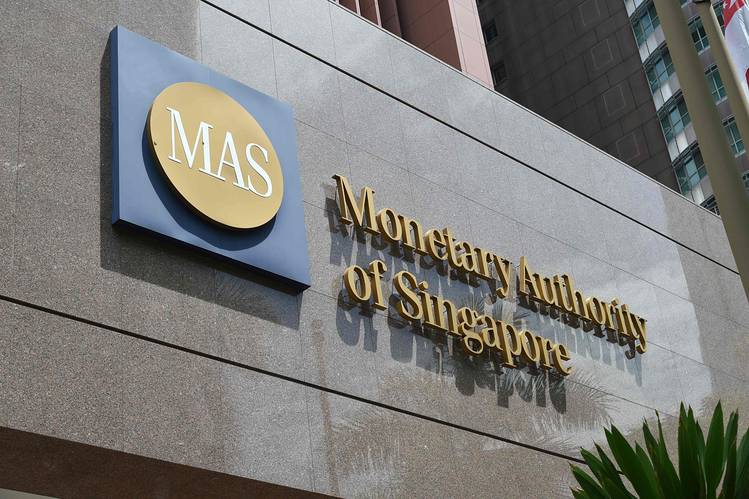
The regulator and licensor in this case will most likely be the Monetary Authority of Singapore (MAS), which has managed to officially declare that cryptocurrency will not be subject to control by government agencies. Only activities with it - purchase and sale and ICO - will come under control. At the same time, ICO digital tokens will be equated to securities, and as a result will have state regulation similar to securities, including registration of an issue prospectus, obtaining intermediary or exchange operator licenses and mandatory compliance with AML rules and laws on combating the financing of terrorism.
However, already now, according to the current legislation of Singapore, commercial activities related to cryptocurrencies are subject to taxation.
According to a written clarification from the Inland Revenue Authority of Singapore (IRAS), companies involved in the purchase and sale of bitcoin are subject to standard income tax.
Income tax ranges from 0 to 17% and depends on the amount of profit of the enterprise. Meanwhile, newly created companies are provided with a 3-year tax incentive with a zero rate, which in itself deserves respect and attracts the majority of international Blockchain startups to this country. True, participation in this preferential scheme is available to all types of new companies, except for organizations whose main activity is attracting investments or real estate purchase and sale transactions.
In transactions where bitcoin acts as a means of payment for real goods and services, a value added tax (goods and services tax, GST) is levied. The latter in Singapore is only 7%.. This only applies to cases where both entities involved in the transaction are registered residents of the country - no GST is charged for non-residents. Virtual services, such as in-app purchases, are also not taxed.
Long-term investment in bitcoin is considered an investment in capital and will not be subject to taxes. Moreover, regardless of whether bitcoin will be accepted as a means of payment for goods and services in the future, fiscal and regulatory authorities do not plan to interfere in this process. A developed banking system is also not an obstacle to this, and MAS does not intend to develop strict regulatory standards for cryptocurrency.
Thus, as of the current moment, cryptocurrencies and ICOs are outside the scope of the current financial legislation of Singapore. For the Singapore financial industry, the use of virtual currencies as a payment method is not critical. Cryptocurrency itself is primarily intended for speculative investment purposes, and the volume of crypto trading in Singapore is significantly lower than in the same markets in the US, Japan and Hong Kong.
MAS will continue to monitor developments in the crypto industry and, if necessary, will consider developing more targeted regulations. That is, although MAS does not currently regulate virtual currencies, it does regulate activities related to them as soon as such activities come to the attention of the financial regulator.
The instructions provided by IRAS are rational and thoughtful. Any business owner can rest assured as long as he pays taxes on income from the sale of bitcoin, since cryptocurrency still remains largely unregulated. This is why companies that are looking for some financial stability can safely choose Singapore as the main parent jurisdiction, while receiving maximum support from the government, without fear of conducting any legal transactions with bitcoin.

You May Also Like
Poland introduces new rules for regulating cryptocurrencies
The Council of Ministers of Poland adopted the bill “On the regulation of Bitcoin and other cryptocurrencies” to bring the circulation of the new asset into compliance with financial legislation to combat money laundering and terrorism.
US citizen will serve three years for illegal Bitcoin exchange
In February, a California man agreed to plead guilty to fraud, money laundering and operating an exchanger without the required license.
