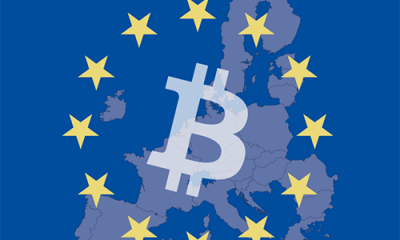
Under the new rules, European users will no longer be able to trade cryptocurrencies anonymously through exchanges, and their ability to use prepaid cards, which lawmakers say have been used to finance militant attacks, will be limited.
A little background on this event.
For the first time, a proposal to require de-anonymization of clients of cryptocurrency exchanges was made in the EU on March 9, 2017. At the same time, the intention to send information about account users to a central database was announced for the first time. Where this database will be located and who will be responsible for ensuring that data about the owners of wallets does not get into the network was not specified.
The resolution stated that virtual currencies cannot and should not be anonymous, and that the anonymity or pseudo-anonymity of cryptocurrencies is, first of all, a hindrance, not a benefit for law-abiding users, which, of course, are EU citizens. These rules were supposed to affect not only Bitcoin (which during this period began to rapidly grow in terms of capitalization) but also all cryptocurrencies and actually prohibit the anonymity of cryptocurrencies, at least in Europe. The resolution is aimed at combating money laundering and terrorism, despite insignificant evidence of the use of cryptocurrencies in both cases.
And yet, with or without evidence of support for terrorism, European legislators began to sense the threat posed by anonymous or pseudo-anonymous cryptocurrencies, which they intend to de-anonymize.
Then, in the spring of 2017, the European Union's law enforcement agency Europol for the first time published a report in which spoke about the role of cryptocurrencies such as Zcash, Monero and Ethereum on the darknet.
This report noted that cybercriminals still prefer Bitcoin, but the situation is rapidly changing, and “Monero, Zcash and Ethereum are gaining popularity in the digital underground.”
Who, according to Europol, can be identified as a “cybercriminal” was also not specified. But an example that caused outrage among European legislators was the famous case of the distribution of Kirk ransomware, which demanded a ransom in Monero..
( By this logic, it is also worth de-anonymizing all holders of dollar deposits in Swiss banks, since cases of extortion of this currency are much more numerous in the history of crime)
Referring to the role of Ethereum in the problem of money laundering, the researchers noted that smart contracts can be used to create illegal payment channels. In addition, information is provided about a trading platform on the darknet, the developers of which want to carry out transactions through the Ethereum blockchain.
Europol noted then that the possibility of “hiding the recipient’s address and transaction amount” in the Zcash system also attracts darknet trading platforms to this cryptocurrency.
In June 2017, the launch of the TITANIUM project was announced in the European Union. It was said to be a three-year, $5 billion project that would bring together universities, private research companies and law enforcement agencies in the UK, Spain, Germany, Austria, Holland and Finland. Its main areas are monitoring blockchains, de-anonymizing wallet addresses, supervising darknet markets, stopping terrorism and money laundering.
During the TITANIUM project, as stated, tools and advanced techniques will be developed for investigating crimes related to the use of cryptocurrencies in Europe, which until now have been carried out situationally by most law enforcement agencies.
The founders of the project plan to create forensic tools for tracking blocks addresses controlled by the same person; identify blocks used for money laundering; comb the Internet, both regular and darknet; automate the collection of information about illegal activities.
Project coordinator Dr. Ross King from the Austrian Institute of Technology noted that criminals and terrorists using cryptocurrency and darknet markets are “increasingly numerous.” King also insisted that Project TITANIUM would respect "privacy."
The project also addresses the fight against terrorism and crime. Attacks on civilians in Manchester and London challenge European governments to demonstrate the need for decisive action.. On June 4, British Prime Minister Theresa May called for the creation of “international agreements to regulate cyberspace” and a ban on “safe spaces” on the Internet for extreme extremists. Given the situation, the TITANIUM project will most likely continue its work after the UK leaves the European Union.
( Note that there is still no evidence that the terrorist attacks in London and Manchester were financed through the darknet, and the fight against terrorism has been going on for several decades and it is completely unclear to us how they “survived” before without anonymous cryptocurrency wallets and exchanges terrorists.)
And finally, on December 16, 2017, the story of the “fight against terrorists from cyberspace” took a new turn.
“Today’s agreement will provide a greater degree of transparency in relation to the fight against money laundering and the financing of terrorism,” explained European Commission representative Vera Jourova.
According to the new rules, European users will no longer be able to exchange cryptocurrencies through exchanges on condition of anonymity, and their ability to use prepaid cards, which lawmakers say have been used to finance militant attacks, will be limited.
Exchanges and wallets that provide cryptocurrency exchange and storage services will be required to identify their customers. The new rules must be officially approved by EU member states and then adopted at the national level within 18 months.
Recall that earlier the European Central Bank refused to regulate the Bitcoin market, and its chairman Mario Draghi said that this issue was not included in the list of authority of the department.
According to https://ttrcoin.com

You May Also Like
The Conference.NFT Kyiv - the first Ukrainian NFT event
NFT or “non-fungible token” took over the cryptocurrency and art markets back in 2020, causing genuine surprise in the new digital world and leaving collectors and investors with their mouths open.
A Korean company found funding for its ICO at the bottom of the sea
The Korean company Shinil Group is going to issue a new token, which will be backed by gold found on a sunken Russian cruiser.
